
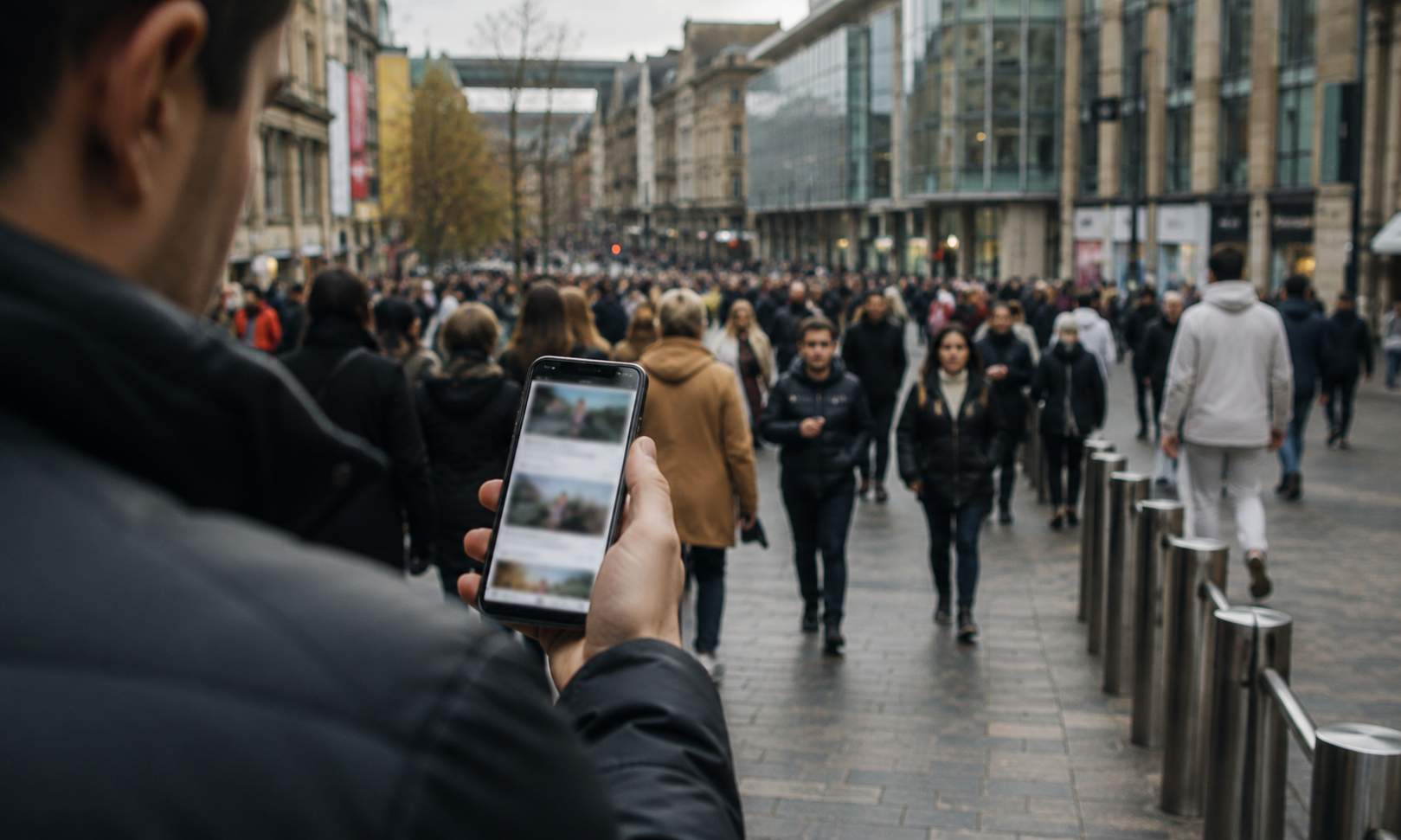
Social media has transformed the way people consume news, share opinions and stay connected with the world. It has given communities a voice, helped expose injustice and enabled important conversations to reach millions within minutes.
Yet the same platforms have also become fertile ground for misinformation, particularly when stories involve race, immigration, religion or crime. False claims can spread faster than verified facts, while emotionally charged posts often receive greater engagement than accurate reporting. In some cases, the consequences extend far beyond the online world, contributing to fear, division and even real-world disorder.
Across England and Wales, politicians, police, academics and technology experts are increasingly warning about the impact of racial misinformation online. For communities in Newcastle and across the North East, the issue is no longer something happening elsewhere. It has become part of a wider national conversation about trust, community cohesion and the responsibility of both platforms and users.
The rise of online misinformation.
The growth of social media over the past two decades has fundamentally changed how information reaches the public.
Platforms such as Facebook, X, TikTok, Instagram and YouTube allow anyone to publish content instantly, regardless of whether it has been verified. While this has democratised communication, it has also reduced the traditional gatekeeping role once carried out by newspapers, broadcasters and editors.
According to Ofcom's Online Nation 2025 report, 41 per cent of UK adults said they had encountered misinformation online during the previous four weeks, making it the most commonly reported online harm. Political misinformation was reported by 29 per cent of users, while 25 per cent encountered misinformation linked to wars or international conflicts. Around 22 per cent said they had seen deceptive AI-generated images or videos designed to mislead viewers.
Those figures illustrate how misinformation has become part of everyday online life rather than an occasional problem.
Why race becomes part of misinformation.
Stories involving race, immigration or ethnicity often generate strong emotional reactions, making them particularly attractive to those seeking clicks, shares or political influence.
Researchers have found that content provoking anger, fear or outrage is more likely to be shared than balanced reporting. Once inaccurate information begins circulating, corrections often struggle to reach the same audience.
In many cases, misinformation exaggerates isolated incidents or falsely identifies individuals involved in crimes before police have confirmed basic facts.
Other posts recycle old videos, mislabel photographs or remove important context, encouraging viewers to reach conclusions based on incomplete or false information.
While legitimate political debate about immigration, border security or integration forms an important part of democratic discussion, misinformation differs because it presents false or misleading claims as fact.
Politics and public debate.
Immigration has remained one of the most debated political issues in Britain for many years.
Governments of different political parties have introduced policies aimed at reducing illegal migration, reforming asylum procedures and controlling legal immigration. Those policies are regularly scrutinised by the public, opposition parties and the media.
Healthy political debate relies upon accurate information.
Problems arise when false claims about migrants, ethnic minorities or religious communities are presented as established fact, particularly when those claims spread widely before they can be challenged.
Experts argue that misinformation can distort public understanding, increase mistrust and make constructive debate more difficult by encouraging people to respond emotionally rather than critically.
When online rumours become real-world problems.
Perhaps the clearest recent example came following the Southport murders in July 2024.
Before police had confirmed key details, false claims circulated widely across social media about the identity, religion and immigration status of the suspect. Many of those claims proved to be inaccurate, yet they spread rapidly across multiple platforms.
The disorder that followed in several towns and cities prompted widespread concern about the role social media played in amplifying misinformation.
Parliamentary committees, researchers and independent experts have since examined how recommendation algorithms can rapidly promote sensational or misleading content, particularly when engagement levels are high.
The Home Office also recorded the highest monthly total of racially or religiously aggravated offences during August 2024, following the Southport murders and subsequent disorder. While many factors influence hate crime, police and public authorities warned that misinformation circulating online contributed to heightened community tensions.
Newcastle and the North East.
The North East has not been immune to the challenges posed by online misinformation.
Newcastle is one of Britain's fastest growing university cities, attracting students and professionals from around the world. The region has become increasingly diverse over recent decades, bringing new cultures, languages and faiths into communities already known for their strong local identity.
Research carried out by Newcastle University in partnership with the North East Anti-Racism Coalition found that many respondents believed racism remained an everyday issue across the region, while a significant proportion felt the problem had worsened.
Although that research focused primarily on lived experiences of racism rather than social media specifically, many respondents identified online abuse and misinformation as contributing factors to wider community tensions.
For local police, councils and community organisations, challenging false information has become increasingly important alongside responding to incidents themselves.
Why misinformation spreads so quickly.
Unlike traditional news organisations, social media platforms reward engagement.
Posts that generate comments, shares and reactions are often promoted to wider audiences by recommendation systems, regardless of whether the information is accurate.
Content that provokes anger or fear can therefore travel much further than calm, evidence-based reporting.
Artificial intelligence has added another challenge. Convincing fake photographs, cloned voices and manipulated videos are becoming easier to produce, making it harder for users to distinguish fact from fiction.
As technology develops, media literacy is becoming just as important as digital access.
Protecting communities in the digital age.
Addressing racial misinformation requires more than removing individual posts after they have gone viral.
Schools, employers, community groups and families all have a role in helping people question what they see online before sharing it with others.
Technology companies continue developing tools to identify misleading content, while the UK's Online Safety Act places greater responsibilities on platforms to tackle illegal content and reduce certain online harms.
Ultimately, however, no regulation can replace critical thinking.
As Newcastle and the wider North East continue to grow as diverse communities, ensuring accurate information reaches the public is essential to maintaining trust between neighbours of different backgrounds.
Social media has transformed modern communication in remarkable ways, but its greatest strength can also become its greatest weakness when misinformation spreads unchecked. The challenge for communities across England and Wales is not simply learning how to use technology, but learning how to recognise when what appears on a screen may not reflect the truth.
Share your thoughts below.
Should social media companies be doing more to stop misinformation on their platforms?
Tech News
How Social Media Is Fuelling Growing Racial Division Across The UK
Advertisement




Comments (0)
You must be logged in to post comments.
Don't have an account? Register here
No comments yet. Be the first to share your thoughts!