
When the Tyne and Wear Metro's new £362 million train fleet was announced, many people across Newcastle and the wider North East questioned whether it represented good value for taxpayers. Others argued the region deserved far greater investment, especially when compared with transport spending in cities such as Manchester and London.
The reality is more complicated than comparing headline figures alone. London's transport network serves millions more passengers every day, while Manchester has spent decades steadily expanding its Metrolink tram system. Newcastle's Metro, meanwhile, has focused on replacing ageing infrastructure rather than building entirely new lines.
So, how does Metro spending in the North East really compare?
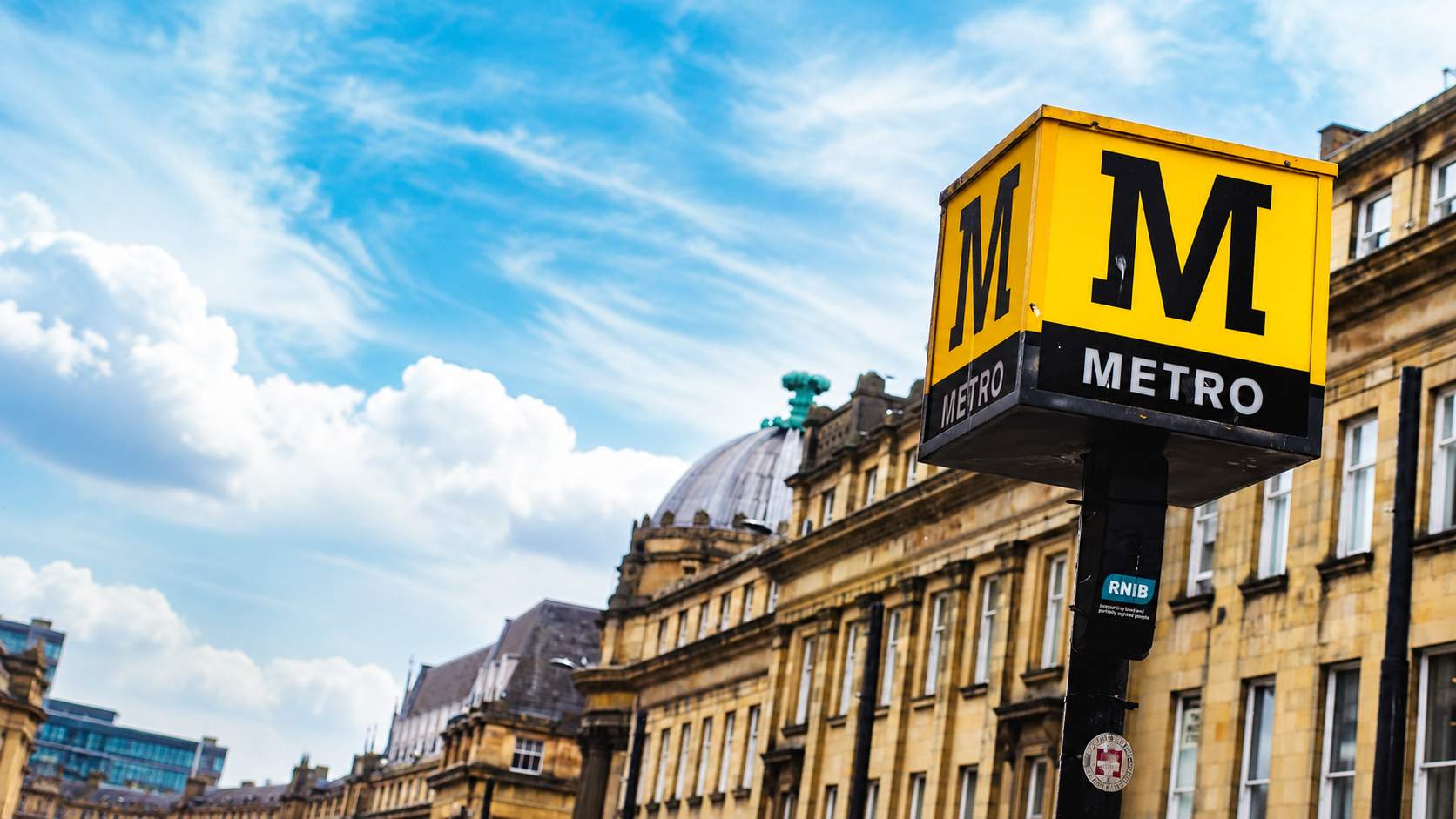
Newcastle has invested more than £900 million in modernising the Metro.
The new trains are only one part of a much larger programme.
The Stadler fleet cost £362 million, but when combined with approximately £446 million spent on infrastructure renewals and £104 million invested in the Metro Flow project, taxpayer investment in modernising the Tyne and Wear Metro now exceeds £900 million.
That money has funded:
46 brand new Metro trains
Track renewals
Bridge repairs
New overhead power lines
Modern signalling equipment
Station improvements
Metro Flow capacity upgrades
Rather than expanding the network, much of the investment has been aimed at ensuring Britain's oldest metro system can continue operating for decades to come.
Manchester has taken a different approach.
While Newcastle has concentrated on replacing ageing assets, Manchester has spent much of the last three decades expanding its network.
Metrolink has grown from a relatively small tram system into the largest light rail network in the UK, with approximately 64 route miles and 99 stops, compared with the Tyne and Wear Metro's 48.5 route miles and 60 stations.
Manchester has benefited from repeated government-backed expansion projects linking areas including Trafford, Rochdale, East Didsbury, Ashton-under-Lyne and Manchester Airport.
Instead of replacing an existing network, much of Manchester's investment has created entirely new routes that previously did not exist.
London operates on a completely different scale.
Comparing Newcastle with London is difficult because of the sheer size of the capital's transport system.
Transport for London oversees the London Underground, Docklands Light Railway, London Trams, Elizabeth line, buses and other transport services.
Official statistics show London's light rail systems alone carried around 115 million passenger journeys during the year ending March 2025. By comparison, the Tyne and Wear Metro carried 32.2 million journeys, while Manchester Metrolink recorded 46 million.
Those numbers help explain why London receives substantially larger transport budgets than other parts of England.
Newcastle carries more passengers than many people realise.
Although it often receives less national attention, the Tyne and Wear Metro remains one of Britain's busiest light rail systems.
The latest Department for Transport figures show:
London light rail - 115 million journeys
Manchester Metrolink - 46 million journeys
Tyne and Wear Metro - 32.2 million journeys
Nottingham Express Transit - 15.7 million journeys
Sheffield Supertram - 9.1 million journeys
West Midlands Metro - 8.8 million journeys
That places the Metro among the busiest urban rail networks outside London.
The North East has focused on replacing ageing infrastructure.
One reason Newcastle's investment can appear smaller than Manchester's is because much of it is less visible.
Passengers immediately notice a brand new tram line or station extension. They rarely notice replaced power cables, upgraded signalling systems or refurbished bridges.
Nexus says recent investment has included 65 kilometres of renewed track, 65 kilometres of overhead power lines, 62 repaired bridges, 27 new escalators and extensive station improvements. These projects may not generate headlines, but they are essential for maintaining reliable services.
Was the North East underfunded for years?
Many transport campaigners believe so.
For years, local politicians argued that transport investment heavily favoured London and parts of southern England, leaving regions such as the North East with ageing infrastructure and limited funding for expansion.
The Metro's original trains entered service in 1980 and remained operational for more than four decades, making them among the oldest metro vehicles still carrying passengers in Britain before their replacement. That longevity reflected careful maintenance, but also highlighted how long the region had waited for major investment.
Does Newcastle deliver good value for money?
Measured by passenger numbers, the Metro continues to play a vital role in the North East.
The network serves Newcastle, Gateshead, North Tyneside, South Tyneside and Sunderland, connecting city centres, residential communities, the coast and Newcastle International Airport.
Government figures show the Metro generated approximately £68.5 million in passenger revenue during the year ending March 2025 despite the ongoing rollout of the new fleet.
Supporters argue that replacing trains and renewing infrastructure before major failures occur represents better long-term value than waiting until assets become unusable.
Critics, however, point to delayed train introductions, software problems and years of disruption as evidence that passengers should have seen better results after such significant investment.
The next comparison could be network expansion.
The biggest difference between Newcastle and Manchester may soon become expansion.
Manchester has steadily extended Metrolink across Greater Manchester, while the Tyne and Wear Metro has largely remained the same size since Sunderland joined the network in 2002.
Regional leaders continue to support proposals to extend Metro services to Washington and potentially other parts of the North East.
If those projects receive funding, the conversation may shift away from replacing ageing infrastructure and towards growing the network to meet future demand.
For now, Newcastle's Metro investment represents one of the largest transport programmes ever undertaken in the North East. While it cannot compete with London's spending power or Manchester's expansion programme, more than £900 million has already been committed to ensuring the region's Metro remains a vital part of everyday life for decades to come.
Join the conversation.
Do you think the North East receives its fair share of transport funding?
Travel News
Is Newcastle Being Short Changed On Transport?
Advertisement



Comments (0)
You must be logged in to post comments.
Don't have an account? Register here
No comments yet. Be the first to share your thoughts!