
When people hear the word "rock", they often think of music before geology. Yet across Newcastle and the North East, rocks have quietly shaped everything from famous landmarks to historic industries and spectacular scenery. National Rock Day, celebrated every year on July 13, offers the perfect excuse to look beneath our feet and discover the incredible geological story that has unfolded over hundreds of millions of years.
From ancient sandstone cliffs to volcanic dolerite and fossil-rich limestone, the region is one of Britain's most fascinating geological landscapes. Many of the places locals enjoy every weekend owe their existence to the rocks beneath them.
Whin Sill helped shape the North East.
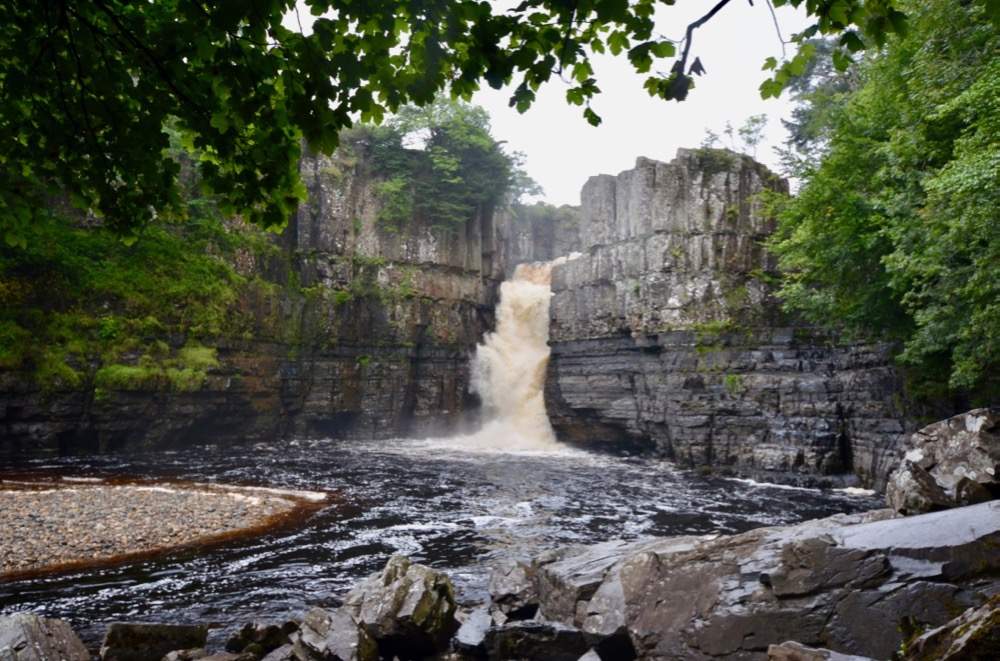
Perhaps the region's most famous rock is the Whin Sill, a vast sheet of dolerite created around 295 million years ago when molten magma cooled beneath the Earth's surface. Today it stretches beneath approximately 4,500 square kilometres of northern England and forms many of the dramatic crags seen across Northumberland and County Durham.
Its hard surface made it the perfect foundation for Hadrian's Wall, while Bamburgh Castle, Dunstanburgh Castle and Holy Island all sit proudly on Whin Sill rock formations. Without this remarkable geological feature, many of the North East's most photographed landscapes would look completely different.
Sandstone built towns and cities.
Much of Newcastle's historic architecture owes its appearance to sandstone, a sedimentary rock formed from compressed grains of sand over millions of years.
Sandstone became one of Britain's most important building materials because it is relatively easy to shape while remaining extremely durable. Across Newcastle city centre, countless historic buildings still display the warm colours and detailed craftsmanship made possible by locally quarried stone.
The Carboniferous sandstones that dominate much of Northumberland were formed around 320 million years ago when vast river systems flowed across tropical landscapes that once covered the region.
Limestone tells an ancient story.
Limestone is another common North East rock that preserves evidence of an entirely different world. Formed from the remains of marine organisms, much of the limestone beneath Northumberland developed when the area lay beneath warm tropical seas.
Many limestone layers still contain fossilised shells, corals and other sea creatures, providing geologists with an extraordinary glimpse into life hundreds of millions of years ago.
These rocks have also played an important economic role through cement production, agriculture and construction, making limestone one of Britain's most valuable natural resources.
Rocks continue supporting modern life.
The North East's rocks are not simply relics of the past. Whinstone remains an important source of crushed aggregate used in road construction because of its exceptional strength. The Whin Sill averages between 25 and 30 metres thick and reaches around 70 metres in some locations, making it an important long-term mineral resource for the region.
Beyond construction, the area's unique geology supports wildlife, tourism, outdoor recreation and scientific research. Walkers, climbers and photographers visit Northumberland National Park throughout the year to experience landscapes created entirely by ancient geological forces.
National Rock Day is therefore more than a celebration of stones. It is a reminder that the North East's history, economy and identity have all been shaped by the remarkable rocks beneath our feet.
Share your favourite geological North East locations below.
Have you visited any of the North East's incredible rock formations or discovered fossils while exploring?
Local News
Discover the North East's Hidden Geology On National Rock Day
Advertisement





Comments (0)
You must be logged in to post comments.
Don't have an account? Register here
No comments yet. Be the first to share your thoughts!