
Dog owners across Newcastle upon Tyne and the wider UK are reacting with concern after reports emerged that dozens of popular breeds could one day face restrictions under proposals linked to animal rights campaigns focused on breeding practices.
The debate has intensified online after PETA published a list of dog breeds it believes should no longer be bred due to health concerns caused by selective breeding. The proposals are not currently law in Britain, but the organisation’s stance has sparked heated discussion among pet owners, breeders, veterinarians, and animal welfare campaigners.
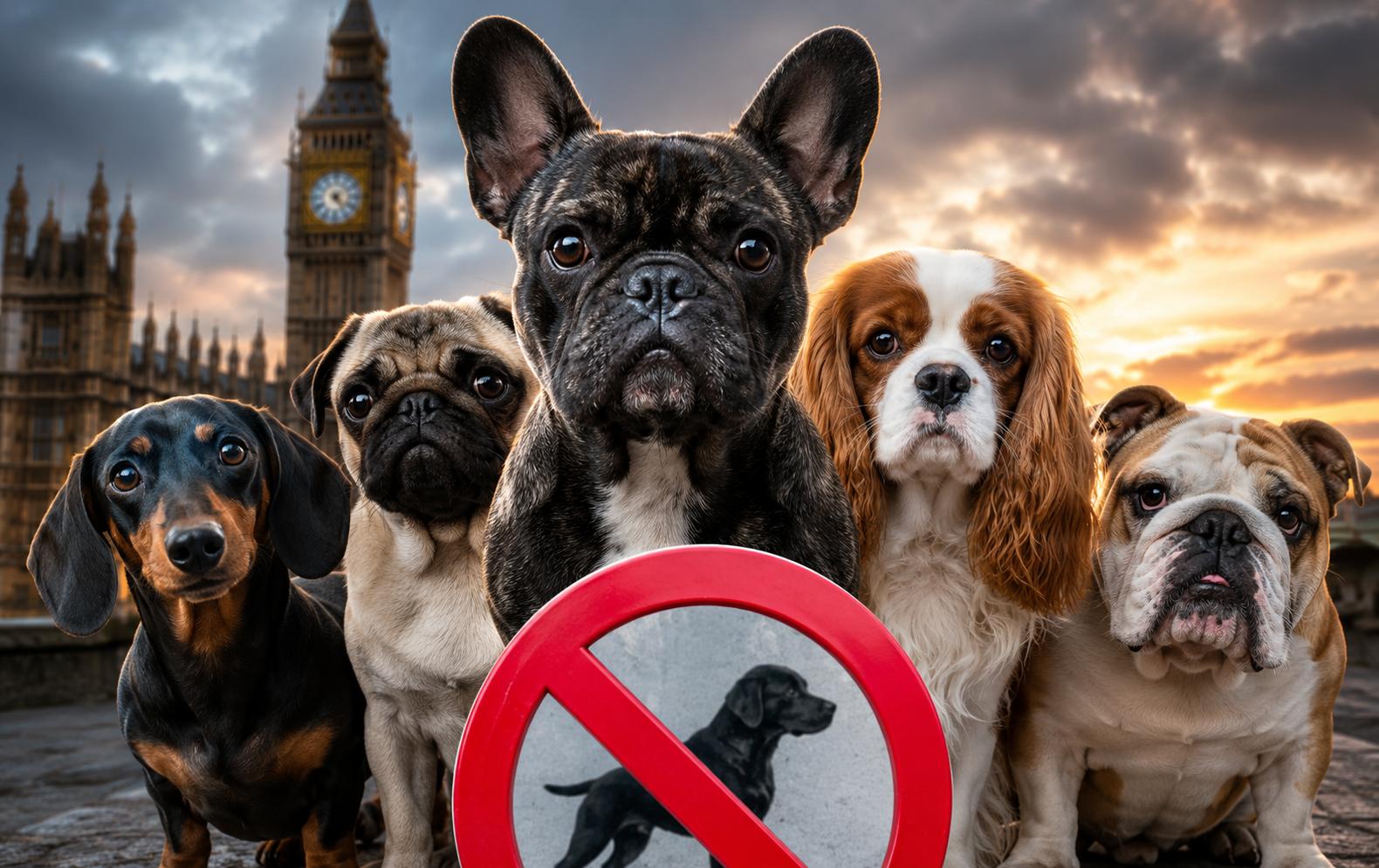
Among the breeds included are some of the country’s most recognisable family pets, including dachshunds, pugs, French bulldogs, shih tzus, corgis, and Cavalier King Charles spaniels.
The issue has become particularly controversial because many dog lovers fear future governments could eventually consider tighter regulations around breeding or ownership if pressure from campaign groups continues to grow.
Current UK laws on banned dog breeds.
At present, five types of dogs are banned under UK legislation. These are the Pit Bull Terrier, Japanese Tosa, Dogo Argentino, Fila Brasileiro, and XL Bully.
Under the Dangerous Dogs Act, ownership of these dogs is heavily restricted and, in many cases, illegal unless strict exemption requirements are met.
Police and courts determine whether a dog is banned based on physical characteristics rather than official breed registration. That means a dog can still be considered illegal even if paperwork lists it as another breed.
People found owning prohibited dogs can face severe consequences including confiscation of the animal, criminal prosecution, fines, and imprisonment.
Authorities can seize a banned dog even if it has never displayed aggression or attacked another animal or person.
The introduction of XL Bully restrictions across England and Wales has already caused significant debate in Newcastle upon Tyne and across the North East, with rescue centres and owners warning that some dogs have been abandoned due to uncertainty over the law.
The 67 breeds highlighted by PETA.
PETA has argued that many pedigree dogs suffer serious health conditions caused by selective breeding for appearance rather than welfare.
The organisation claims flat-faced breeds and dogs bred with exaggerated body features can experience breathing difficulties, spinal disorders, mobility problems, eye conditions, and shortened lifespans.
Among the breeds listed by PETA are:
French Bulldog
Dachshund
Pug
Shih Tzu
Great Dane
St Bernard
Cavalier King Charles Spaniel
Pembroke Welsh Corgi
Chihuahua
Shar Pei
Bulldog
Basset Hound
Mastiff
Tibetan Mastiff
Newfoundland
Staffordshire Terrier
Shetland Sheepdog
In total, around 67 breeds appear on the campaign list.
PETA says it wants to discourage further breeding of dogs with inherited health problems rather than remove existing pets from owners. Under the proposals outlined online, current dogs would remain legal and could still be rehomed through rescue organisations.
However, critics argue that limiting breeding could eventually reduce the availability of many beloved family pets in the UK.
Newcastle dog owners voice concerns.
The proposals have sparked strong reactions among dog owners in Newcastle upon Tyne, Gateshead, Sunderland, and across the North East.
Many owners believe responsible breeding practices should be improved rather than introducing bans or restrictions affecting entire breeds.
Others argue there should be stricter oversight of breeders who prioritise profit over animal welfare.
Several Newcastle dog owners speaking online said they were worried public perception of certain breeds could worsen if more campaigns push for restrictions.
French bulldog owners in particular have defended the breed, saying many dogs live healthy lives when properly cared for and bred responsibly.
Meanwhile, some veterinarians have supported aspects of the discussion, pointing to rising concerns around breathing issues in flat-faced breeds such as pugs and bulldogs.
Growing scrutiny over PETA animal shelters.
The debate has also led to renewed scrutiny of PETA itself, particularly regarding criticism surrounding animal shelters connected to the organisation in the United States.
PETA has faced controversy for years over euthanasia rates at shelters linked to its operations. Critics have repeatedly argued that some surrendered animals are put down rather than rehomed, leading to accusations that the organisation does not operate traditional no-kill shelters.
Reports published in the US have highlighted cases where animals surrendered to facilities associated with PETA were euthanised after relatively short periods if homes could not be found.
Animal welfare experts note that no-kill shelters generally aim to save and rehome the overwhelming majority of animals in their care, whereas other shelters may euthanise animals due to illness, behavioural concerns, overcrowding, or limited resources.
PETA has defended its position in previous statements, arguing that some animals received by shelters are suffering, dangerous, terminally ill, or unsuitable for rehoming.
The organisation has also claimed it accepts animals that other shelters may refuse.
Nevertheless, criticism continues online, with opponents arguing the charity should not advocate against breeding while facing ongoing scrutiny over euthanasia statistics.
The issue has become part of wider discussions among UK pet owners who question whether organisations involved in animal welfare campaigns should face greater transparency over shelter practices.
Why adoption is becoming more popular in Newcastle.
As debate around dog breeding continues, many animal welfare campaigners are encouraging families looking for a pet to consider adoption before purchasing from breeders.
Across Newcastle upon Tyne and the North East, local shelters continue to care for dogs needing permanent homes, with many experts saying adoption can be one of the best ways to find a suitable family pet.
Reputable rescue centres carefully assess dogs before rehoming them and work closely with potential owners to match animals with the right households and lifestyles.
One organisation regularly praised by local pet owners is Newcastle Dog and Cat Shelter (https://www.dogandcatshelter.com/dogs/), which has helped rehome thousands of animals across the region over the years.
The shelter supports abandoned and unwanted pets while promoting responsible ownership throughout Newcastle and surrounding areas.
Animal welfare advocates say adopting from trusted local shelters can also help reduce pressure on rescue services already dealing with rising numbers of abandoned pets following changes in the cost of living and stricter dog laws.
Experts advise families to research breeds carefully, understand exercise and training requirements, and always avoid illegal puppy farms or unlicensed breeders.
Many rescue dogs can make loyal and loving companions, with shelters often able to provide detailed behavioural assessments and support after adoption.
Could these breeds actually become banned in Britain?
At present, there are no confirmed government plans to ban the 67 breeds highlighted by PETA.
Legal experts say any major expansion of the Dangerous Dogs Act or breeding legislation would likely involve lengthy consultations, parliamentary debate, and significant opposition from breeders, veterinary groups, and dog owners.
However, campaigners believe pressure around animal welfare standards could eventually lead to tighter breeding regulations in the future.
Some experts predict the UK could instead introduce stricter health testing requirements, licensing rules, or breeding standards rather than outright bans.
Animal charities have increasingly warned against purchasing dogs from irresponsible breeders or puppy farms, particularly where health issues are common within certain breeds.
The Kennel Club has also supported measures aimed at improving welfare standards without banning breeds entirely.
Debate continues across Newcastle and the UK.
The discussion surrounding dog welfare, breeding ethics, and dangerous dog laws shows no sign of slowing down.
Across Newcastle upon Tyne and the wider North East, pet owners remain divided between supporting stronger welfare protections and opposing any measures they believe unfairly target popular family dogs.
With emotions running high on both sides, the future of dog breeding laws in Britain is likely to remain a major talking point for years to come.
Would you adopt a rescue dog from a Newcastle upon Tyne shelter instead of buying from a breeder? Share your thoughts in the comments and join the debate with fellow North East pet owners.
Lifestyle News
Dog Ban Debate Grows as 67 Breeds Face Possible UK Restrictions
Advertisement




Comments (0)
You must be logged in to post comments.
Don't have an account? Register here
No comments yet. Be the first to share your thoughts!