
Newcastle has long been recognised as one of Britain's great music cities, but while venues such as the Utilita Arena, NX Newcastle and St James' Park continue attracting global stars, many of the places that built the city's reputation have disappeared altogether.
Long before stadium concerts became the norm, Newcastle's clubs and ballrooms gave music fans the chance to witness artists who would later become household names. From The Rolling Stones and David Bowie to Nirvana and Oasis, some of the world's biggest performers appeared on stages that no longer exist or have dramatically changed over the years.
These forgotten venues were more than just places to watch live music. They helped establish Newcastle as a must-play stop on the UK's touring circuit and played a major role in shaping the North East's musical identity.
Here are five venues whose influence can still be felt today.
Club A'Gogo became the birthplace of Newcastle's modern music scene.
Few venues hold quite the same legendary status as Club A'Gogo.
Opening on Percy Street in 1962, the club quickly became the beating heart of Newcastle's rhythm and blues movement. During its short but hugely influential six-year lifespan, it welcomed artists including The Rolling Stones, Pink Floyd, The Who, Cream, The Yardbirds, Jeff Beck and John Lee Hooker before many reached the peak of their fame.
The venue also became synonymous with The Animals, who regularly performed there before going on to international success with House of the Rising Sun. Even Jimi Hendrix began establishing his UK reputation through performances connected with the club's vibrant music scene.
Club A'Gogo closed in 1968 before eventually disappearing during the redevelopment of the city centre, but its legacy remains so significant that Newcastle City Council unveiled a commemorative plaque in 2022 recognising its contribution to British music history.
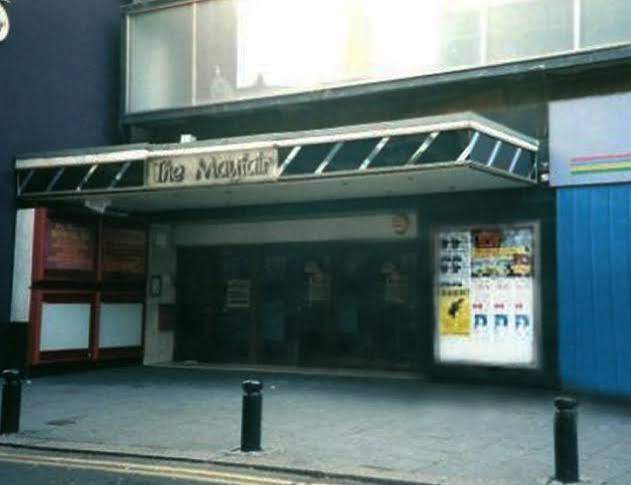
The Mayfair Ballroom introduced generations to rock legends.
For almost four decades, The Mayfair Ballroom on Newgate Street became one of Britain's most respected live music venues.
Originally opening in September 1961 with space for around 1,500 people, it evolved from a traditional ballroom into one of the country's most important rock venues.
Its list of performers reads like a Rock and Roll Hall of Fame induction ceremony. Queen, David Bowie, U2, Pink Floyd, AC-DC, Metallica, Nirvana, Fleetwood Mac, The Police, Iron Maiden and The Clash all appeared on its stage.
Perhaps its greatest claim to fame came on 4 October 1968, when Led Zeppelin performed their first ever UK concert there while still billed as "The Yardbirds featuring Jimmy Page". It is one of the most significant dates in British rock history, yet it happened in Newcastle.
The Mayfair closed in 1999 before being demolished to make way for The Gate development, leaving generations of Geordie music fans convinced the city lost one of its greatest cultural landmarks.
Riverside helped define alternative music in the North East.
If The Mayfair belonged to classic rock, Riverside belonged to alternative music.
Opening on Melbourne Street in 1985 as a co-operative run by local music enthusiasts, Riverside quickly became one of Britain's most respected independent venues. It regularly featured in NME's lists of the country's best live music venues.
Artists including Nirvana, Oasis, David Bowie and Gil Scott Heron all played there, while countless North East bands received opportunities to perform alongside internationally recognised acts.
Unlike many commercial venues, Riverside developed a reputation for taking chances on emerging artists long before they achieved mainstream success. That willingness to champion new music helped create an atmosphere that many Newcastle gig-goers still describe as impossible to replicate.
Its cultural importance was formally recognised in 2024 when the former venue received a Newcastle City Council blue plaque.
The Cooperage gave local bands a home.
Nestled on The Close near Newcastle's Quayside, The Cooperage was never the biggest venue in the city, but it became one of the most loved.
Opening in 1975 inside a medieval timber-framed building, the venue combined bars, restaurants and an intimate live music room where audiences stood just feet from performers. Thursday nights became legendary for showcasing local bands, while former Club A'Gogo favourites The Junco Partners were among its earliest resident acts.
Its relaxed atmosphere attracted musicians and fans who preferred authenticity over commercial polish. Unlike larger venues, The Cooperage became a place where local artists could build loyal followings before moving on to bigger stages.
After more than 30 years, noise complaints eventually brought the venue's story to an end in 2009.
Downbeat Club helped launch Newcastle talent.
Overshadowed by larger venues, the Downbeat Club in Carliol Square nevertheless played an important role during Newcastle's booming 1960s music scene.
Opening in 1965, it became known for nurturing local talent and hosting up-and-coming rhythm and blues acts at a time when live music was becoming central to youth culture across Britain.
While it never attracted the same international headlines as Club A'Gogo, venues like the Downbeat Club formed the backbone of Newcastle's live music circuit. They provided essential opportunities for local musicians to perform regularly, develop audiences and refine their sound before moving on to larger venues.
Many historians argue that without smaller clubs like these, Newcastle would never have established the vibrant music ecosystem that later produced artists including Sting, Mark Knopfler and, more recently, Sam Fender.
Their influence still echoes across Newcastle.
Although these venues have disappeared or been transformed, their impact has never faded.
Between them, they hosted hundreds of concerts, introduced thousands of North East fans to future superstars and helped place Newcastle firmly on Britain's live music map. Their stages welcomed artists who would collectively sell hundreds of millions of records and win dozens of Grammy Awards, while inspiring generations of local musicians to believe international success was possible.
Today's audiences may fill St James' Park, NX Newcastle and the Utilita Arena, but much of that success can be traced back to these pioneering venues. They proved that Newcastle audiences embraced new music, supported emerging talent and created an atmosphere that touring artists remembered long after leaving Tyneside.
Their buildings may be gone, but their place in Newcastle's musical history remains impossible to replace.
Share your memories below!
Which forgotten Newcastle venue do you remember most fondly?
Local News
Five Lost Venues Every Music Loving Geordie Should Know
Advertisement


Comments (0)
You must be logged in to post comments.
Don't have an account? Register here
No comments yet. Be the first to share your thoughts!