
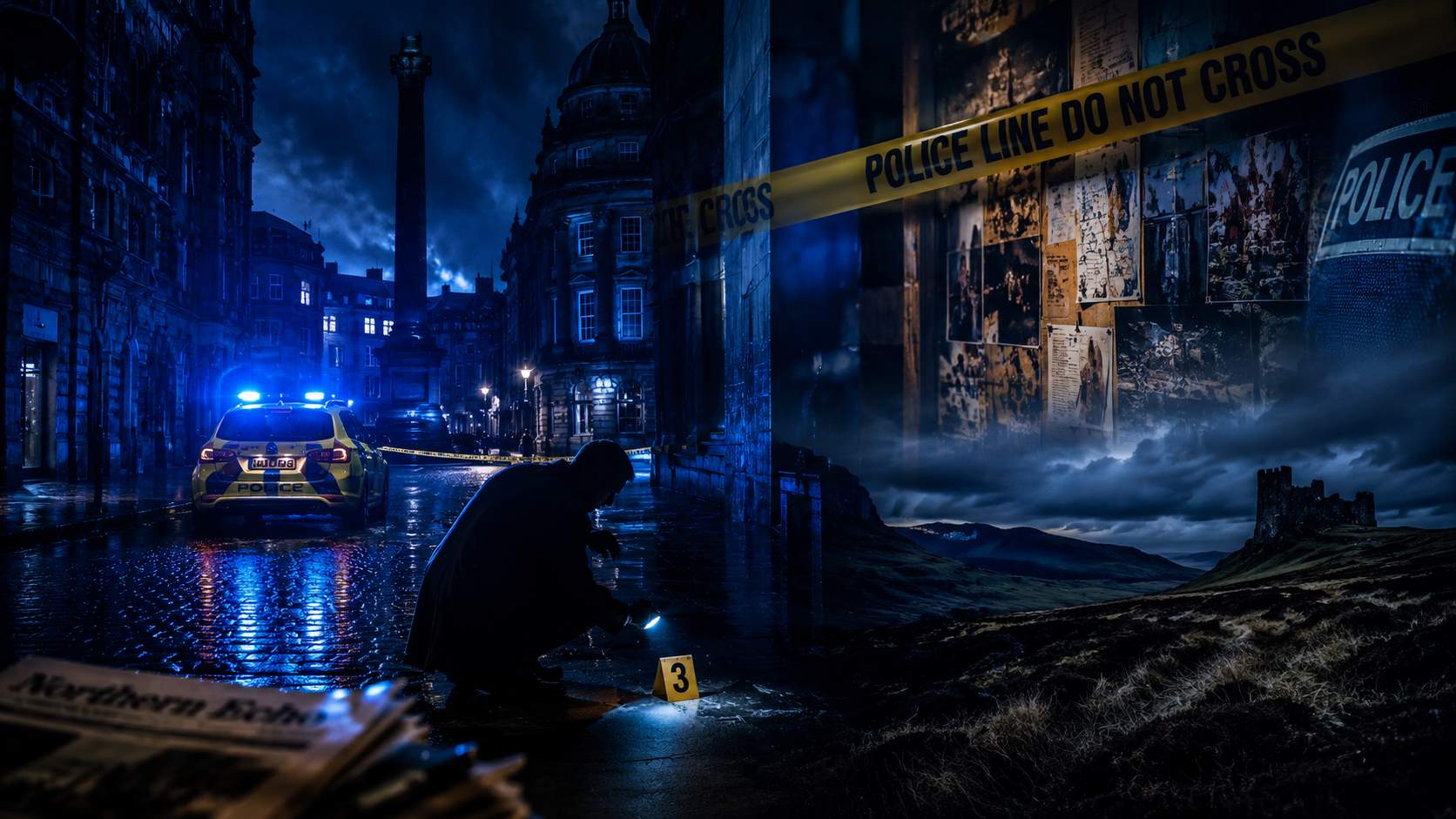
The North East has a proud history stretching back thousands of years, but like every region, it has also witnessed crimes that shocked communities and dominated national headlines. Some became turning points in policing, while others changed the way the public viewed crime, media coverage and public safety.
Although these cases remain unforgettable, it is worth remembering that serious violent crime remains relatively rare. Across England and Wales, police recorded 503 homicides during the year ending December 2025, representing the lowest annual figure for decades, according to the Office for National Statistics.
Here are five criminal cases that left a lasting mark on Newcastle and the wider North East.
1. The Raoul Moat manhunt.
Few criminal investigations have captured public attention quite like the Raoul Moat case during the summer of 2010.
After being released from prison, Moat shot his former partner, murdered her new partner Chris Brown and seriously injured Northumbria Police officer David Rathband before disappearing into the Northumberland countryside.
What followed was one of the largest manhunts in British policing history. Hundreds of officers, specialist firearms teams and military support searched for Moat over several days before he was located in Rothbury. The standoff ended after he took his own life.
The case prompted major discussions about police resources, firearms response and offender risk management. It also led to widespread debate over media reporting and the role social media played during major police operations.
2. The murder of Jill Dando's killer investigation links.
Although television presenter Jill Dando was killed in London, one of Britain's most controversial criminal investigations had strong North East connections.
Barry George, who had family links to the region, was convicted in 2001 before the conviction was later quashed following fresh forensic evidence. He was acquitted at a retrial in 2008.
The case became one of the UK's most discussed miscarriages of justice debates and highlighted the growing importance of forensic science in criminal investigations.
It also helped shape conversations around appeals, evidence standards and the responsibility of investigators when dealing with nationally significant cases.
3. The murder of PC David Rathband.
Although linked to the Raoul Moat shootings, the story of PC David Rathband deserves separate recognition because of its lasting impact.
After being shot and blinded while sitting in his patrol car, Rathband became an inspirational figure, campaigning for injured emergency workers and raising awareness about disability.
Tragically, he died in 2012.
His case highlighted the dangers faced daily by frontline officers and led to renewed conversations about officer welfare, trauma support and long-term rehabilitation following serious injuries.
Police officers across England and Wales continue to face thousands of assaults every year, reinforcing the risks involved in frontline policing.
4. The Newcastle United footballer kidnapping plot.
In 2010, Newcastle United striker Nile Ranger became the target of an attempted kidnapping linked to organised criminal activity.
The case involved a group attempting to extort money after luring the footballer into a meeting. Several offenders were later convicted following a detailed police investigation.
Although unusual, the case demonstrated how organised crime groups sometimes target high-profile individuals through intimidation and extortion rather than conventional robbery.
It also highlighted the increasingly sophisticated methods used by organised criminal networks operating across the UK.
5. The Peterlee bank siege.
One of the North East's most dramatic armed incidents unfolded in Peterlee during the early 1990s when an attempted robbery escalated into a lengthy hostage situation.
Specialist negotiators, armed officers and emergency services surrounded the scene while national media closely followed developments.
Thankfully, the incident ended without the large-scale loss of life many had feared, but it reinforced the importance of specialist firearms units and crisis negotiation teams.
Modern police training now places significant emphasis on negotiation before force wherever possible, reflecting lessons learned from incidents like this.
Why these cases still matter.
Many of these crimes remain familiar because they changed more than individual lives. They influenced policing, criminal justice procedures and public awareness.
Today, technology has transformed criminal investigations. DNA analysis, digital forensics, mobile phone evidence and extensive CCTV coverage have dramatically improved detectives' ability to solve serious offences compared with previous decades.
At the same time, overall homicide levels across England and Wales have fallen. The latest Office for National Statistics figures show homicide has continued its long-term decline, with 503 recorded offences in the year ending December 2025, while the homicide rate fell to 8.1 victims per million people.
Although these crimes remain among the most shocking in North East history, they are remembered because they were exceptional events rather than everyday occurrences. Their legacy continues to influence policing, public safety and criminal investigations across the region today.
Join the conversation.
Which North East criminal case do you think had the biggest impact on the region?
Crime News
Newcastle Crimes That Made National Headlines
Advertisement



Comments (0)
You must be logged in to post comments.
Don't have an account? Register here
No comments yet. Be the first to share your thoughts!