
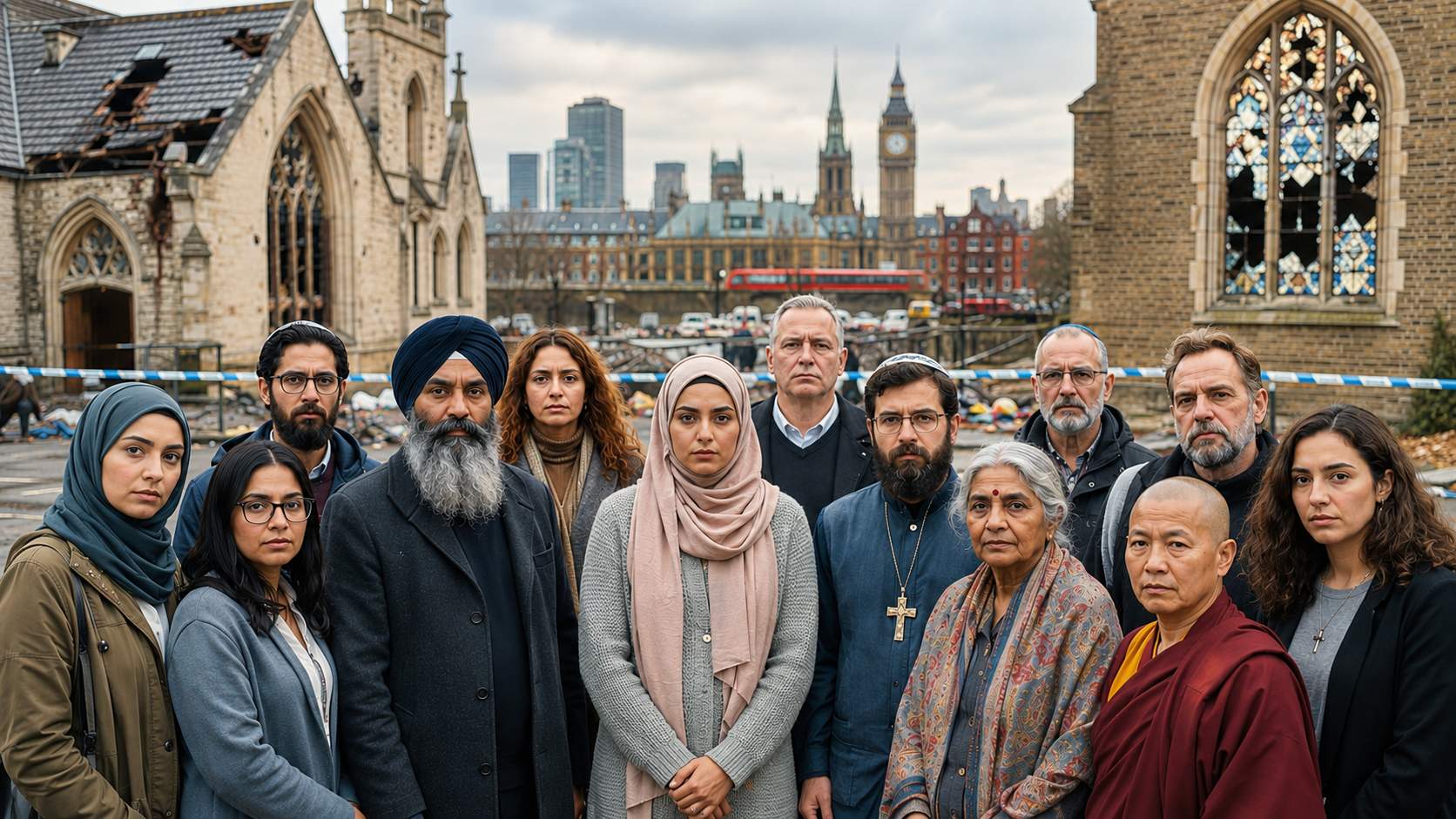
Religious hate crime has become one of the fastest-growing concerns facing communities across England and Wales, with official figures showing offences have reached their highest level on record.
While the overwhelming majority of people live peacefully alongside neighbours of different faiths, police and community organisations warn that prejudice linked to religion has become increasingly visible in recent years. From verbal abuse in public places to online threats and attacks on places of worship, religious hatred continues to affect thousands of people every year.
The latest Home Office figures show police recorded 10,065 religious hate crimes in England and Wales during the year ending March 2025. Excluding the Metropolitan Police from year-on-year comparisons because of changes to its crime recording system, that represented a 3 per cent increase on the previous year.
Although religious hate crime accounts for a smaller proportion of offences than race hate crime, experts warn its impact extends far beyond individual victims, affecting families, communities and social cohesion.
A problem that has evolved over time.
Religious discrimination has existed for centuries, but hate crime linked specifically to religion became a greater focus for police following the introduction of new legislation during the early 2000s and increased awareness after major international terrorist attacks.
Events including the September 11 attacks in 2001, the London bombings in 2005 and more recent conflicts overseas have all influenced community tensions at different points over the past two decades.
In many cases, spikes in religious hate crime have followed high-profile incidents that receive widespread media attention, even when those targeted have no connection to the events themselves.
Researchers say social media has also transformed the spread of misinformation, allowing rumours and inflammatory content to reach large audiences within minutes.
Who is being targeted.
Home Office figures show Muslims remained the largest group targeted by religious hate crime during the latest reporting year, accounting for around 45 per cent of offences where the victim's religion was known.
Jewish communities accounted for approximately 29 per cent of recorded offences, while smaller numbers involved Christians, Sikhs, Hindus, Buddhists and people from other faiths.
Although the overall number of offences affecting Muslims was higher, Jewish people experienced the highest rate relative to population size, highlighting how different communities can be affected in different ways.
Community leaders have repeatedly stressed that no religion should become the target of abuse because of the actions of individuals or events taking place elsewhere in the world.
Why are offences increasing.
There is no single reason behind the increase in religious hate crime.
Police recording has improved over the past decade, encouraging more victims to report incidents that may previously have gone unrecorded. Greater public awareness has also increased confidence in recognising and reporting hate crime.
However, official statistics also show that major national and international events can trigger sharp increases.
The Home Office reported that offences targeting Muslims increased by 19 per cent during the latest reporting year. The highest monthly total of racially or religiously aggravated offences was recorded during August 2024 following the Southport murders and the disorder that spread to several towns and cities across England.
Police, local authorities and community organisations warned that misinformation circulating online contributed to hostility towards minority communities during that period.
These figures demonstrate how quickly tensions can escalate when inaccurate information spreads through social media and online platforms.
How religious hate crime manifests.
Many people associate hate crime with physical violence, but the reality is often far broader.
Victims regularly report being shouted at because of their faith, receiving threatening messages online, having religious clothing mocked or facing abuse while travelling on public transport.
Others describe damage to places of worship, offensive graffiti, threatening letters or discrimination in workplaces and education.
Some incidents involve people being targeted simply because they are perceived to belong to a particular religion, even when assumptions about their faith are incorrect.
For many victims, repeated verbal abuse and intimidation can be just as damaging as a single physical attack, leaving people feeling isolated within communities they have lived in for years.
The North East is not immune.
Although the North East generally records fewer hate crimes than larger metropolitan areas, community organisations have continued working to improve reporting and support for victims.
Research carried out by Newcastle University alongside the North East Anti-Racism Coalition found many respondents believed discrimination remained an everyday issue across the region, while concerns about racism and religious prejudice frequently overlapped.
Newcastle has become increasingly diverse over recent decades, welcoming students, professionals and families from around the world.
That diversity has enriched the city culturally and economically, but local leaders say it also reinforces the importance of challenging prejudice before it becomes normalised.
Northumbria Police and Newcastle City Council continue encouraging anyone who experiences or witnesses hate crime to report incidents, even where victims are unsure whether a criminal offence has been committed.
The wider impact on communities.
Religious hate crime rarely affects only one person.
Families may become anxious about attending places of worship. Parents may worry about children wearing religious clothing to school. Community organisations can face increased security costs, while local businesses may see customers avoiding certain areas after high-profile incidents.
The emotional consequences can also be significant.
According to the Home Office, victims of hate crime are considerably more likely than victims of crime generally to report being seriously affected emotionally by what happened to them.
That lasting impact helps explain why tackling hate crime remains a priority for police forces and community organisations across the country.
Building stronger communities.
Religious differences have long formed part of Britain's identity, and the overwhelming majority of people from different faiths continue to live peacefully alongside one another.
Maintaining that trust requires more than responding after offences have occurred. Education, early intervention, responsible reporting, community engagement and challenging misinformation all play important roles in preventing hatred from taking hold.
As England and Wales become increasingly diverse, protecting people from discrimination because of their religion is not simply about enforcing the law. It is about ensuring every community feels safe to practise its faith without fear of intimidation, abuse or exclusion.
The latest figures show religious hate crime remains a serious issue that cannot be ignored. Whether the next few years bring improvement will depend not only on policing, but on the willingness of communities across the country, including Newcastle and the wider North East, to reject hatred in all its forms and continue building understanding between people of different faiths.
Share your thoughts.
Why do you think religious hate crime is increasing?
Crime News
Religious Hate Crime In England & Wales Reaches Record Highs
Advertisement


Comments (0)
You must be logged in to post comments.
Don't have an account? Register here
No comments yet. Be the first to share your thoughts!