
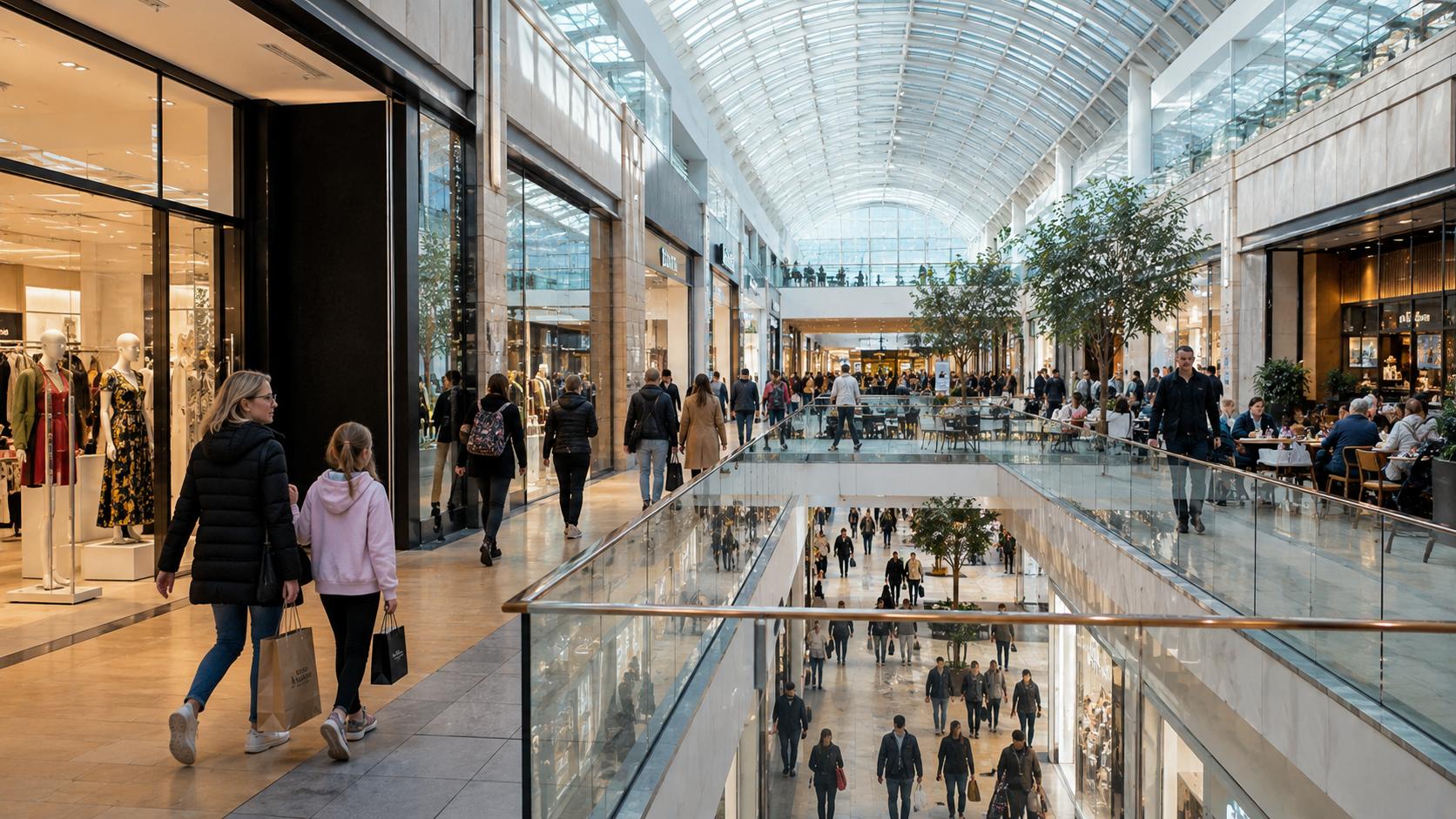
When the Metrocentre opened in Gateshead in 1986, nothing comparable existed in Britain. Four decades later it remains one of the largest shopping centres in Europe and a fixture of North East life.
Its story is also the story of a fundamental shift in where people in the region shop, and of the pressures now reshaping that model again.
Here is how it happened.
It was built on industrial waste ground.
The site was ash dumping ground for Dunston power station, low-lying land beside the Tyne considered largely useless for development.
John Hall, the Newcastle developer later closely associated with Newcastle United, acquired the land and pursued the project when few believed a shopping centre of that scale could work outside London.
The site's designation within an enterprise zone provided financial advantages that made development viable, and construction proceeded through the mid-1980s.
The scale was unprecedented.
The centre opened in phases from 1986, eventually offering around two million square feet of retail space and several hundred shops.
Crucially, it combined shopping with leisure from the outset, including cinema, bowling and, in the early years, an indoor theme park, at a time when British shopping centres were purely retail.
Free parking on a very large scale, direct access from the A1 and later a dedicated railway station and bus interchange made it accessible to a catchment extending well beyond Tyneside.
It changed regional shopping habits.
Before 1986, significant comparison shopping in the region meant Newcastle city centre. The Metrocentre created an alternative that was easier to reach by car and free to park at.
The effect on surrounding town centres was substantial, and Gateshead's own town centre in particular struggled to compete with a development inside its own borough.
Newcastle city centre responded over subsequent decades with investment in Eldon Square, Grainger Town and the Quayside, and the two have coexisted since, serving somewhat different purposes.
The model has come under pressure.
Out-of-town retail faces the same pressures as the high street. Online shopping has reduced comparison retail footfall, and several anchor department store chains that occupied large units nationally have collapsed or contracted.
The Metrocentre has not been immune, and its ownership has changed following financial difficulties affecting its previous owners, a pattern repeated across large UK shopping centres.
Vacancy in large anchor units is the central challenge for centres of this type, since the space is difficult to relet to conventional retailers.
Leisure has become the answer.
The response across the sector has been to increase the proportion of space devoted to leisure, food and experience-based operators rather than pure retail.
Restaurants, cinemas, gyms, trampoline parks, indoor golf, soft play and entertainment venues now occupy space that would previously have been shops.
The logic is that these uses cannot be replicated online, and they generate longer dwell times and repeat visits. The Metrocentre has followed that pattern, as have retail parks across the region.
The wider out-of-town picture.
The North East has a substantial out-of-town retail and industrial offer beyond the Metrocentre.
The Team Valley Trading Estate in Gateshead, established in the 1930s as a government response to unemployment in the region, remains one of the largest business parks in the country and combines industrial, distribution and retail uses.
Retail parks at Silverlink, Kingston Park, Newcastle's Great Park, Sunderland and Teesside serve local catchments, and the growth of discount operators and food retail has kept many of them trading strongly while comparison retail has declined.
Planning policy shapes the balance.
National planning policy has for many years applied a sequential test, directing retail development towards town centres in preference to edge-of-centre and then out-of-centre sites.
That framework was introduced partly in response to the effects of developments such as the Metrocentre on existing centres.
Local plans across the region set out retail hierarchies and policies on where different scales of development are appropriate, and applications for large out-of-centre retail are assessed against impact on existing centres.
What it means for businesses.
For retailers, the choice between a city centre unit, a shopping centre and a retail park involves different rent, service charge, footfall profile and customer behaviour.
Shopping centre leases carry service charges that can be substantial, and turnover-based rents have become more common as landlords have adapted to a weaker letting market.
For independents, retail parks have historically been difficult to access due to unit sizes and covenant requirements, though some centres have introduced smaller units and pop-up space to broaden their tenant mix.
The Metrocentre's next phase.
Large centres nationally are exploring redevelopment options including residential, offices, healthcare and logistics on surplus land.
Whether that happens at the Metrocentre depends on ownership, viability and planning, and no comprehensive scheme has been delivered to date.
What is clear is that a development conceived for a 1980s shopping economy is operating in a very different market, and its adaptation matters to Gateshead's rate base and to thousands of jobs.
Share your thoughts.
Do you shop at the Metrocentre more or less than you did five years ago?
Business News
The Metrocentre and Out-of-Town Retail in the North East
Built on power station ash beds in the 1980s, the Metrocentre changed shopping across the North East and is now adapting to a very different market.
Advertisement


Comments (0)
You must be logged in to post comments.
Don't have an account? Register here
No comments yet. Be the first to share your thoughts!