
A major undercover investigation has uncovered claims that people smugglers organising illegal Channel crossings are using UK-registered businesses to process payments from migrants attempting to enter Britain by small boat.
The investigation, carried out over three months, revealed how cash deposits and electronic bank transfers linked to crossings were allegedly routed through companies operating openly in the UK, including a wholesale business based in Newcastle upon Tyne.
The findings have raised fresh concerns about the sophistication of migrant smuggling gangs and the apparent ease with which financial transactions connected to illegal crossings can move through legitimate business channels.
Security experts say the operation points to an increasingly confident criminal network that appears willing to operate in plain sight despite repeated government promises to crack down on organised immigration crime.
Undercover Reporter Taken Inside Migrant Camp Near Dunkirk.
The investigation began in northern France, where an undercover researcher posing as a migrant seeking passage to the UK visited a migrant encampment near Dunkirk commonly referred to as “the jungle”.
The camp, situated beside railway tracks and surrounded by muddy scrubland, has become a temporary base for many migrants preparing to attempt dangerous Channel crossings.
Conditions inside the camp were described as bleak. Large areas had flooded following weeks of heavy rain, leaving tents partially submerged and many migrants living in freezing and unsanitary conditions.
Within minutes of arriving, the undercover researcher was approached by men believed to be working for rival smuggling gangs. Two separate smugglers eventually made contact and explained how crossings could be arranged.
One smuggler, identifying himself as “Zia”, reportedly told the researcher that payments for crossings could be made in London through money exchange businesses.
According to the undercover account, Zia explained that migrants or relatives could deposit money in the UK and that smugglers would only receive the funds after the migrants successfully reached Britain.
“In London, they don’t give you a receipt. They call me to say they’ve got the money,” the smuggler allegedly said.
The crossing itself was referred to as “the game”, a term reportedly used by smugglers to describe illegal small-boat journeys across the English Channel.
Woolwich Phone Shop Secretly Filmed Discussing Crossing Payments.
The investigation later shifted back to the UK, where reporters visited a mobile phone repair and accessories shop in Woolwich, south-east London.
The undercover researcher posed as a family member based in Britain who was arranging payment for relatives attempting to cross from France.
During secretly recorded conversations, shop workers allegedly explained how thousands of pounds in cash could be deposited and later transferred to smugglers once migrants safely arrived in the UK.
One worker reportedly told the researcher that around £2,700 would be required for two people to make the crossing.
“If your people do not cross, if he tells me to return your money back to you, I’ll do it,” the worker allegedly said.
However, the same individual also acknowledged the dangers involved in small-boat crossings, warning that no journey could ever be guaranteed safe.
“You can’t count on boats,” he reportedly added. “You never know. God forbid the boat sinks.”
No money was ultimately handed over during the operation.
When confronted later by reporters, a worker at the shop denied any involvement in moving money connected to people smuggling and insisted the business was “only a phone shop”.
Newcastle Upon Tyne Business Named in Investigation.
One of the most striking elements of the investigation involved the alleged use of a wholesale company registered in Newcastle upon Tyne.
The smuggler known as “Ahmad” reportedly provided undercover reporters with bank account details linked to the Newcastle business and claimed electronic transfers connected to migrant crossings could be sent there.
Investigators later verified that the banking details supplied matched records associated with the company.
The Newcastle business owner has strongly denied any wrongdoing.
In a statement responding to the allegations, the company said it “strongly rejects any suggestion that we have knowingly or negligently enabled criminal activity”.
The business also stated it would fully cooperate with any investigation carried out by authorities.
The connection to Newcastle upon Tyne has intensified local interest in the story, particularly given the city’s growing role as a commercial and logistics hub in northern England.
While there is currently no evidence suggesting company directors themselves were directly involved in organising crossings, investigators are examining whether business accounts may have been exploited by third parties.
Cambridgeshire Car Wash and European Businesses Also Identified.
Alongside the Newcastle company, investigators were also given banking information linked to a car wash business based in Cambridgeshire.
The smuggler allegedly claimed that payments connected to crossings could also be transferred through that account.
The car wash business did not respond to requests for comment.
Beyond Britain, the investigation identified additional businesses in mainland Europe allegedly connected to the payment system.
These reportedly included a car wash in Antwerp, Belgium, and a restaurant in Paris, France, where cash payments could be made by migrants or their relatives.
The smuggler also supplied the names and banking details of individuals located across Europe who were said to be capable of receiving payments linked to crossings.
Experts say the findings suggest smugglers are increasingly relying on fragmented and international financial networks that make tracing money far more difficult for law enforcement agencies.
Criminal Finance Experts Warn Smugglers Are Becoming More Confident.
Tom Keatinge, director of the Centre for Finance and Security at the Royal United Services Institute, described the findings as deeply concerning.
According to Keatinge, the apparent willingness of smugglers to use openly registered businesses in Britain suggests criminal networks no longer fear detection to the same extent.
“It is a concern that people feel sufficiently confident they can operate out in the open,” he said.
Keatinge noted that criminal gangs traditionally rely on underground cash systems or informal transfer methods to avoid scrutiny.
The alleged use of legitimate UK company bank accounts marks what experts believe could represent a significant evolution in how migrant smuggling operations handle money.
Financial investigators say such arrangements can make illegal payments appear legitimate, particularly if they are mixed with genuine business income.
UK Government Under Pressure to “Follow the Money”.
The revelations are likely to increase pressure on the UK government to strengthen efforts targeting the finances behind illegal migration networks.
Prime Minister Sir Keir Starmer previously pledged to “smash the gangs” responsible for dangerous Channel crossings and argued that authorities needed to focus on disrupting profits.
“If you’re going to smash a gang that is driven by money, follow the money,” Starmer said earlier this year while announcing sanctions against suspected smugglers.
Despite those promises, recent court cases suggest recovering criminal profits remains extremely difficult.
In one recent prosecution in Cardiff, two smugglers involved in organising the illegal entry of hundreds of migrants were jailed. However, investigators struggled to locate and seize most of the money generated by the operation.
The National Crime Agency said much of the money had already been transferred abroad before authorities could intervene.
Only Fraction of Smuggling Profits Recovered by Authorities.
Figures obtained from the Crown Prosecution Service show authorities have recovered only a small proportion of the money linked to convicted people smugglers.
Since 2020, courts determined that convicted smugglers in Britain had benefited by more than £16 million through criminal activity.
However, confiscation orders issued by judges totalled only £2.9 million because investigators were unable to identify additional assets.
As of February this year, only £1.6 million had actually been recovered.
The CPS acknowledged the challenges involved in tracing money connected to international smuggling networks.
Officials stated that prosecutors work to deprive criminals of profits “wherever possible” but noted they can only target assets that can be identified at the time of prosecution.
Experts say smugglers often move funds rapidly between countries, use intermediaries, or rely on informal financial systems designed to avoid detection.
Social Media Ads May Be Opening New Routes for Criminal Abuse.
Investigators and cybercrime specialists are also raising concerns about a growing number of social media advertisements seeking access to dormant or delinquent online payment accounts.
Across platforms including Facebook, Telegram, TikTok and encrypted messaging apps, users are increasingly encountering posts offering money in exchange for temporary access to bank accounts, payment wallets or online merchant accounts.
Many advertisements promise quick earnings or passive income opportunities for people willing to “rent” their accounts.
Security analysts warn these arrangements may allow organised criminal groups to move money through accounts belonging to unsuspecting individuals.
Experts believe some of these accounts could potentially be used in connection with people smuggling operations without account holders fully understanding how their details are being exploited.
Criminals may use multiple accounts to break up transactions into smaller amounts, making suspicious payments harder for banks and investigators to detect.
In some cases, stolen or compromised business identities may also be used to open payment processing facilities that appear legitimate on paper.
Cybercrime specialists say financially vulnerable individuals are often targeted through social media advertisements promising commissions or cuts of revenue in exchange for access to online banking facilities.
Once access is provided, accounts can allegedly be used for a range of criminal activities including fraud, money laundering and potentially migrant smuggling payments.
Authorities have warned the public against allowing third parties to use personal or business financial accounts, even if the arrangement initially appears harmless.
Illegal Channel Crossings Continue to Dominate Political Debate.
The issue of small-boat crossings remains one of the most politically sensitive topics facing the UK government.
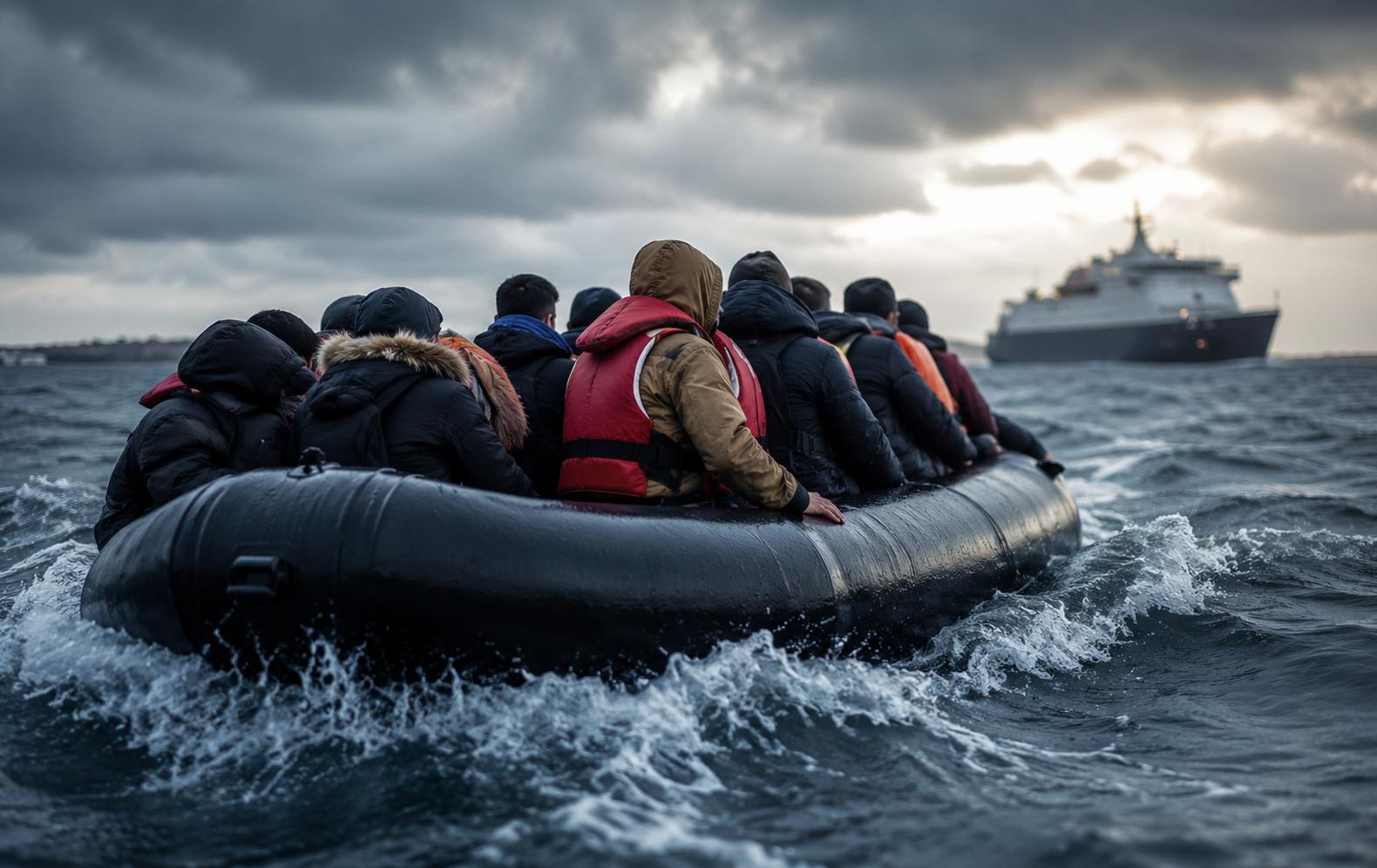
Thousands of migrants continue risking dangerous journeys across the English Channel each year despite worsening weather conditions and repeated enforcement operations.
Many migrants are fleeing conflict, poverty or political instability, while others are seeking economic opportunities in Britain.
At the same time, authorities argue criminal gangs are exploiting vulnerable people by charging huge sums for unsafe journeys in overcrowded inflatable boats.
The latest investigation highlights how deeply embedded smuggling networks may now be across Europe and within parts of the UK economy itself.
For cities such as Newcastle upon Tyne, the mention of local businesses in an international smuggling investigation is likely to prompt renewed discussion around financial oversight and business regulation.
No criminal charges have currently been announced in connection with the companies identified during the investigation.
However, law enforcement agencies are expected to face mounting pressure to determine whether criminal gangs are increasingly infiltrating legitimate commercial systems to support illegal migration routes.
Questions Continue Over Smuggling Networks and Financial Oversight.
As authorities continue attempts to disrupt organised immigration crime, the investigation raises difficult questions about how criminal gangs are adapting to tougher border controls.
The alleged use of ordinary businesses, international transfers and social media recruitment tactics suggests modern smuggling operations are becoming increasingly sophisticated.
For investigators, following the money may prove just as challenging as stopping the boats themselves.
What are your thoughts on the alleged use of a Newcastle-based businesse in migrant smuggling networks? Share your thoughts & views in the comments below.
Crime News
BBC Investigation Reveals Newcastle Business Allegedly Used in Migrant Smuggling Network
Advertisement


Comments (0)
You must be logged in to post comments.
Don't have an account? Register here
No comments yet. Be the first to share your thoughts!