
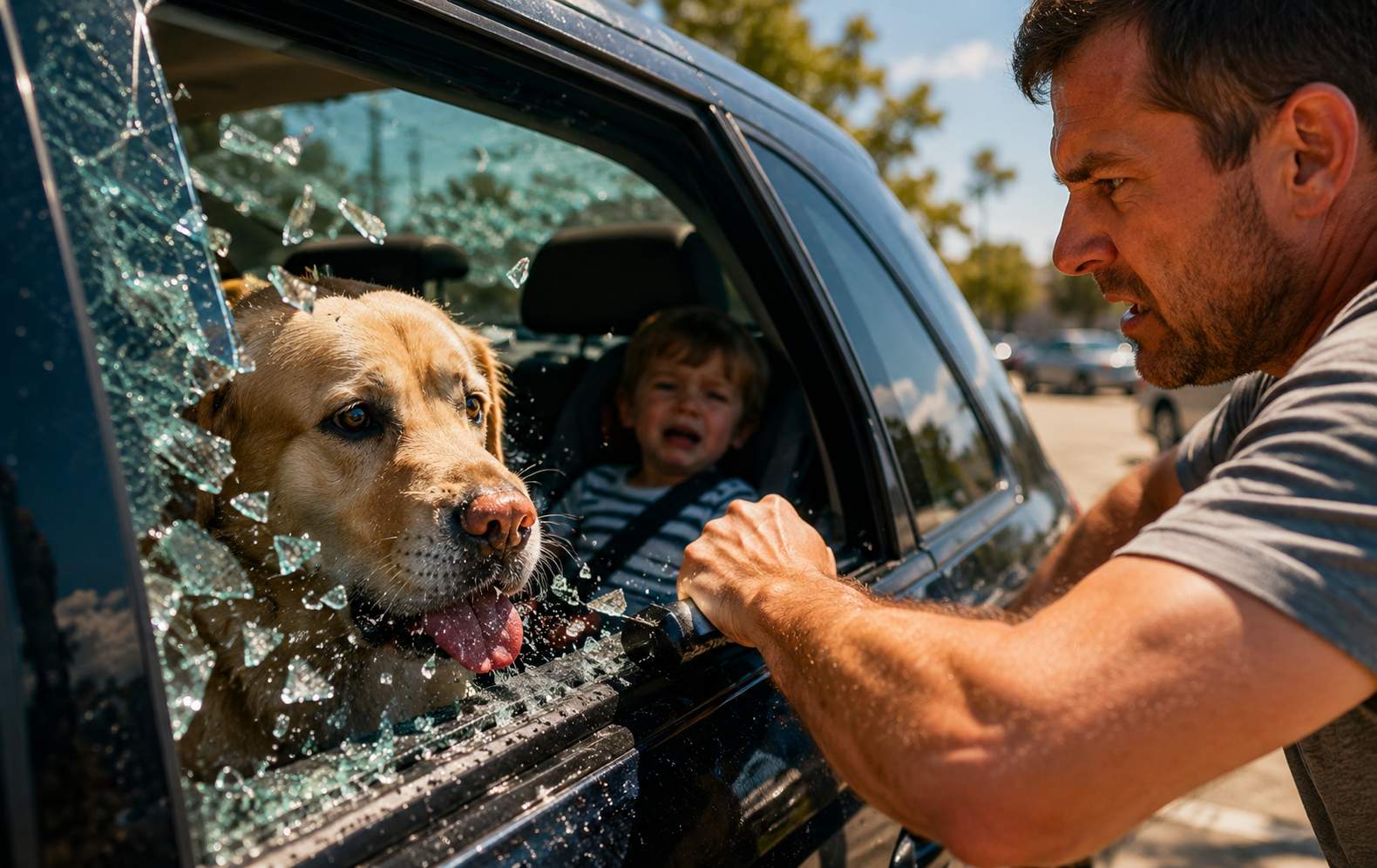
As temperatures rise across the UK each summer, reports of dogs and children being left alone inside parked cars continue to spark public outrage. Many people who witness the situation face a difficult question. If a child or pet appears to be in danger from the heat, can you legally smash the car window to rescue them?
The issue has become increasingly important during UK heatwaves, with police forces, animal charities and legal experts all warning that a locked vehicle can become dangerously hot within minutes. While many people instinctively want to act quickly, the law around damaging someone else's property is not always straightforward.
Understanding your legal position before intervening could help you avoid trouble while still protecting a life.
Why Hot Cars Become Dangerous So Quickly.
Experts repeatedly warn that even mild outdoor temperatures can turn a parked vehicle into a serious health risk. According to the RSPCA, the inside of a car can become unbearably hot in a short period of time, even when windows are slightly open or the vehicle is parked in shade.
Dogs are especially vulnerable because they cannot regulate body temperature as effectively as humans. Heatstroke in animals can develop rapidly and may become fatal before emergency services arrive.
Children face similar risks. Young children can overheat much faster than adults because their bodies are less able to control temperature changes. In severe cases, dehydration, seizures and unconsciousness can occur.
Police and emergency responders often treat these situations as urgent incidents where every minute matters.
What UK Law Says About Breaking a Car Window.
There is no specific UK law that explicitly states members of the public can legally smash a car window to rescue a child or animal. However, the law does recognise situations where criminal damage may be considered justified if the action was necessary to prevent greater harm.
Under the Criminal Damage Act 1971, a person could potentially avoid prosecution if they honestly believed their actions were needed to protect life or property. In practical terms, this means a court may accept that breaking a window was reasonable if a child or dog was in immediate danger.
Legal experts often point to the concept of "lawful excuse." If someone genuinely believed intervention was necessary to save a life, police and prosecutors may decide no further action is needed.
However, every case is judged individually. That means there is no automatic legal protection simply because someone believed they were doing the right thing.
What You Should Do Before Breaking a Window.
Police and animal welfare organisations strongly advise people to follow certain steps before taking action.
The first step should always be to assess the level of danger. Signs of heat distress in dogs include excessive panting, drooling, vomiting, collapse or unresponsiveness. For children, warning signs may include sweating, confusion, crying weakly or appearing unconscious.
You should then attempt to locate the vehicle owner. Nearby shops, shopping centres or venues may be able to make announcements over a public address system.
Calling 999 is also recommended if the situation appears serious or life threatening. Emergency handlers can advise whether police or ambulance crews are being dispatched.
If there is enough time, try recording evidence with photographs or video. This may help explain your actions later if questions arise about property damage.
Only if the situation becomes critical and immediate danger is clear should breaking the window be considered.
Could You Still Be Charged for Criminal Damage?
Technically, yes. Breaking a car window without permission could still lead to allegations of criminal damage. Whether police pursue the matter usually depends on the circumstances.
Officers are likely to consider factors such as:
Whether there was a genuine emergency.
Whether reasonable steps were taken first.
Whether emergency services were contacted.
Whether the action taken was proportionate.
In many real-life cases involving animals or children in distress, police have shown understanding toward rescuers. Still, there is no guarantee.
Legal specialists say the safest approach is to ensure your actions are clearly focused on protecting life rather than acting out of anger or frustration toward the vehicle owner.
What Animal Welfare Laws Say About Dogs Left in Cars.
Drivers who leave dogs inside dangerously hot vehicles may face legal consequences themselves.
Under the Animal Welfare Act 2006, pet owners have a legal duty to protect animals from unnecessary suffering. If a dog becomes seriously ill or dies because it was left in extreme heat, owners could face prosecution, fines or even bans on keeping animals.
The RSPCA has repeatedly warned motorists that leaving dogs in hot cars is never safe, even for a short period.
Animal welfare officers often receive hundreds of reports during warmer months, particularly during school holidays and heatwaves.
Cases That Have Sparked Public Debate.
Several incidents across the UK have gone viral on social media after passers-by broke car windows to rescue trapped animals or children.
Public reaction is usually strongly supportive of rescuers, especially when distress is clearly visible. Videos showing overheated dogs or crying children trapped in vehicles often generate outrage online.
However, legal professionals warn against assuming public support automatically means legal protection. Social media attention does not change how criminal damage laws are applied.
Each situation still depends on evidence and whether the response was considered reasonable at the time.
Police Advice During UK Heatwaves.
Many UK police forces now issue seasonal warnings reminding drivers never to leave children or pets alone inside vehicles.
Some forces have publicly stated they would support members of the public who acted reasonably to save a life in genuine emergencies. Others encourage witnesses to contact emergency services first whenever possible.
Police also warn that modern vehicles can remain dangerously hot even if air conditioning was previously running.
Heat-related emergencies inside vehicles can escalate much faster than many drivers realise.
What Drivers Should Remember.
For motorists, the message from safety experts is simple. Never leave a child or dog alone inside a parked vehicle during warm weather.
Even a quick trip into a shop can become dangerous if delays occur. Temperatures inside a car can rise dramatically within minutes, regardless of whether windows are slightly open.
Drivers may also face police investigations, animal welfare prosecutions or safeguarding concerns if a vulnerable person or animal is placed at risk.
As UK summers continue to bring hotter weather, awareness around hot car dangers is expected to remain a major public safety issue.
Final Thoughts.
Breaking a car window to save a child or dog in extreme heat may be legally defensible in the UK, but it is not automatically protected by law. The key issue is whether the action was genuinely necessary and proportionate in an emergency.
Anyone witnessing a dangerous situation should contact emergency services immediately, assess the level of risk carefully and act responsibly if immediate intervention becomes unavoidable.
Do you think UK law should give clearer legal protection to people who rescue animals or children from locked vehicles? Join the discussion and let us know your view.
Crime News
Can You Break a Car Window to Save a Dog or Child From Extreme Heat?
Advertisement




Comments (0)
You must be logged in to post comments.
Don't have an account? Register here
No comments yet. Be the first to share your thoughts!