
Cryptocurrency has experienced one of the most remarkable journeys in financial history. What began as a niche technology discussed primarily in online forums has evolved into a global market worth trillions of pounds, attracting everyone from retail investors and major financial institutions to governments and multinational corporations.
For investors in Newcastle and across the North East, interest in cryptocurrency remains strong. Search data continues to show significant demand for information about Bitcoin, Ethereum, Dogecoin and other digital assets, particularly as traditional savings accounts struggle to keep pace with inflation and investors look for alternative opportunities.
Yet despite the growing acceptance of cryptocurrency, one question continues to dominate discussions among investors: is cryptocurrency still a good investment in 2026, or has the opportunity already passed?
The answer is far more complicated than a simple yes or no.
Cryptocurrency Has Become More Mainstream.
A decade ago, cryptocurrency was considered highly speculative and largely unregulated.
Today, the landscape looks very different.
Major financial institutions now offer cryptocurrency investment products, publicly listed companies hold digital assets on their balance sheets and millions of people worldwide own some form of cryptocurrency.
According to industry research from Triple-A, global cryptocurrency ownership exceeded 560 million people in 2024, representing roughly 6.8 percent of the world's population. This marked a substantial increase compared with previous years and highlights how rapidly digital assets have entered the mainstream.
The UK has also seen strong adoption. Financial Conduct Authority research has suggested that millions of UK adults now own cryptocurrency, with awareness levels reaching record highs.
For many investors, cryptocurrency is no longer viewed as an experimental technology. Instead, it has become another asset class alongside stocks, property and commodities.
Bitcoin Remains The Market Leader.
Bitcoin remains the dominant force in the cryptocurrency market.
Created in 2009, Bitcoin was the first cryptocurrency and continues to account for a significant share of the entire digital asset market.
One reason investors continue to favour Bitcoin is its limited supply. Only 21 million Bitcoin will ever exist, creating scarcity that many supporters compare to precious metals such as gold.
Recent years have also seen growing institutional involvement. Major investment firms and exchange-traded funds have increased exposure to Bitcoin, helping drive broader adoption and legitimacy.
For investors considering cryptocurrency for the first time, Bitcoin is often viewed as the least speculative option within an inherently volatile market.
However, that does not mean it is risk-free. Bitcoin remains capable of experiencing substantial price swings over relatively short periods.
Ethereum Continues To Evolve.
While Bitcoin is primarily viewed as a digital store of value, Ethereum serves a different purpose.
Ethereum powers smart contracts, decentralised finance platforms and many blockchain-based applications.
The network's transition toward more energy-efficient technology significantly reduced electricity consumption compared with earlier years, addressing one of the biggest criticisms frequently levelled at cryptocurrencies.
Ethereum remains the foundation for thousands of blockchain projects and continues to attract developers worldwide.
Many investors see Ethereum as a technology investment rather than simply a digital currency, making it one of the most widely held cryptocurrencies globally.
Because Ethereum's ecosystem extends beyond payments into areas such as decentralised applications and tokenisation, supporters argue it has long-term growth potential beyond simple price appreciation.
Dogecoin Still Divides Opinion.
Few cryptocurrencies generate as much debate as Dogecoin.
Originally created as a joke, Dogecoin developed an enormous online following and achieved a market capitalisation worth billions of pounds.
Supporters point to its strong community, widespread recognition and continued popularity on social media.
Critics argue that Dogecoin lacks some of the technological advantages offered by other cryptocurrencies and remains heavily influenced by online sentiment.
For investors, Dogecoin often represents a higher-risk option compared with Bitcoin or Ethereum.
While it has delivered extraordinary returns during certain periods, its price history demonstrates the importance of understanding volatility before investing.
Solana Has Emerged As A Major Contender.
Solana has become one of the most closely watched cryptocurrencies in recent years.
Known for its high transaction speeds and relatively low costs, Solana has attracted developers building decentralised applications and blockchain services.
Many analysts view Solana as one of the strongest competitors to Ethereum, particularly in sectors requiring fast transaction processing.
Its growing ecosystem has helped increase investor interest, although it remains subject to the same market volatility that affects the broader cryptocurrency sector.
As with any cryptocurrency investment, potential rewards must be balanced against risk.
XRP Continues To Attract Investors.
XRP remains one of the largest cryptocurrencies by market value.
The project focuses on facilitating faster international payments and improving cross-border financial transactions.
Supporters believe XRP could play a significant role in the future of global payment systems if adoption continues to increase.
Its regulatory challenges over recent years have attracted significant attention, but many investors continue to view XRP as a long-term opportunity.
Like other cryptocurrencies, however, future performance depends on a range of technological, regulatory and market factors.
Should You Buy Cryptocurrency Today?
Whether cryptocurrency represents a good investment depends largely on an individual's financial goals and risk tolerance.
Many financial experts recommend viewing cryptocurrency as a high-risk asset rather than a guaranteed path to wealth.
Unlike traditional investments, cryptocurrencies can experience dramatic fluctuations. It is not unusual for prices to move significantly within days or even hours.
For this reason, many investors limit cryptocurrency exposure to a small percentage of their overall portfolio.
Those considering investing should ensure they understand the technology, risks and volatility involved before committing money.
What About Cryptocurrency Mining?
Mining remains one of the most misunderstood aspects of cryptocurrency.
Bitcoin mining involves using powerful computers to verify transactions and secure the blockchain network. In return, miners receive newly created Bitcoin and transaction fees.
Years ago, individuals could mine Bitcoin using home computers. Today, the industry is dominated by specialised hardware and large-scale operations.
For most Newcastle or North East residents, mining Bitcoin from home is unlikely to be profitable due to equipment costs, electricity expenses and increasing competition.
Some smaller cryptocurrencies remain more accessible for individual miners, but profitability varies significantly depending on market conditions.
Before investing in mining equipment, individuals should carefully calculate costs and potential returns.
Trading Versus Long-Term Investing.
One of the biggest decisions facing cryptocurrency investors is whether to trade actively or invest for the long term.
Trading involves buying and selling frequently in an attempt to profit from short-term price movements.
While successful traders can generate impressive returns, trading also carries substantial risks. Many inexperienced traders underestimate the complexity of analysing markets and managing emotions during volatile periods.
Long-term investing typically involves purchasing cryptocurrency and holding it for years rather than reacting to daily price fluctuations.
Historically, long-term strategies have often proven less stressful and more effective for many retail investors than attempting to time the market.
Cryptocurrency Risks Every Investor Should Understand.
Despite its growing popularity, cryptocurrency remains a high-risk investment.
Key risks include:
Extreme price volatility.
Regulatory changes.
Exchange failures.
Cybersecurity threats.
Fraud and scams.
Technological developments.
According to Action Fraud, cryptocurrency-related fraud continues to generate significant losses for UK consumers each year. Investors should only use reputable exchanges and maintain strong security practices.
Education remains one of the best defences against scams and poor investment decisions.
Cryptocurrency And The North East.
Interest in cryptocurrency extends well beyond London.
Across Newcastle, Gateshead, Sunderland and the wider North East, growing numbers of residents are exploring digital assets as part of broader investment strategies.
The region's strong technology sector, universities and growing digital economy have helped create communities interested in blockchain technology and cryptocurrency innovation.
Several North East businesses have also experimented with accepting cryptocurrency payments, although adoption remains relatively limited compared with traditional payment methods.
As awareness continues to grow, cryptocurrency is likely to remain a topic of discussion among local investors and technology enthusiasts.
The Outlook For Cryptocurrency.
Few industries have evolved as rapidly as cryptocurrency.
Supporters believe digital assets will play an increasingly important role in finance, payments and technology over the coming decades. Critics remain concerned about volatility, regulation and long-term sustainability.
The reality probably lies somewhere between those viewpoints.
Cryptocurrency has survived multiple market crashes, regulatory challenges and sceptical predictions. Yet it remains one of the most volatile asset classes available to investors.
For those willing to accept risk, cryptocurrency may continue to offer opportunities. For others, a cautious approach may be more appropriate.
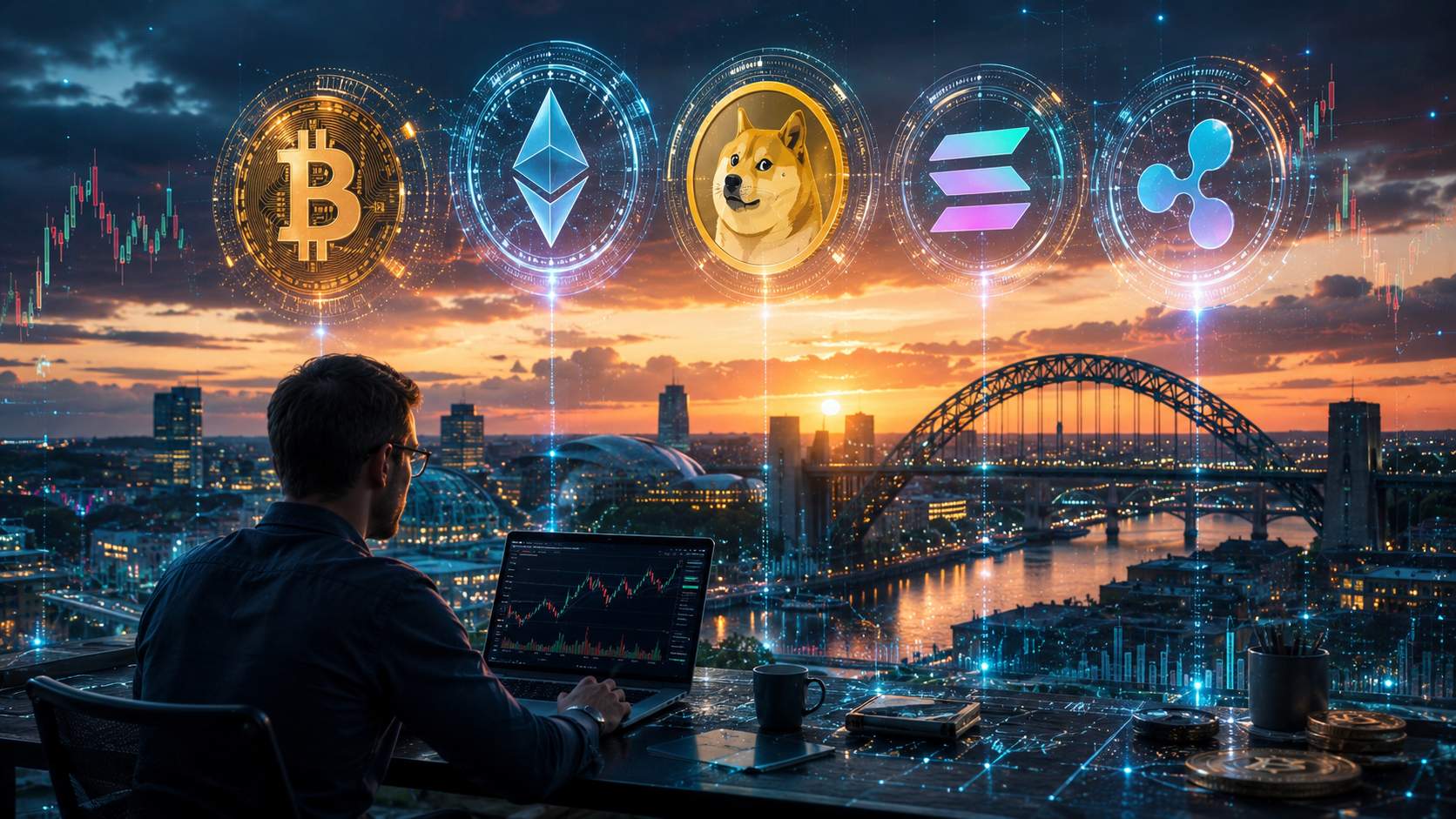
What remains clear is that Bitcoin, Ethereum, Dogecoin, Solana and XRP continue to attract global attention, and the debate over their future is unlikely to disappear anytime soon.
As investors across Newcastle and the North East evaluate their financial options in 2026, cryptocurrency remains one of the most fascinating and potentially rewarding, yet unpredictable, areas of the modern investment landscape.
Have your say.
Is cryptocurrency still worth buying in 2026, or do you think the biggest gains have already been made?
Business News
Cryptocurrency In 2026: Boom, Bust Or Biggest Opportunity Yet?
Advertisement




Comments (0)
You must be logged in to post comments.
Don't have an account? Register here
No comments yet. Be the first to share your thoughts!