
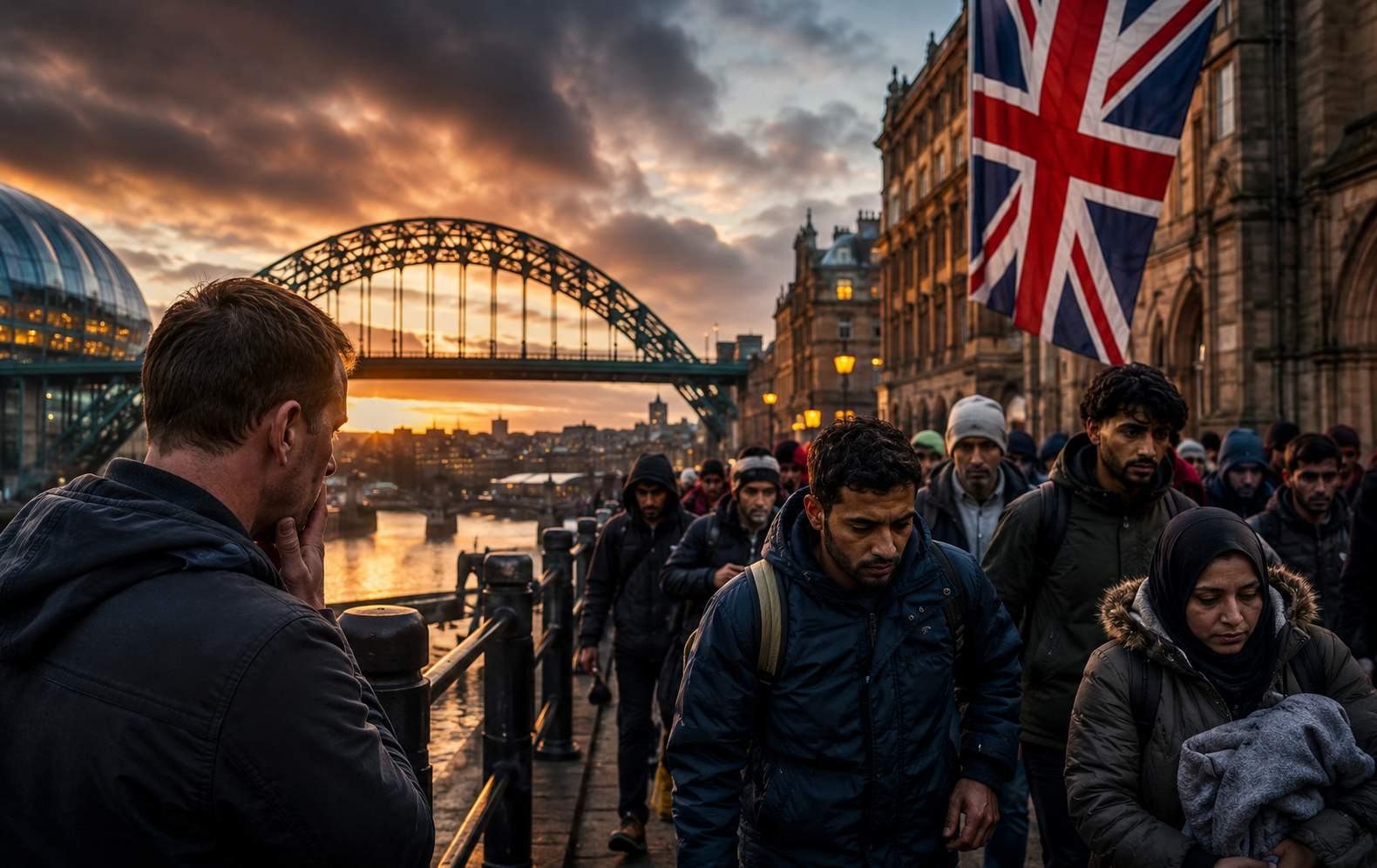
Conversations about immigration have become increasingly common across Newcastle and the wider North East in recent years. From social media discussions to conversations in pubs, workplaces and community groups, migration has emerged as one of the most debated topics in the region.
While many residents value the cultural and economic contributions that newcomers bring to the city, others have voiced concerns about pressure on housing, jobs, public services and welfare spending. These concerns are often amplified online, where misinformation can spread quickly and shape public opinion.
As Newcastle continues to grow and evolve, understanding the facts behind the debate has become increasingly important. With political rhetoric surrounding small boat crossings, asylum seekers and migration levels regularly dominating national headlines, many local residents are asking questions about the impact immigration is having on their communities.
Rising Tensions In Communities.
Across Newcastle, some residents say they have noticed a rise in anti-immigration comments both online and in everyday life. Community leaders and anti-racism organisations have reported concerns about increasingly hostile language directed at migrants, refugees and asylum seekers, such as calling them "Boat People", "Migrant Doctors" and a range of other highly offensive term online.
The issue has become especially prominent following ongoing debates surrounding Channel crossings and asylum accommodation across the UK. While immigration remains a national political issue, local communities often become the focus of frustration over wider economic and social challenges.
Experts warn that when complex national issues are reduced to simple slogans, tensions can increase between different groups living within the same communities. Newcastle has long been recognised as a diverse and welcoming city, but like many areas across the country, it has not been immune to the increasingly polarised debate surrounding migration.
The Most Common Complaints About Immigration.
Among those who oppose current levels of immigration, several concerns are raised repeatedly.
One common claim is that immigrants are taking jobs away from local workers. Another frequently heard argument is that newcomers receive free housing ahead of local families waiting on housing lists.
Concerns are also regularly expressed about welfare payments, healthcare access, school places and pressure on public services. Some residents believe immigration is a significant cause of stretched NHS services, rising rents and long waiting lists for social housing.
Others point to reports of asylum accommodation and government spending as evidence that taxpayers are being unfairly burdened. These concerns are often shared widely online and can shape perceptions even when statistical evidence presents a more complex, and more oft than not, corrective picture.
Are Immigrants Taking Jobs From Local People?
Research from economists and labour market experts has consistently found little evidence that immigration has a major negative impact on employment opportunities for UK-born workers.
Many migrants work in sectors experiencing labour shortages, including healthcare, social care, hospitality, construction and agriculture. These industries have struggled to recruit enough staff domestically for many years.
The NHS itself relies heavily on international workers. Thousands of doctors, nurses and healthcare professionals working across the UK were born overseas and play a vital role in maintaining services. Without migrant workers, many hospitals and care providers would face even greater staffing shortages.
While immigration can increase competition in some parts of the labour market, most studies suggest the overall impact on employment levels is relatively small. Economists often argue that immigration can support economic growth by helping businesses fill vacancies and expand operations.
What Support Do Asylum Seekers Actually Receive?
Asylum seekers are generally not entitled to mainstream welfare benefits such as Universal Credit, Jobseeker's Allowance or Housing Benefit while their asylum application is being processed. Instead, those who can demonstrate that they are destitute and have no means of supporting themselves may qualify for asylum support provided by the Home Office.
Under current arrangements, asylum seekers living in self-catered accommodation receive approximately £49.18 per week per person to cover essential living expenses such as food, clothing, toiletries and other day-to-day necessities. This works out at just over £7 per day. The payment is loaded onto a prepaid card rather than being paid directly as cash.
Where accommodation already provides meals, support payments can be significantly lower. In some catered accommodation settings, individuals may receive around £9.95 per week for personal essentials, while additional payments may be available in limited circumstances such as pregnancy or caring for young children.
Accommodation itself is usually arranged by the Home Office rather than chosen by the asylum seeker. Individuals can be placed anywhere in the UK where suitable accommodation is available, including hotels, hostels, shared houses and other temporary housing. Unlike social housing tenants, asylum seekers do not generally have the ability to choose where they live and are not automatically placed ahead of local residents on council housing waiting lists.
Another common misconception is that asylum seekers can immediately begin working after arriving in Britain. In reality, most are prohibited from working while their claim is being processed. Exceptions can apply where claims have been outstanding for more than 12 months through no fault of the applicant, but even then employment is usually restricted to specific shortage occupations approved by the government.
Critics often point to the cost of asylum accommodation as evidence of pressure on taxpayers. Government spending on asylum support has increased significantly in recent years, largely because of rising application numbers, a backlog in processing claims and the use of hotel accommodation. However, migration experts argue that these costs should be considered separately from wider discussions surrounding legal migration and long-term economic contribution.
Once asylum seekers are granted refugee status, they become eligible to work without restriction and may access benefits under the same rules that apply to other eligible UK residents. Many refugees subsequently enter employment, pay taxes and contribute to local economies, including communities across Newcastle and the wider North East.
It is important to note that asylum seekers, refugees, legal migrants and illegal immigrants are all subject to different rules. Many statistics and claims shared online combine these groups together, which can create confusion about who is eligible for financial support, housing or employment rights.
What About Illegal Immigrants?
Another common concern raised in immigration debates involves people who are living in the UK illegally. This group can include individuals who entered the country without permission, people who overstayed visas after arriving legally, or those whose asylum claims have been refused but who remain in the country.
Unlike refugees who have been granted protection or migrants with legal permission to live and work in Britain, illegal immigrants generally have very limited access to public support.
They are not normally entitled to mainstream welfare benefits such as Universal Credit, Housing Benefit or most forms of state financial assistance. They are also prohibited from working legally in the UK. Employers who knowingly hire people without the legal right to work can face substantial financial penalties and other sanctions.
The issue becomes more complex when discussing healthcare, education and emergency support. Regardless of immigration status, emergency NHS treatment must be provided when necessary, while children living in the UK are entitled to access education. In some circumstances, local authorities may also have legal obligations to provide support where vulnerable individuals or children would otherwise face homelessness or serious hardship.
One reason illegal immigration remains a controversial political issue is the cost associated with immigration enforcement, border security, asylum processing and accommodation for individuals whose status is being determined. Critics argue these costs place additional pressure on public finances, while others point out that faster immigration decisions and more effective enforcement could reduce some of those costs.
There is also a widespread perception that large numbers of illegal immigrants are claiming benefits and receiving social housing. However, immigration experts note that individuals without legal status generally have no access to most benefits and are excluded from the majority of public assistance programmes.
Official estimates of the number of people living in the UK illegally vary considerably because, by its nature, the population is difficult to measure accurately. This uncertainty often fuels speculation and political debate.
What is clear is that illegal immigration represents a different issue from legal migration, refugee resettlement and asylum applications, despite the terms frequently being used interchangeably in public discussions.
The Housing Question.
Housing remains one of the most sensitive issues in the immigration debate.
Some residents believe migrants are routinely given priority access to social housing. However, housing allocation in the UK is generally based on eligibility, need and local authority policies rather than nationality alone.
Government figures have consistently shown that the majority of social housing tenants are UK nationals. Housing experts argue that the UK's housing shortage is primarily linked to decades of insufficient housebuilding, rising demand and population growth rather than immigration alone.
This does not mean migration has no impact on housing demand. Additional population growth inevitably increases pressure on housing supply. However, experts generally view housing shortages as a much broader issue than immigration alone.
Economic Contributions To Newcastle.
Newcastle has a long history as a city shaped by migration. Over generations, people from different countries have contributed to local businesses, universities, healthcare services and cultural life.
International students contribute millions of pounds annually to the local economy through tuition fees, accommodation spending and everyday purchases. Many local businesses also depend on workers from overseas to fill vacancies.
Business groups frequently argue that controlled migration can support economic growth, particularly in regions facing skills shortages and ageing populations.
Across the North East, migrant workers play important roles in healthcare, manufacturing, logistics, hospitality and education. Their contributions often receive less attention than the political debates surrounding migration.
Why Perceptions And Reality Often Differ.
Public attitudes towards immigration are often influenced by personal experiences, media coverage and online discussions rather than direct interactions with migrants themselves.
Researchers have found that people frequently overestimate the number of immigrants living in their local areas and misunderstand eligibility rules surrounding housing and welfare support.
This does not mean concerns should be dismissed. Issues such as housing shortages, NHS waiting times and pressure on public services are genuine challenges. However, experts argue that these problems are often driven by a range of economic, demographic and political factors rather than immigration alone.
The challenge for policymakers is addressing those underlying problems while also managing migration effectively and maintaining public confidence in the system.
Looking Ahead For Newcastle.
As Newcastle continues to develop, immigration is likely to remain a topic of discussion across the city.
The challenge for policymakers, community leaders and residents will be finding ways to address legitimate concerns while avoiding misinformation and division. Constructive debate based on facts rather than assumptions is widely viewed as the best path forward.
For a city known for its strong sense of community, many believe the future will depend on ensuring conversations about immigration remain respectful, informed and focused on solutions rather than blame.
Whether residents support higher levels of immigration, lower levels of immigration or reforms to the current system, there is broad agreement that public discussion should be based on accurate information rather than myths and misconceptions.
As the debate continues, Newcastle's experience reflects a wider national conversation about identity, public services, economic growth and the role immigration will play in shaping the UK's future.
What are your views on immigration in Newcastle and the wider North East? Share your thoughts in the comments and join the conversation.
Political News
Jobs, Housing and Benefits - Separating Immigration Facts From Fiction
Advertisement




Comments (0)
You must be logged in to post comments.
Don't have an account? Register here
No comments yet. Be the first to share your thoughts!