
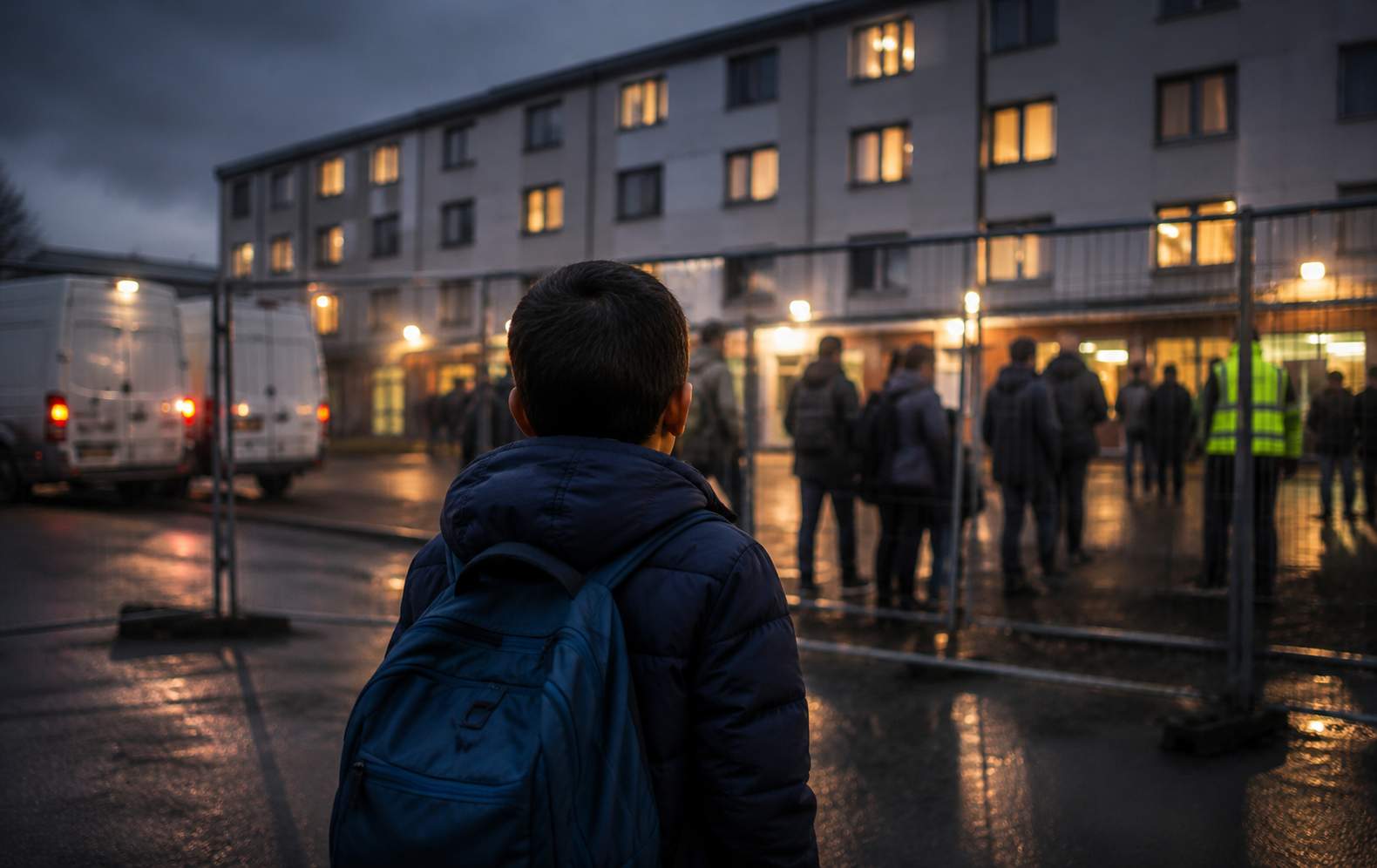
Hundreds of migrant children seeking safety in the UK were wrongly identified as adults last year, according to a major new report that has intensified criticism of the Home Office and the country’s asylum procedures.
Human rights organisations say the mistakes exposed vulnerable young people to serious safeguarding risks after they were placed in adult hotels, detention centres and, in some cases, prisons. Campaigners argue the findings reveal deep flaws in the age assessment process used when asylum seekers arrive in Britain.
The report, published by the Helen Bamber Foundation, found that at least 755 children were incorrectly assessed as adults in 2025. Many of those children had arrived in the UK alone after fleeing conflict, persecution or exploitation in their home countries.
The charity warned that the real figure could be significantly higher because not all local authorities shared information for the research.
The issue has sparked renewed concern across the country, including among refugee support groups in Newcastle and the wider North East, where charities have repeatedly called for stronger protections for young asylum seekers arriving in the UK.
More Than Half of Disputed Cases Later Found to Be Children.
Data obtained through Freedom of Information requests from 85 councils in England and Scotland revealed there were 1,504 referrals involving young asylum seekers who had been placed in adult accommodation despite claiming they were under 18.
Of the 1,454 people who later underwent formal age assessments, 52 per cent were ultimately confirmed to be children.
Campaigners say the figures show the current system is failing vulnerable young people at a critical point in their lives. Many of those affected reportedly experienced fear, confusion and trauma after being housed alongside unrelated adults while waiting for their cases to be reviewed.
Some of those initially placed in adult accommodation are believed to have been sent to asylum hotels across England, including locations in the North East where hotels have previously been used to temporarily house migrants awaiting immigration decisions.
Hotels in Newcastle, Gateshead, Middlesbrough, Stockton and Sunderland have all been linked to asylum accommodation contracts in recent years, with local communities frequently debating the pressure placed on services and safeguarding systems.
Critics argue that placing children who have been wrongly identified as adults into these environments creates additional risks, particularly when vulnerable young people are left without specialist support or supervision.
The government also released official age assessment figures for the first time. According to the Home Office, 6,420 asylum seekers underwent an initial age check in the year ending March 2026. Around 43 per cent were judged to be adults, while 57 per cent were determined to be children.
Between July and December 2025, officials overturned decisions involving 326 young people who had initially been treated as adults. Another 377 cases remain unresolved.
Charities Warn of Serious Safeguarding Failures.
Human rights groups say the consequences of incorrect assessments can be devastating for children already escaping traumatic situations.
Kamena Dorling, director of policy at the Helen Bamber Foundation, described the findings as evidence of a "serious safeguarding crisis" within the asylum system.
She said many children were being placed with unknown adults in accommodation settings that were never designed for minors. Others were reportedly detained under immigration powers or processed through the adult criminal justice system.
Campaigners argue these mistakes leave children exposed to exploitation, intimidation and emotional harm. Several organisations have called for urgent reform of the assessment process and greater independent oversight.
Refugee support charities operating in Newcastle and across the North East say local councils are often left handling the consequences after young people are eventually recognised as children and transferred into care services.
Local authorities already facing pressure on social care budgets have repeatedly warned that delays and assessment disputes place additional strain on frontline services. Some campaigners in the region have also questioned whether hotels used for asylum accommodation are suitable environments for vulnerable young migrants.
Concerns Raised Over Border Assessment Methods.
Previous investigations into the Home Office age assessment process have also drawn criticism over how decisions are made.
Former independent chief inspector of borders and immigration David Bolt previously found that officials sometimes relied on questionable indicators during visual assessments at the border.
According to evidence gathered during inspections, factors such as body language, appearance and even a lack of eye contact were considered during initial judgements about a person’s age.
Lawyers and charities have also claimed some children felt pressured into stating they were over 18 after arriving in the UK.
Critics argue visual assessments are unreliable, especially when children may appear older due to trauma, malnutrition or difficult journeys to Britain.
Immigration lawyers say there is growing concern that rushed decisions are being made in busy processing environments where staff have limited specialist training in child protection.
Government Plans AI Age Checks for Asylum Seekers.
The controversy comes as ministers prepare to introduce AI facial-recognition technology into the age assessment process.
The Home Office says the technology is intended to support officials by providing faster and more consistent age estimates. The government plans to integrate the system into asylum procedures during 2026.
However, rights groups and refugee charities have strongly criticised the proposal, warning that artificial intelligence could lead to even more disputed decisions and potentially life-changing errors.
Campaigners say facial age estimation technology remains controversial because there is limited evidence proving its accuracy across different ethnicities and backgrounds.
Critics have described the move as an experiment on vulnerable migrants, particularly children arriving alone on small boats across the English Channel.
The Home Office insists no final decision has been made about exactly how the AI system will be used. Officials say anyone whose age remains uncertain after initial checks will continue to be treated as a child until further assessments are completed by local authorities.
A Home Office spokesperson said robust age checks were necessary to maintain border security and prevent adults from entering children’s services.
Child Migrants Also Caught Up in Deportation Policy.
Separate data collected by the charity Humans for Rights Network found more than 70 asylum seekers whose ages were disputed had been detained for removal to France under the government’s controversial “one in, one out” migrant returns agreement.
The group reported that 26 of those individuals were later released into the care of children’s services after concerns about their ages were accepted.
The findings have fuelled wider debate over the UK government’s approach to small boat crossings and asylum enforcement.
Earlier this year, further controversy emerged after reports revealed a child migrant faced prosecution over allegations linked to a Channel crossing.
The teenager, who cannot be identified for legal reasons, had reportedly already been assessed as under 18. Despite that, prosecutors argued pursuing the case remained in the public interest because of the seriousness of the alleged offence.
The case prompted criticism from legal experts and child welfare organisations, who questioned whether vulnerable children should face criminal proceedings connected to dangerous migration routes.
Pressure Mounts for Reform Across the UK.
The growing number of disputed age cases is increasing pressure on ministers to reform the asylum system while ensuring children receive proper protection.
Campaigners are calling for more independent social workers, improved safeguarding training and a presumption that anyone claiming to be a child should initially be treated as one.
Immigration remains one of the most politically sensitive issues in Britain, particularly as small boat crossings continue to dominate national debate.
In Newcastle, refugee charities and community organisations say the issue highlights the human impact behind immigration statistics. Groups working with asylum seekers in the region have urged the government to focus on child welfare alongside border enforcement.
Supporters argue Britain has legal and moral responsibilities to protect children seeking refuge, regardless of how they arrive in the country.
As scrutiny of the Home Office grows, pressure is likely to continue mounting over whether current assessment methods can reliably distinguish vulnerable children from adults without placing young people at risk.
What do you think about the UK’s current migrant age assessment system and the use of hotels in Newcastle and the North East for asylum accommodation? Share your views in the comments below.
Local News
Migrant Children May Have Been Placed in North East Hotels After Home Office Errors
Advertisement


Comments (0)
You must be logged in to post comments.
Don't have an account? Register here
No comments yet. Be the first to share your thoughts!