
A major £8.8 million investment in the Tyne and Wear Metro network has been completed, with transport leaders describing the project as a crucial step towards securing the long-term future of public transport across Newcastle upon Tyne and the wider North East.
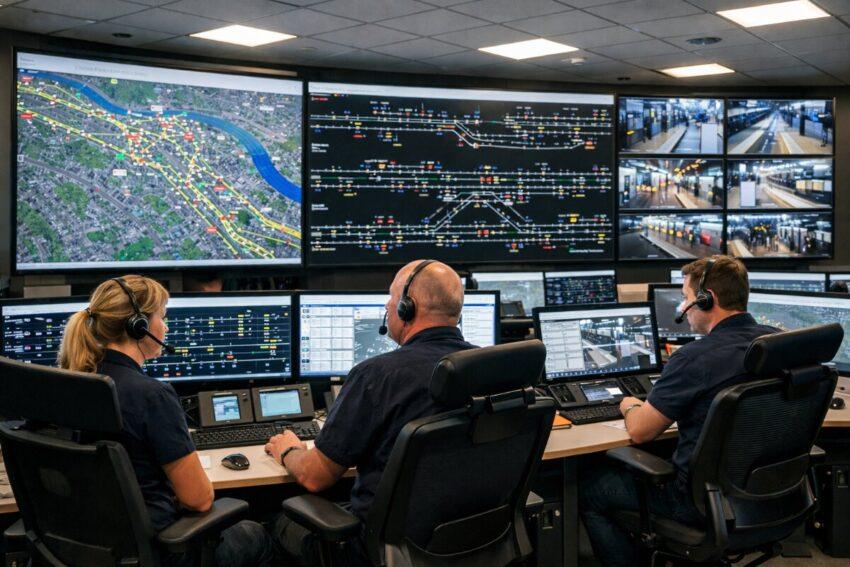
The extensive upgrade has transformed the Metro’s central control room with advanced digital technology that is expected to improve reliability, speed up fault detection and reduce disruption for thousands of daily passengers. Nexus, the public body which operates the Metro system, says the modernisation gives the network some of the most sophisticated control technology currently being used in the UK rail industry.
The project focused on replacing and upgrading the Supervisory Control and Data Acquisition System, more commonly known as SCADA. While largely invisible to passengers, the technology sits at the heart of the Metro network and controls many of the systems required to keep services running safely and efficiently.
The investment comes at a time when the Tyne and Wear Metro continues to play a central role in connecting communities across Newcastle, Gateshead, Sunderland, South Tyneside and North Tyneside. With millions of passenger journeys made every year, maintaining reliability has become increasingly important for commuters, businesses and visitors travelling across the region.
New technology designed to reduce delays.
According to Nexus, the upgraded SCADA system will allow engineers and control room staff to identify and respond to technical issues far more quickly than before. The technology monitors a wide range of infrastructure across the Metro network, including high voltage power supplies, fire alarms, tunnel drainage pumps, lifts, escalators and station lighting.
By digitising and modernising the control systems, staff can now remotely monitor and manage key infrastructure in real time. This is expected to significantly reduce the time taken to identify faults and coordinate repairs, helping to minimise service disruption for passengers travelling throughout Newcastle upon Tyne and surrounding areas.
For Metro customers, the changes may not be immediately visible during their journeys, but Nexus believes the long-term benefits will be substantial. Faster responses to technical failures could help reduce delays, improve passenger safety and create a more dependable public transport system for the North East.
The new technology also introduces improved resilience into the network. Older systems can become increasingly difficult and expensive to maintain as components age and replacement parts become harder to source. The latest digital infrastructure is designed to provide a stronger foundation for future improvements and expansion projects.
Metro control room receives modern redesign.
Alongside the software and infrastructure improvements, the Metro control room itself has undergone a major redesign. A new four-metre-wide digital display screen has been installed to give control room teams a clearer overview of the network and allow staff to monitor operations more effectively.
The redesigned workspace also creates additional room for operational teams and introduces a more modern working environment. Nexus says the updated layout has been developed to improve communication between teams and support faster decision-making during incidents or service interruptions.
The control room acts as the operational nerve centre for the entire Tyne and Wear Metro network. From this location, teams oversee train movements, monitor power systems and coordinate responses to technical issues and emergencies across dozens of stations.
For passengers travelling through Newcastle city centre stations such as Monument, Central Station and Haymarket, the improvements could help contribute to smoother journeys and more consistent service performance over the coming years.
Nexus calls investment essential for Metro future.
Nexus Major Projects Director Paul Welford described the completion of the upgrade as a major milestone for the Metro system and praised the collaborative effort involved in delivering the project.
He said the new technology would transform how Metro staff monitor critical infrastructure and respond when issues arise across the network.
Mr Welford explained that the investment represents an important commitment to the long-term future of Tyne and Wear Metro, especially as the network continues modernising other aspects of its operations, including the introduction of a new fleet of trains.
He also highlighted the role the technology will play in helping engineers remotely manage both high and low voltage power systems while improving oversight of essential facilities such as lighting, escalators and station alarms.
According to Nexus, the project was carefully managed to minimise disruption while installation work took place. The organisation worked alongside specialist engineering company Sella Controls to deliver the programme on schedule and within budget.
The completion of the control room upgrade follows another major Metro investment completed in 2018, when a £12 million computerised signalling control system was introduced as part of wider efforts to modernise the network.
Sella Controls praises partnership approach.
Sella Controls, the engineering firm responsible for delivering the upgrade, said the project showcased the importance of technical expertise and close collaboration with Nexus.
Chris Elliott, Sales Director for Global Account Management Rail at Sella Controls, said the company understood early in the process what Nexus required from its delivery partner and focused on providing both engineering knowledge and flexibility throughout the project.
He pointed to the company’s extensive experience in traction power SCADA systems and said this expertise had helped ensure the successful renewal of the Metro’s control technology.
Mr Elliott also stressed the importance of maintaining close communication with the client during every stage of the programme. He said the partnership approach allowed the project team to adapt to operational challenges while keeping disruption to passengers to a minimum.
The company believes projects like this will become increasingly important across Britain’s railway industry as operators modernise ageing infrastructure and look for more efficient ways to manage rail systems using digital technology.
Metro modernisation continues across the North East.
The control room investment forms part of a much larger transformation programme currently taking place across the Tyne and Wear Metro network.
In recent years, Nexus has launched several major projects aimed at improving reliability, modernising infrastructure and preparing the system for future demand. One of the most significant developments is the arrival of a new fleet of Metro trains, which are expected to replace the ageing trains that have operated on the network for decades.
The new trains are being introduced in phases and are designed to provide passengers with improved accessibility, greater comfort and more reliable performance. Combined with upgrades to signalling systems and control technology, transport officials hope the investments will help create a more modern and dependable Metro service for future generations.
Transport infrastructure remains a key issue for Newcastle upon Tyne and the wider North East economy. Reliable public transport networks are seen as essential for supporting employment, education, tourism and business growth across the region.
The Metro network itself remains one of the most recognisable parts of daily life in Newcastle and surrounding areas. For many residents, it provides a vital connection between homes, workplaces, universities, shopping centres and entertainment venues.
As Newcastle continues to grow and attract investment, pressure has increased on public transport operators to maintain reliable services while also improving capacity and customer experience.
Why the SCADA system matters to passengers.
Although the term SCADA may sound highly technical, the system plays a direct role in everyday Metro operations and passenger safety.
The technology continuously monitors critical infrastructure and instantly alerts staff to faults or abnormalities. This allows engineers to react more quickly when equipment fails or power issues occur.
For example, if a station escalator develops a fault or a power supply issue affects a section of track, control room teams can identify the problem almost immediately and coordinate repairs or alternative arrangements.
The system also monitors fire alarms, lighting systems and tunnel drainage pumps, all of which are essential for maintaining safe operations throughout the network.
By upgrading to a more advanced digital platform, Nexus expects to improve both efficiency and reliability while reducing the likelihood of extended disruptions.
Passengers in Newcastle upon Tyne and across Tyne and Wear are likely to notice the benefits gradually over time through more stable services and fewer delays linked to technical failures.
Investment highlights confidence in public transport.
The £8.8 million project also reflects broader confidence in the long-term future of public transport across the North East.
Despite financial pressures facing transport operators nationwide, significant investment continues to be directed towards the Metro network as local leaders aim to improve connectivity and support economic development.
Public transport experts often point out that modernisation projects such as this are essential for maintaining ageing rail infrastructure and ensuring systems remain fit for purpose in the decades ahead.
Digital technology is playing an increasingly important role across the railway industry, with operators using smarter systems to improve reliability, monitor equipment and respond more effectively to incidents.
For Nexus, the latest investment demonstrates a continued commitment to improving passenger experience while preparing the Metro network for future challenges.
The organisation says the upgraded control systems provide a stronger operational foundation as the network continues evolving alongside wider regeneration and transport plans across Newcastle upon Tyne and the North East.
A major step forward for Newcastle transport.
The completion of the control room modernisation represents another important chapter in the ongoing transformation of the Tyne and Wear Metro.
While much of the work has taken place behind the scenes, the technology now controlling large parts of the network is expected to have a direct impact on day-to-day reliability for passengers travelling across Newcastle and beyond.
As the Metro prepares for the arrival of new trains and further infrastructure upgrades, transport officials hope investments like this will help deliver a more efficient, resilient and future-ready railway system for the region.
For commuters, students and visitors relying on the Metro every day, the improvements could help strengthen confidence in one of the North East’s most important public transport networks.
Do you think about the £8.8m Metro upgrade in Newcastle will improve Metro reliability across the North East?
Local News
Newcastle Metro Unveils £8.8m Control Room Upgrade to Cut Delays
Advertisement




Comments (0)
You must be logged in to post comments.
Don't have an account? Register here
No comments yet. Be the first to share your thoughts!