
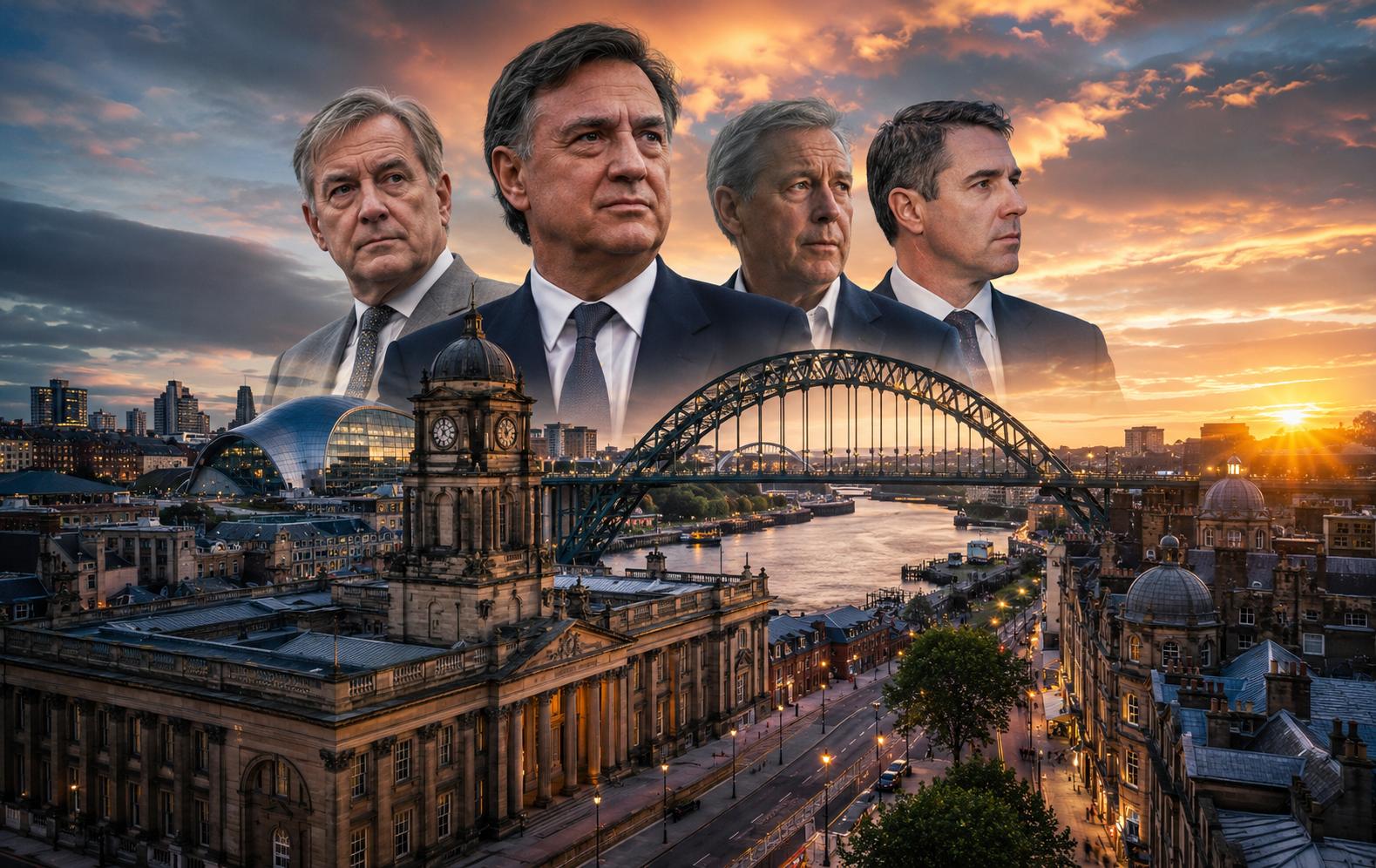
For decades, politics in Newcastle upon Tyne reflected the wider story of industrial decline, class identity, economic reinvention, and Labour loyalty across the North East. From the collapse of heavy industry during the 1970s to the fragmented political landscape emerging today, Newcastle’s political history has been shaped by powerful personalities, dramatic scandals, changing voter priorities, and repeated battles over the future of the city.
For much of the modern era, Labour dominated Newcastle City Council and parliamentary politics, often viewed as the natural political home for working-class communities across Tyneside. However, beneath that dominance were periods of deep controversy, public frustration, and growing pressure from rival political movements. In recent years, political loyalties that once appeared unbreakable have started to fracture dramatically.
The city’s political story is also closely connected to Newcastle’s economic transformation. As traditional industries disappeared, local politicians were forced to rethink how the city could survive and compete. Regeneration projects, housing debates, austerity cuts, and transport investment all became defining political battlegrounds over the last five decades.
Today, Newcastle politics is entering one of the most unpredictable periods in its modern history after Labour’s historic collapse in the 2026 local elections reshaped the balance of power inside the council chamber for the first time in years.
The 1970s - Industrial Decline and Political Upheaval.
The 1970s marked one of the most turbulent periods in Newcastle’s political history. Traditional industries including shipbuilding, coal mining, engineering, and manufacturing were already beginning to decline across Tyneside, creating growing unemployment and financial uncertainty for thousands of local families.
Labour remained the dominant force in Newcastle politics during this era because of the city’s deep industrial roots and strong trade union culture. Many working-class communities viewed Labour as the party most closely connected to public services, workers’ rights, and social housing during a period of economic instability.
At the same time, Newcastle politics became nationally infamous because of the scandal surrounding former council leader T Dan Smith. Smith had built a reputation as an ambitious moderniser determined to transform Newcastle into a major modern European city through large-scale redevelopment projects.
Supporters praised Smith for trying to modernise Newcastle’s ageing infrastructure and attract investment into the city centre. Critics, however, accused him of allowing aggressive redevelopment to damage parts of Newcastle’s architectural heritage and local communities.
His political downfall came after corruption allegations linked to architect John Poulson, eventually leading to criminal convictions. The scandal became one of the most famous examples of corruption in British local government history and damaged public trust in Newcastle politics for years afterward.
Despite the controversy, many redevelopment ideas associated with that era continued shaping Newcastle throughout the following decades. Road systems, office developments, and city centre expansion projects introduced during this period permanently altered Newcastle’s appearance and political direction.
The Thatcher Years and Labour Resistance.
The election of Margaret Thatcher’s Conservative government in 1979 deepened political divisions across Newcastle and the wider North East. Thatcherism became deeply unpopular in many parts of Tyneside because of industrial closures, rising unemployment, and cuts to traditional manufacturing sectors.
Newcastle developed a reputation as one of Labour’s safest urban strongholds during the 1980s. Strong anti-Conservative feeling across working-class communities helped Labour maintain control of Newcastle City Council throughout much of the decade.
Political battles frequently focused on public spending, housing policy, unemployment, and central government funding cuts. Labour councillors regularly accused Westminster of abandoning northern cities while prioritising investment elsewhere in the country.
The economic pain felt across Newcastle during the 1980s forced local leaders to begin searching for a new identity for the city. Political attention slowly shifted toward regeneration, culture, retail, tourism, and education as alternatives to the collapsing industrial economy.
Early regeneration discussions around the Quayside and city centre began gaining momentum during this period. Although many projects were still years away, political leaders increasingly recognised that Newcastle’s future depended on reinventing itself economically.
Regeneration Politics Transforms Newcastle During the 1990s.
By the 1990s, Newcastle politics became heavily focused on urban regeneration and economic transformation. Labour still maintained dominant political control, but the priorities of local government began changing significantly.
The city aggressively pursued investment projects aimed at reshaping Newcastle into a modern regional capital built around tourism, nightlife, higher education, finance, and culture. Major Quayside redevelopment projects became central to this strategy.
Landmarks including the Baltic Centre for Contemporary Art, the Sage Gateshead, and the Millennium Bridge later emerged as symbols of Newcastle’s transformation from industrial city to modern cultural destination.
The expansion of Newcastle’s universities also played a major political and economic role during this period. Increasing student populations helped reshape parts of the city while strengthening Newcastle’s reputation as a centre for education and nightlife.
At the same time, debates around regional inequality and northern investment became increasingly important politically. Many Newcastle politicians argued that London-focused economic policies continued disadvantaging the North East.
Calls for stronger regional powers and greater devolution grew throughout the late 1990s, with local leaders pushing for more control over transport, economic development, and infrastructure spending.
Liberal Democrats Challenge Labour Dominance.
Although Labour remained Newcastle’s dominant political force for decades, serious electoral challenges began emerging during the early 2000s. The Liberal Democrats started gaining support in several parts of the city, particularly suburban wards, student-heavy communities, and middle-class residential areas.
Public dissatisfaction over local services, planning decisions, council spending, and housing issues weakened Labour’s previously secure grip on Newcastle City Council. Liberal Democrat councillors successfully positioned themselves as an alternative for voters frustrated with one-party dominance.
For periods during the 2000s, Labour’s control became increasingly unstable as opposition parties gained influence inside the council chamber. Newcastle politics became far more competitive and unpredictable than it had been during earlier decades.
The rise of the Liberal Democrats also reflected demographic changes inside the city. Younger professionals, graduates, and students became increasingly important political groups, while environmental concerns and public transport gained greater attention.
Although Labour eventually regained stronger control of the council, the political shifts of the 2000s demonstrated that Newcastle voters were becoming more willing to abandon traditional loyalties when dissatisfaction grew.
Austerity and Growing Public Anger During the 2010s.
The financial crisis of 2008 and the austerity policies introduced after 2010 became defining political issues in Newcastle throughout the following decade. Large reductions in local government funding placed enormous pressure on Newcastle City Council and public services across the city.
Labour politicians repeatedly warned that spending cuts were threatening libraries, youth centres, social care programs, housing services, and local community projects. Council leaders argued northern cities like Newcastle were being disproportionately affected compared with wealthier parts of southern England.
Public frustration over austerity fuelled protests, political activism, and growing distrust toward Westminster politics. Housing affordability, homelessness, food poverty, and social inequality became increasingly important local political issues.
At the same time, Newcastle continued investing heavily in regeneration and tourism as part of long-term economic strategies. Large-scale apartment developments, student accommodation projects, and city centre expansion transformed the skyline but also triggered criticism from residents concerned about affordability and overdevelopment.
Environmental issues also started becoming more politically significant during this period. Debates around clean air zones, cycling infrastructure, public transport, and climate policy gained momentum inside Newcastle politics.
Notable Politicians From Newcastle.
Several political figures became closely associated with Newcastle’s modern political identity over the decades. T Dan Smith remains one of the city’s most controversial names because of both his ambitious redevelopment plans and the corruption scandal that destroyed his career.
Nick Brown became one of Newcastle’s most recognisable Labour politicians after serving as MP for Newcastle upon Tyne East and Wallsend before later representing Newcastle upon Tyne East. Brown held senior government roles during the Tony Blair and Gordon Brown years and became a major Labour figure in the North East.
Former Newcastle Central MP Jim Cousins also became known nationally for his outspoken views on economic policy and regional inequality. Throughout his career, Cousins frequently campaigned for greater investment into northern England.
More recently, Chi Onwurah has become one of Newcastle’s most visible political voices. As MP for Newcastle upon Tyne Central and West, she has focused heavily on technology, digital infrastructure, economic development, and regional inequality.
At local government level, numerous council leaders and senior councillors helped shape Newcastle’s housing strategy, regeneration plans, transport investment, and public service reforms over the years.
Labour’s Historic Collapse in 2026.
One of the biggest political shocks in Newcastle’s modern history came during the May 2026 local elections, when Labour effectively lost its decades-long grip on Newcastle City Council. The result reflected wider political fragmentation across England, with Reform UK, the Liberal Democrats, Green Party candidates, and independents all making substantial gains at Labour’s expense.
The elections produced a highly divided council chamber with no single party able to dominate in the way Labour had for generations. Liberal Democrats emerged as the largest group with 25 seats, while both Reform UK and the Green Party secured 24 seats each. Labour suffered an extraordinary collapse, falling to just two councillors after years of internal division, defections, and voter dissatisfaction. Independent candidates also retained influence across several wards.
The result followed months of instability inside Newcastle Labour, including high-profile resignations and councillors leaving the party to sit as independents. Former council leader Nick Kemp was among several figures who quit Labour during disputes over national policies and local frustrations.
Political analysts described the election as a turning point for Newcastle politics. Rather than voters simply moving toward one opposition party, support fragmented across multiple alternatives. Reform UK gained backing in traditionally working-class areas, the Liberal Democrats strengthened suburban and student-heavy wards, while Green Party candidates increased support in areas including the city centre, Jesmond and South Gosforth.
The election also mirrored broader national trends, with Reform UK making major gains across England while Labour struggled in several traditional heartlands. Newcastle, long viewed as one of Labour’s safest urban strongholds, suddenly became one of the clearest examples of how rapidly political loyalties can shift.
Scandals, Public Trust and Political Scrutiny.
Like many major cities, Newcastle’s political history has regularly included controversy, criticism, and debates over transparency. Questions surrounding planning decisions, regeneration projects, council spending, and relationships with developers have periodically attracted public scrutiny.
Although no later scandal matched the scale of the T Dan Smith affair, public distrust toward political institutions has remained a recurring issue. Planning disputes involving apartment developments, student housing, and commercial expansion often divided residents and councillors alike.
Declining turnout in some local elections also reflected wider national frustration toward mainstream politics and growing voter disengagement.
Despite this, Newcastle continues to maintain strong traditions of political activism and community campaigning. Trade unions, local campaign groups, student organisations, and grassroots movements still play highly visible roles in shaping debates across the city.
Newcastle’s Political Future.
As Newcastle moves further into the 2020s, its political future appears more unpredictable than at any point in recent memory. The collapse of Labour’s historic dominance has opened the door to a far more fragmented and competitive political landscape.
Major debates around housing, public transport, regional investment, regeneration, clean energy, and inequality are likely to dominate Newcastle politics for years to come. Questions around balancing rapid development with affordability and local identity will remain particularly important.
The rise of Reform UK, the growth of Green politics, stronger Liberal Democrat support, and the influence of independent councillors suggest Newcastle voters are increasingly willing to challenge traditional political structures.
What remains clear is that Newcastle’s political history reflects far more than election results alone. It tells the story of a city repeatedly forced to adapt through industrial collapse, economic transformation, political controversy, and social change while still maintaining a powerful sense of regional pride and identity.
What are your memories of Newcastle politics over the years, and which leaders or decisions do you think changed the city the most?
Political News
Newcastle Politics Since the 1970s - Power, Scandals and Change
Advertisement


Comments (0)
You must be logged in to post comments.
Don't have an account? Register here
No comments yet. Be the first to share your thoughts!