
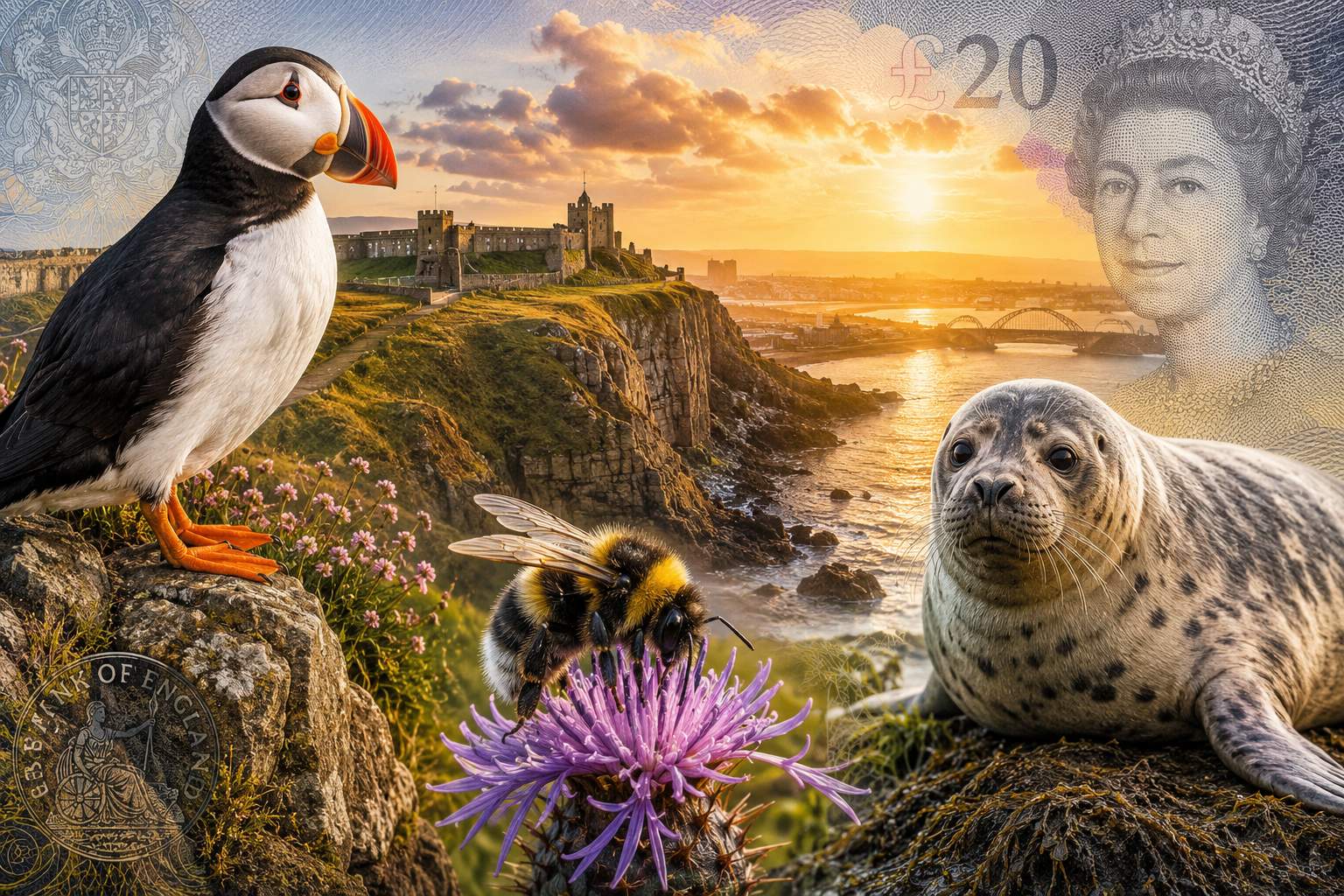
The Bank of England has unveiled an 18-strong shortlist of animals, birds, insects and marine creatures that could soon feature on Britain's next generation of banknotes, marking one of the most significant design changes to UK currency in decades.
Among the contenders are the much-loved Atlantic puffin, the buff-tailed bumblebee, the red fox and the European hedgehog, with members of the public now being invited to help shape the future look of the nation's cash.
The move represents a major shift away from the tradition of featuring historical figures on banknotes. While the portrait of King Charles III will remain, the reverse side of future notes will celebrate Britain's rich natural heritage instead.
For residents across Newcastle and the wider North East, the shortlist has particular local significance. Several of the featured species can be found in the region's coastal waters, countryside and nature reserves, making the public consultation especially relevant to local communities who regularly encounter these iconic creatures.
Public Invited to Choose Britain's Wildlife Champions.
The Bank of England has opened a nationwide consultation that allows people to vote for their favourite wildlife species from the shortlist.
Voters can select up to six animals in total, choosing up to two from each of three categories: mammals, birds, and amphibians, insects and fish.
The shortlisted mammals are the bottlenose dolphin, brown hare, European hedgehog, grey seal, pine marten and red fox.
Bird contenders include the Atlantic puffin, barn owl, common kingfisher, Eurasian curlew, great spotted woodpecker and white-tailed eagle.
Completing the list are the Atlantic salmon, basking shark, buff-tailed bumblebee, common frog, emperor dragonfly and marsh fritillary butterfly.
The consultation runs until 3 July, after which Bank of England Governor Andrew Bailey will make the final decision on which four species appear on the £5, £10, £20 and £50 notes.
Newcastle's Strong Connection to the Shortlisted Wildlife.
Many of the shortlisted species have close links to Newcastle and the North East, adding a regional dimension to the national vote.
Atlantic puffins are among the most recognisable seabirds along the Northumberland coastline. Visitors regularly travel from Newcastle to nearby coastal locations and offshore islands to catch a glimpse of the colourful birds during the breeding season.
The puffin remains one of Britain's most photographed seabirds, attracting thousands of wildlife enthusiasts to the North East each year and contributing significantly to local tourism.
Grey seals, another shortlisted contender, are frequently spotted along the Northumberland coast, while Atlantic salmon continue to play an important role in river ecosystems across the region.
Meanwhile, buff-tailed bumblebees are a familiar sight in Newcastle's parks, gardens and green spaces, helping pollinate plants and supporting biodiversity across urban and rural environments.
Wildlife charities have long highlighted the importance of protecting pollinator populations in cities such as Newcastle, where community projects and conservation initiatives continue to encourage bee-friendly habitats.
Why Wildlife Is Replacing Historic Figures.
The decision to move away from historical personalities has generated widespread debate across the political spectrum.
Current Bank of England notes feature former Prime Minister Sir Winston Churchill on the £5 note, novelist Jane Austen on the £10 note, artist JMW Turner on the £20 note and mathematician Alan Turing on the £50 note.
However, the Bank says the redesign is part of a wider currency renewal programme aimed at improving security features and reducing the risk of counterfeiting.
As notes are periodically redesigned, officials decided to explore new themes that better reflect modern Britain and its natural environment.
Future banknotes will continue to include the monarch and references to the UK's nations, but wildlife will take centre stage on the reverse side for the first time in more than half a century.
Wildlife Tourism Continues to Grow Across Britain.
The timing of the consultation comes amid growing public interest in British wildlife and nature tourism.
According to VisitBritain research, millions of domestic and international visitors participate in nature-based activities each year, contributing significantly to local economies.
Wildlife tourism has become increasingly important in regions such as Northumberland, where birdwatching, seal spotting and coastal exploration attract visitors throughout the year.
The Atlantic puffin, in particular, remains one of the UK's most sought-after wildlife sightings. Conservation organisations have reported strong public interest in puffin colonies, with many visitors travelling considerable distances to see the birds in their natural habitat.
The growing popularity of wildlife experiences reflects a broader trend towards outdoor recreation and environmental awareness.
Bees, Butterflies and Pollinators Under the Spotlight.
The inclusion of insects on the shortlist has also drawn attention to the crucial role pollinators play in the UK's ecosystem.
Research from the UK Centre for Ecology & Hydrology estimates that insect pollination contributes hundreds of millions of pounds annually to the UK economy through agricultural production.
Bumblebees are among the most important pollinating insects, helping support crops, wildflowers and natural habitats across the country.
In Newcastle and surrounding areas, local conservation groups have increasingly focused on creating pollinator-friendly spaces in public parks, schools and residential developments.
Supporters of the buff-tailed bumblebee argue that featuring the species on a banknote could help raise awareness about biodiversity and conservation challenges facing pollinators.
Expert Panel Narrowed Down the Choices.
The final shortlist was selected by a panel of wildlife experts, broadcasters and academics.
Among those involved were wildlife presenters Gordon Buchanan, Miranda Krestovnikoff and Nadeem Perera, alongside conservation and academic specialists including Katy Bell, Steve Ormerod and Dawn Scott.
Their task was to identify species that represent Britain's diverse ecosystems while also holding cultural and environmental significance.
Notably absent from the final list are household pets and several popular animals that attracted public attention during earlier discussions, including beavers and badgers.
The Bank hopes the final selection will reflect both public enthusiasm and the importance of protecting Britain's natural heritage.
Cash Usage Remains Important Despite Digital Payments.
Although digital payments continue to grow in popularity, cash remains an essential part of everyday life for millions of people across the UK.
UK Finance figures have previously shown that billions of cash transactions still take place annually, despite the increasing use of contactless cards and mobile payment services.
For many communities, including parts of Newcastle and the wider North East, cash continues to play an important role in budgeting, accessibility and local commerce.
The introduction of wildlife-themed banknotes could therefore ensure that images of Britain's most iconic species are seen by millions of people every day.
A New Chapter for British Currency.
The wildlife banknote project represents more than a design refresh. It reflects changing attitudes towards nature, conservation and national identity.
Whether the eventual winners are puffins, bumblebees, seals or salmon, the new notes will offer a fresh way to celebrate the animals and habitats that help define Britain.
For Newcastle residents, the prospect of seeing species that inhabit local coastlines, rivers and green spaces featured on currency adds an extra layer of interest to the public vote.
With voting now underway, the decision ultimately rests with the public and the Bank of England as Britain prepares for a new era of banknote design.
Share your suggestions.
What do you think should feature on Britain's next banknotes?
Political News
Newcastle Wildlife Could Inspire Future UK Banknotes
Advertisement


Comments (0)
You must be logged in to post comments.
Don't have an account? Register here
No comments yet. Be the first to share your thoughts!