
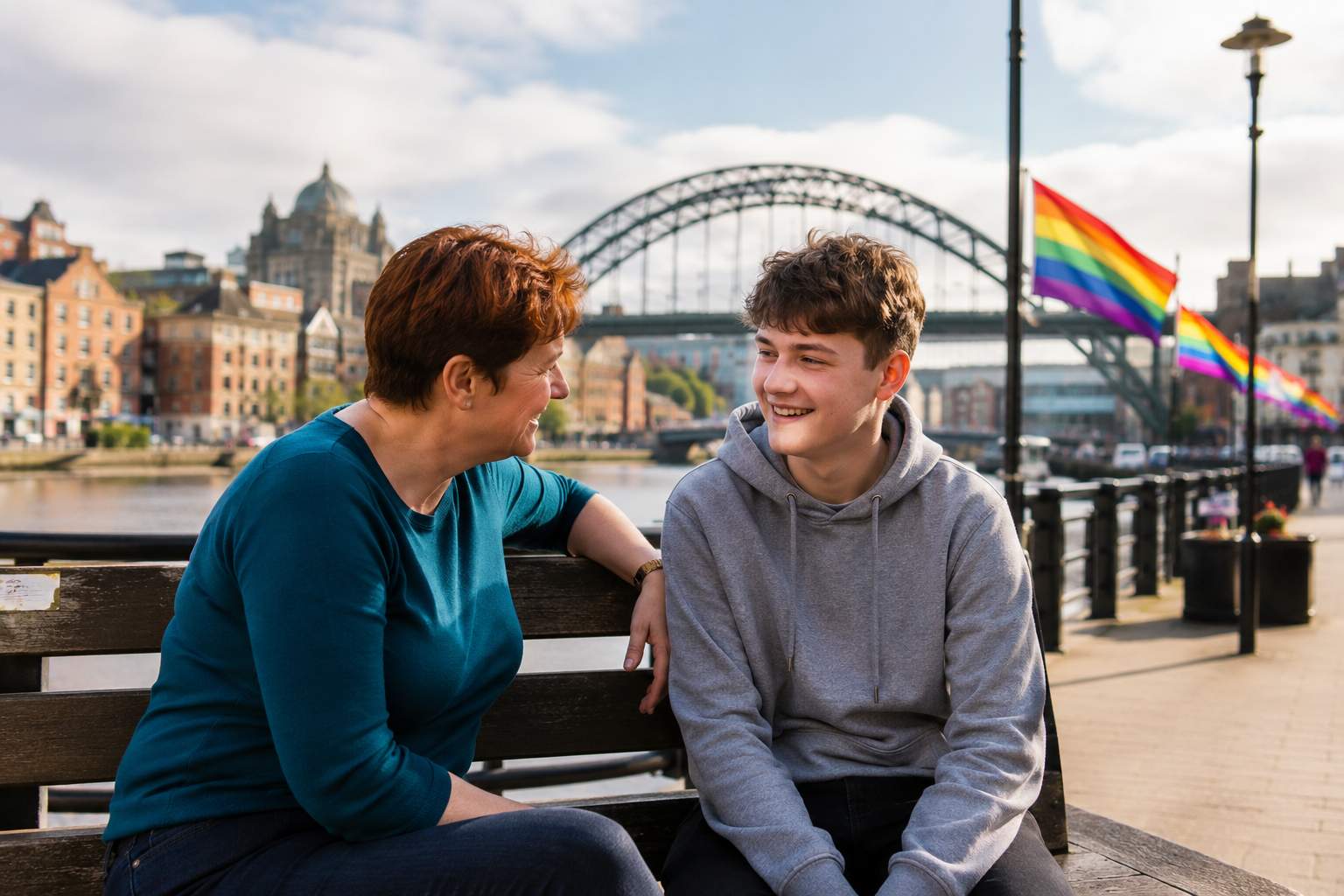
Pride Month is a time of celebration, visibility and reflection for LGBTQ+ communities across the UK. In Newcastle and across the North East, rainbow flags can be seen flying at community events, businesses and local landmarks as people come together to celebrate diversity and inclusion.
For many families, however, Pride Month can also become a deeply personal moment. It is often a time when young people feel empowered to share an important part of who they are with those closest to them. If your child comes out as gay, your response can have a lasting impact on their confidence, wellbeing and future relationship with you.
While many parents want to be supportive, it is normal to feel surprised, emotional or unsure about what to say. The good news is that you do not need to have all the answers immediately. What matters most is showing your child that they are loved, valued and accepted.
Why coming out still matters in 2025.
Although society has become more accepting in recent decades, coming out remains a significant milestone for many LGBTQ+ people. Official UK statistics show younger generations are more likely to openly identify as lesbian, gay or bisexual than previous generations. Around 8% of people aged 16 to 24 identified as lesbian, gay or bisexual in 2024, according to the Office for National Statistics.
That growing visibility is encouraging, but it does not mean every young person feels safe discussing their sexuality. Research from the charity Just Like Us found that 31% of LGBT+ young adults were not confident their parents or guardians would accept them if they came out. Nearly half reported being estranged from at least one family member.
These figures highlight an important reality. For many young people, telling their parents they are gay can still feel like one of the biggest risks they will ever take.
Your first reaction matters more than having the perfect words.
Many parents worry about saying the wrong thing. In reality, your initial reaction often carries more weight than finding the perfect response.
If your child tells you they are gay, start by listening. Allow them to speak without interruption and avoid immediately asking lots of questions. They may have spent months or even years building up the courage to tell you.
Simple responses such as "Thank you for telling me", "I love you" or "I'm proud that you felt able to share this with me" can provide enormous reassurance.
It is important to remember that while this information may be new to you, your child has likely spent considerable time thinking about it. The conversation is often the result of a long personal journey rather than a sudden decision.
Avoid making the conversation about yourself.
Parents sometimes respond with shock because they are processing unexpected emotions. While this reaction can be understandable, it is important not to shift the focus away from your child.
Comments such as "Why didn't you tell me sooner?" or "I need time to get used to this" may unintentionally make your child feel guilty or responsible for your feelings.
Instead, focus on understanding their experience. Ask open and supportive questions. You might ask how long they have known, whether they have spoken to anyone else about it, and what kind of support they would like from you.
The goal is to create a safe space where your child feels heard rather than judged.
Understanding the challenges LGBTQ+ young people face.
Even with growing acceptance, many gay young people continue to face challenges at school, online and in wider society.
The NSPCC reports that some of the most common concerns discussed by young people around sexuality include coming out, bullying, discrimination and worries about acceptance.
Mental health organisations also continue to highlight the pressures experienced by LGBTQ+ young people. Research published in the UK by The Trevor Project found that many LGBTQ+ young people experience significant mental health challenges, often linked to discrimination and fear of rejection.
Family support can act as a powerful protective factor against these difficulties. When young people know they are accepted at home, they are often better equipped to navigate challenges elsewhere.
Remember that nothing has changed about your child.
One of the most helpful perspectives for parents is recognising that your child is still the same person they were before the conversation.
Their personality, interests, talents, ambitions and values remain exactly the same. The only difference is that they have trusted you with a deeper understanding of who they are.
Many young people fear that coming out will change how their parents see them. By continuing to treat your child with the same love and respect as before, you can help remove that fear.
Acceptance does not require perfection. It simply requires consistency.
Supporting your child in Newcastle and the North East.
Families in Newcastle and the wider North East have access to a growing network of LGBTQ+ support organisations and community groups.
Northern Pride, which hosts one of the region's largest Pride celebrations, has become a focal point for LGBTQ+ visibility and support in the North East. Events bring together people from across Newcastle, Gateshead, Sunderland, Durham and beyond, helping young people feel part of a wider community.
Local youth organisations, school support programmes and community groups also provide safe spaces where LGBTQ+ young people can connect with others who share similar experiences.
For parents, these organisations can offer valuable guidance on understanding sexuality, supporting family conversations and accessing professional support when needed.
Many parents find reassurance in speaking to others who have gone through similar experiences with their own children.
Educate yourself without relying on your child to teach you.
It is perfectly normal to have questions. However, your child should not feel responsible for becoming your sole source of information.
Take time to read reputable resources from organisations such as Stonewall, Barnardo's, NSPCC and local LGBTQ+ charities. Learning independently demonstrates commitment and respect.
This can help you understand common terminology, challenges facing LGBTQ+ young people and ways to become a stronger ally.
The more informed you become, the more confident your child is likely to feel discussing important issues with you in the future.
Respect your child's privacy.
One mistake some well-meaning parents make is sharing the news with friends or family members before receiving permission.
Coming out is a personal process. Your child may feel comfortable telling you but not yet be ready to tell grandparents, siblings, neighbours or extended relatives.
Always ask before sharing information about their sexuality with anyone else.
Allowing your child to control their own story helps build trust and reinforces their sense of safety within the family.
What if you need time to process your emotions?
Supporting your child does not mean pretending you never experience emotions yourself.
Some parents may feel surprised, worried about how others will react or concerned about challenges their child might face in life. These feelings can be normal.
The key is ensuring your child does not become responsible for managing those emotions.
Talk privately with a trusted friend, partner, counsellor or support organisation if you need guidance. Processing your own feelings separately allows you to remain a source of reassurance for your child.
Remember that acceptance is a journey for some families. What matters most is maintaining an open and loving relationship throughout that journey.
Statistics every parent should know.
Several recent studies provide insight into why parental support is so important:
Around 8% of UK young adults aged 16 to 24 identify as lesbian, gay or bisexual.
Nearly half (46%) of LGBT+ young adults report being estranged from at least one family member.
Around 31% are not confident their parents would accept them if they came out.
Research suggests 79% of British adults would support a family member coming out as lesbian, gay or bisexual.
Childline identifies coming out, bullying and discrimination among the most common concerns discussed by young people regarding sexuality.
These figures demonstrate both the progress that has been made and the importance of continued family support.
Building a stronger relationship after coming out.
Many parents fear that coming out will change family dynamics. In reality, many families report becoming closer afterwards.
When a young person no longer feels the need to hide an important part of themselves, relationships often become more open and authentic.
Continue asking about their friendships, hobbies, relationships and future plans just as you always have. Celebrate their achievements and support them through challenges.
Being gay is one aspect of who your child is. It should not become the only thing family conversations revolve around.
The strongest message you can send is simple: your love is not conditional.
Pride Month is a reminder that acceptance starts at home.
Pride events across Newcastle and the North East celebrate visibility, equality and community. Yet for many LGBTQ+ people, the most important source of support remains much closer to home.
A parent's acceptance can shape confidence, mental wellbeing and self-worth for years to come.
If your child comes out as gay this Pride Month, they are not asking for perfection. They are asking to be loved, respected and accepted for who they truly are.
And for most young people, there is no greater gift than knowing their family stands beside them.
Share your advice on how to support LGBTQ+ youth.
Has your family experienced a coming out journey?
Community News
The Conversation That Changes Lives: Supporting a Gay Child
Advertisement





Comments (0)
You must be logged in to post comments.
Don't have an account? Register here
No comments yet. Be the first to share your thoughts!