
Long before the great coal staithes and steam colliers of the Victorian age, the coal trade of the Tyne depended on a tough and proud body of men known as the keelmen. For generations they laboured on the river, carrying coal in their distinctive boats from the riverside down to the waiting ships, and in doing so they became one of the most distinctive communities in the whole history of Newcastle. Their story, and the remarkable hospital they built for themselves, deserves to be far better known.
Workers of the River.
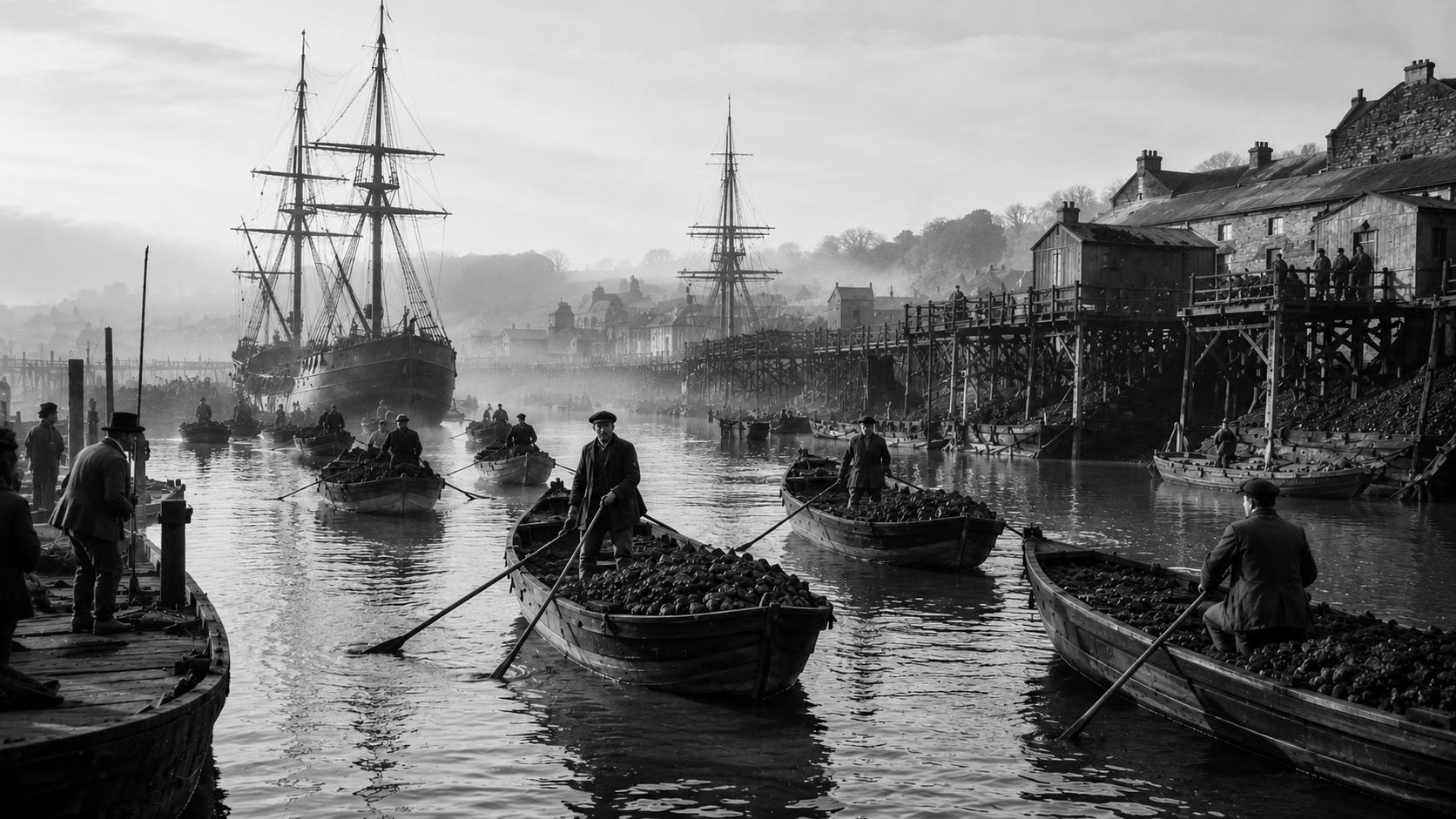
The keelmen took their name from the keel, a flat-bottomed boat designed to navigate the shallow, tricky waters of the Tyne. In the days before the river was deepened, large sea-going colliers could not always reach the riverside spots where coal was loaded, so the keelmen ferried the coal out to them in their keels. It was gruelling, skilled work that demanded strength, balance and an intimate knowledge of the river's currents and tides. A crew would manoeuvre their heavily laden boat downstream, often using long oars and a single sail, before unloading the coal into the holds of the ships by hand.
Life on the Keels.
The life of a keelman was physically punishing and often dangerous. Loading and unloading tons of coal by hand, in all weathers and at all states of the tide, took a heavy toll on the body, and accidents on the busy, crowded river were a constant risk. The men were typically paid by the tide rather than the hour, and their livelihoods rose and fell with the fortunes of the coal trade. For all the hardship, however, the keelmen took enormous pride in their craft and their independence, and they guarded the customs and traditions of their trade with fierce determination.
A Tight-Knit Community.
Many of the keelmen and their families lived together in the crowded riverside district of Sandgate, just east of the old town, and they formed an exceptionally close and distinctive community. With their own dress, their own customs and a powerful sense of solidarity, the keelmen were a recognisable part of Tyneside life, and they were not afraid to stand up for themselves. Over the years they organised to defend their wages and conditions, and their disputes and strikes were a notable feature of the city's history. This strong communal spirit was the foundation for one of their most impressive achievements.
The Keelmen's Hospital.
In a truly remarkable act of self-help, the keelmen funded and built their own charitable hospital. Paid for through contributions from the men's own hard-earned wages, the Keelmen's Hospital was completed in 1701 in Sandgate as an almshouse to care for old, sick and injured keelmen and their widows. That a body of working men should organise themselves to provide for their own in this way, centuries before any welfare state, is genuinely inspiring. The handsome building, arranged around a central courtyard, still survives in Newcastle today as a lasting and tangible monument to the dignity, foresight and solidarity of the keelmen.
The Keel Row.
The keelmen even left their mark on the region's music. The Keel Row is one of the most famous of all Tyneside folk songs, a lively tune celebrating a keelman and the women who loved them, and it remains widely known and sung to this day. Songs like this kept the memory and the spirit of the keelmen alive in the popular imagination, long after the trade itself had begun to fade. Through such music, the rhythm of life on the river and the pride of these riverside workers have echoed down the centuries.
A Vanished Trade Remembered.
The keelmen's way of life could not last forever. As the Tyne was dredged and deepened, and as great coal staithes and railways allowed colliers to be loaded directly, the need for the keels gradually disappeared, and the trade slowly died away. Yet the keelmen are far from forgotten. Their hospital still stands, their songs are still sung, and their story remains a cherished part of Newcastle's heritage. They were a vital link in the chain that carried the coal of the North East to the wider world, and their resilience, independence and remarkable spirit of self-reliance continue to command respect to this day.
Pride and Hardship on the River.
The keelmen occupy a special place in the affection of those who study Tyneside's past, partly because they embodied a fierce independence that came to symbolise the spirit of the river. They were known for their distinctive appearance and customs, and they took enormous pride in their skill at handling the heavy keels through the crowded, tidal waters of the Tyne. Theirs was a precarious living, dependent on the rhythms of the coal trade and the tides, and times of hardship could bite deeply into the riverside community of Sandgate. Yet the keelmen were far from passive in the face of difficulty; they organised, they bargained and, when they felt they were being treated unfairly, they were prepared to withdraw their labour in disputes that could bring the whole coal trade to a standstill. This combination of pride, solidarity and self-reliance is exactly what makes their story so compelling. They were ordinary working men who helped shape the fortunes of a great trade, looked after their own and left behind a legacy of music, memory and a remarkable hospital that still stands as testament to their character.
Get involved.
Leave a comment with your own take and pass this story on to someone who would enjoy it, particularly if you have keelmen somewhere in your own family tree.
Did you know the keelmen built and paid for their own hospital more than three centuries ago?
Newcastle History
The Keelmen of the Tyne and Their Hospital
The keelmen carried Tyneside's coal in their flat-bottomed boats, forming a fiercely proud riverside community in Sandgate, and even built their own hospital in 1701. The story of a vanished but unforgettable trade.
Advertisement


Comments (0)
You must be logged in to post comments.
Don't have an account? Register here
No comments yet. Be the first to share your thoughts!