
Section 28 remains one of the most controversial laws in modern British history. Enacted on 24 May 1988 as part of the Local Government Act 1988, it restricted local authorities from what the law described as the "promotion of homosexuality." Although the wording was brief, its effect was far-reaching, especially in schools, councils and LGBTQ+ communities across Britain.
The law was repealed in Scotland on 21 June 2000 through the Ethical Standards in Public Life etc. (Scotland) Act 2000. It remained in force in England and Wales until 18 November 2003, when it was repealed by Section 122 of the Local Government Act 2003. Section 28 did not apply to Northern Ireland.
More than 20 years after its repeal in England and Wales, Section 28 is still discussed in debates about LGBTQ+ education, equality, school policy and the rights of young people to learn about different families and identities. For many people who grew up under it, the law was not just a political argument. It shaped classrooms, silenced teachers and left a generation of LGBTQ+ pupils feeling invisible.
What Section 28 was.
Section 28 was introduced into law as Section 28 of the Local Government Act 1988. Its wording said that a local authority "shall not intentionally promote homosexuality or publish material with the intention of promoting homosexuality." It also said local authorities should not promote "the teaching in any maintained school of the acceptability of homosexuality as a pretended family relationship."
The phrase "pretended family relationship" became one of the most criticised parts of the law. To many LGBTQ+ people and campaigners, it suggested that same-sex relationships and families were not real, equal or worthy of recognition. The law did not make homosexuality illegal, and it did not directly ban teachers from mentioning LGBTQ+ people. However, the wording was so broad and unclear that many schools and councils became afraid of crossing the line.
This uncertainty mattered. Teachers, librarians, youth workers and local authority staff often felt unsure about what they could say, teach or provide. Books, support materials and advice services connected to LGBTQ+ issues were sometimes avoided or withdrawn. The result was a chilling effect that went far beyond the exact legal wording.
Why Section 28 was introduced.
Section 28 was introduced during a period of intense social and political tension in Britain. The 1980s saw growing LGBTQ+ visibility, but also widespread prejudice, especially during the HIV and AIDS crisis. Gay men in particular were often targeted by hostile media coverage, moral panic and misinformation.
At the same time, some Conservative politicians argued that left-wing local councils were using public money to support materials or projects they believed promoted homosexuality. Supporters of Section 28 claimed it was needed to protect children and defend traditional family values. Opponents argued that the law was a direct attack on gay and lesbian people, and that it used children and schools as a political battleground.
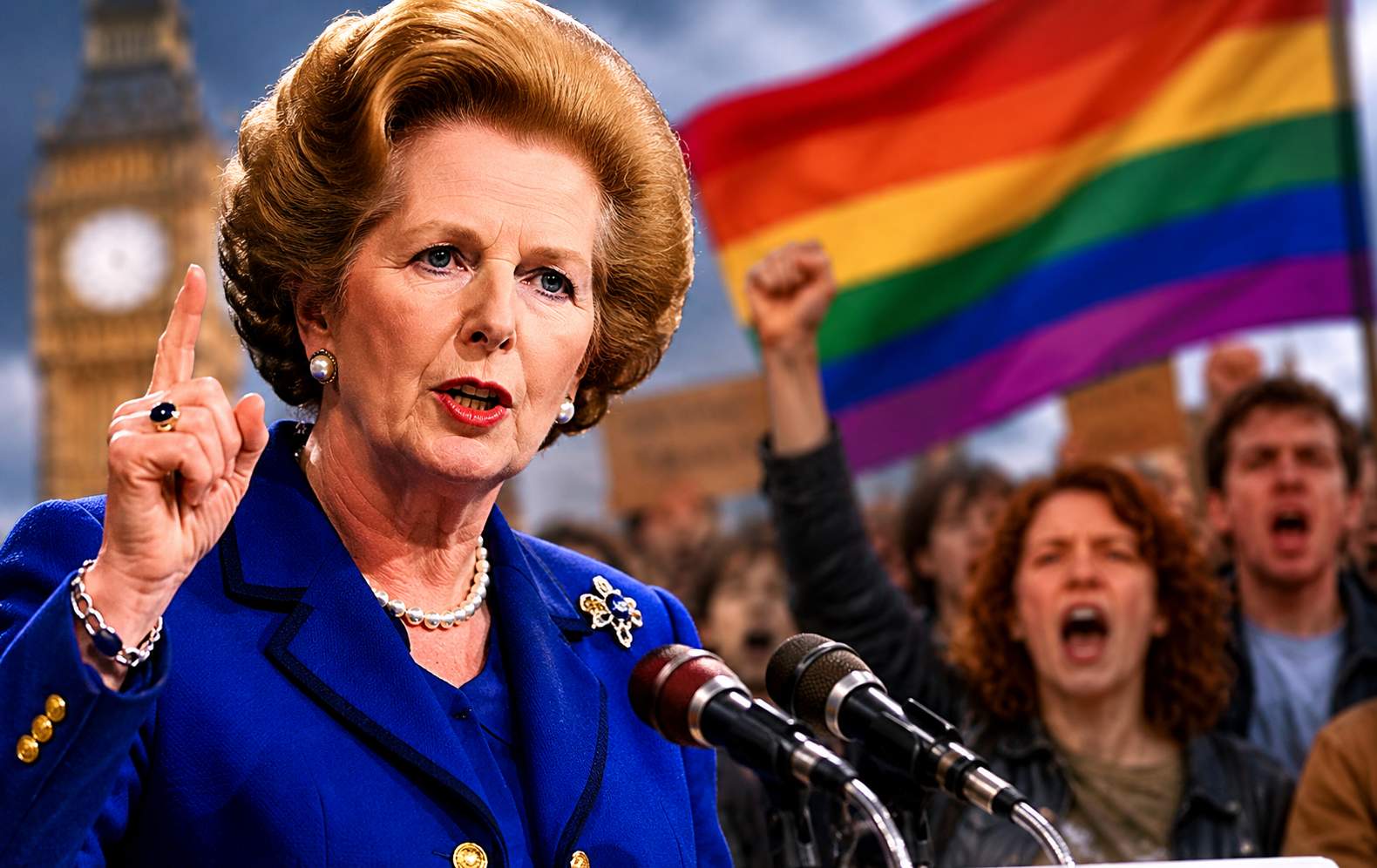
Margaret Thatcher's government backed the measure, and it became law on 24 May 1988. For supporters, it was presented as a safeguard. For critics, it was an official act of discrimination that singled out LGBTQ+ people for unequal treatment.
The reaction to the law.
The introduction of Section 28 triggered major protests and helped energise a new era of LGBTQ+ activism in Britain. Campaigners, teachers, trade unions, artists and civil rights groups warned that the law would increase stigma and make schools less safe for young people.
Some protests became famous. Activists disrupted a BBC news broadcast, while others staged a protest in the House of Lords. These moments helped turn Section 28 from a parliamentary clause into a national symbol of resistance.
The backlash also contributed to the growth of LGBTQ+ campaigning organisations. Many activists who fought Section 28 went on to play major roles in campaigns for equal age of consent, civil partnerships, adoption rights and same-sex marriage. In that sense, the law had an unintended effect. It mobilised many people who might otherwise never have entered public campaigning.
The effect on schools.
Although Section 28 applied to local authorities rather than directly to individual teachers, its impact on schools was profound. Many teachers believed they could not discuss homosexuality, same-sex relationships or LGBTQ+ families in any positive or supportive way. Even where the law did not technically ban such conversations, fear of complaints or disciplinary action often led to silence.
This had serious consequences for pupils. LGBTQ+ students, or those questioning their sexuality, often grew up without support, representation or reliable information. In many classrooms, heterosexual relationships were treated as normal, while same-sex relationships were ignored or treated as controversial.
The law also affected how schools responded to homophobic bullying. Some teachers felt unable to challenge anti-gay language properly because doing so might require a wider discussion about LGBTQ+ identity. As a result, many pupils were left to deal with bullying, shame and isolation without the backing they needed from adults.
No successful prosecutions were brought under Section 28, but that does not mean the law had no effect. Its power was often cultural and psychological. It made people cautious, encouraged self-censorship and created the impression that LGBTQ+ lives were unsuitable for open discussion in schools.
The effect on LGBTQ+ communities.
For LGBTQ+ communities, Section 28 was deeply damaging. It arrived at a time when many gay and bisexual people were already facing fear and hostility linked to the AIDS crisis. The law reinforced the message that homosexuality was something dangerous, inappropriate or unacceptable for young people to know about.
For lesbian and gay parents, the phrase "pretended family relationship" was especially painful. It suggested that their families were inferior to heterosexual families. For young people growing up with same-sex parents, the law added another layer of stigma.
The emotional legacy was also significant. Many LGBTQ+ adults who were at school during the Section 28 years have spoken about feeling alone, ashamed or unable to ask for help. Some did not see themselves reflected positively in education until adulthood. Others say the silence around LGBTQ+ identity delayed their ability to understand or accept themselves.
Section 28 did not only affect what was taught. It affected what was considered speakable.
Why Section 28 was repealed.
By the late 1990s, public attitudes toward LGBTQ+ people were changing. The election of the Labour government in 1997 also brought a new political approach to equality law. Campaigners argued that Section 28 was outdated, discriminatory and harmful to children who needed support.
The repeal process was not straightforward. Opposition remained strong among some conservative politicians, newspapers and religious groups. Critics of repeal claimed that removing Section 28 would allow inappropriate teaching in schools. Supporters of repeal argued that the law had never protected children, but had instead made schools less able to support them.
Scotland repealed Section 28 first. The law ended there on 21 June 2000 through the Ethical Standards in Public Life etc. (Scotland) Act 2000. In England and Wales, repeal took longer. Section 28 was finally removed on 18 November 2003 under Section 122 of the Local Government Act 2003.
The repeal reflected a wider shift in British law and society. Over the following years, the UK introduced major LGBTQ+ rights reforms, including civil partnerships, adoption equality, stronger anti-discrimination protections and same-sex marriage.
The legacy of Section 28 today.
Section 28 is no longer law, but its legacy continues. Many teachers and pupils who lived through it say the effects did not disappear overnight. Schools that had avoided LGBTQ+ topics for years did not automatically become confident in discussing them after repeal.
The law is still raised today in debates about relationships and sex education, LGBTQ+ inclusion and the treatment of transgender and queer young people in schools. For campaigners, Section 28 is often used as a warning about what can happen when politics restricts honest education about identity, relationships and families.
Its legacy can also be seen in the continued need for inclusive teaching materials. Many schools now teach about different family structures and LGBTQ+ history, but campaigners argue that provision remains inconsistent. Some young people still report hearing anti-LGBTQ+ language or feeling that their experiences are not properly represented.
For those who grew up under Section 28, the law remains personal. It shaped childhoods, delayed conversations and left many people feeling that they had to hide who they were. That is why the history of Section 28 continues to matter.
Why Section 28 still matters.
Section 28 matters because it shows how a short piece of legislation can have a long social impact. Its wording was narrow enough to sit inside local government law, but broad enough to influence schools, public services and public attitudes for more than a decade.
It also matters because it is part of the wider history of LGBTQ+ rights in the UK. The law was introduced at a time when gay and lesbian people were often treated as a threat to family life. Its repeal marked a major step toward legal equality, but the memories of its impact continue to shape how many people view education policy today.
The story of Section 28 is not only about what Parliament passed in 1988 or repealed in 2000 and 2003. It is about the pupils who were left unsupported, the teachers who felt silenced, the families who were insulted by the law's wording and the campaigners who fought for change.
Section 28 came into force on 24 May 1988 and became one of the defining LGBTQ+ rights issues in modern British history. It was repealed in Scotland on 21 June 2000 and in England and Wales on 18 November 2003. It never applied in Northern Ireland.
Although no successful prosecutions were brought under the law, its impact was still powerful. It created fear, encouraged silence and made many schools and local authorities cautious about discussing LGBTQ+ lives. For a generation of young people, that silence had lasting consequences.
Today, Section 28 stands as a reminder of how law, politics and culture can shape the way people understand themselves and others. Its repeal was a milestone for equality, but its legacy continues to influence debates about education, inclusion and LGBTQ+ rights in Britain.
Do you believe the legacy of Section 28 is still felt in classrooms and communities today?
Let us know your thoughts below and help continue the discussion on LGBTQ+ rights, history and equality.
Political News
The Lasting Impact of Margaret Thatcher's Section 28 on LGBTQ+ Rights in the UK
Advertisement


Comments (0)
You must be logged in to post comments.
Don't have an account? Register here
No comments yet. Be the first to share your thoughts!