
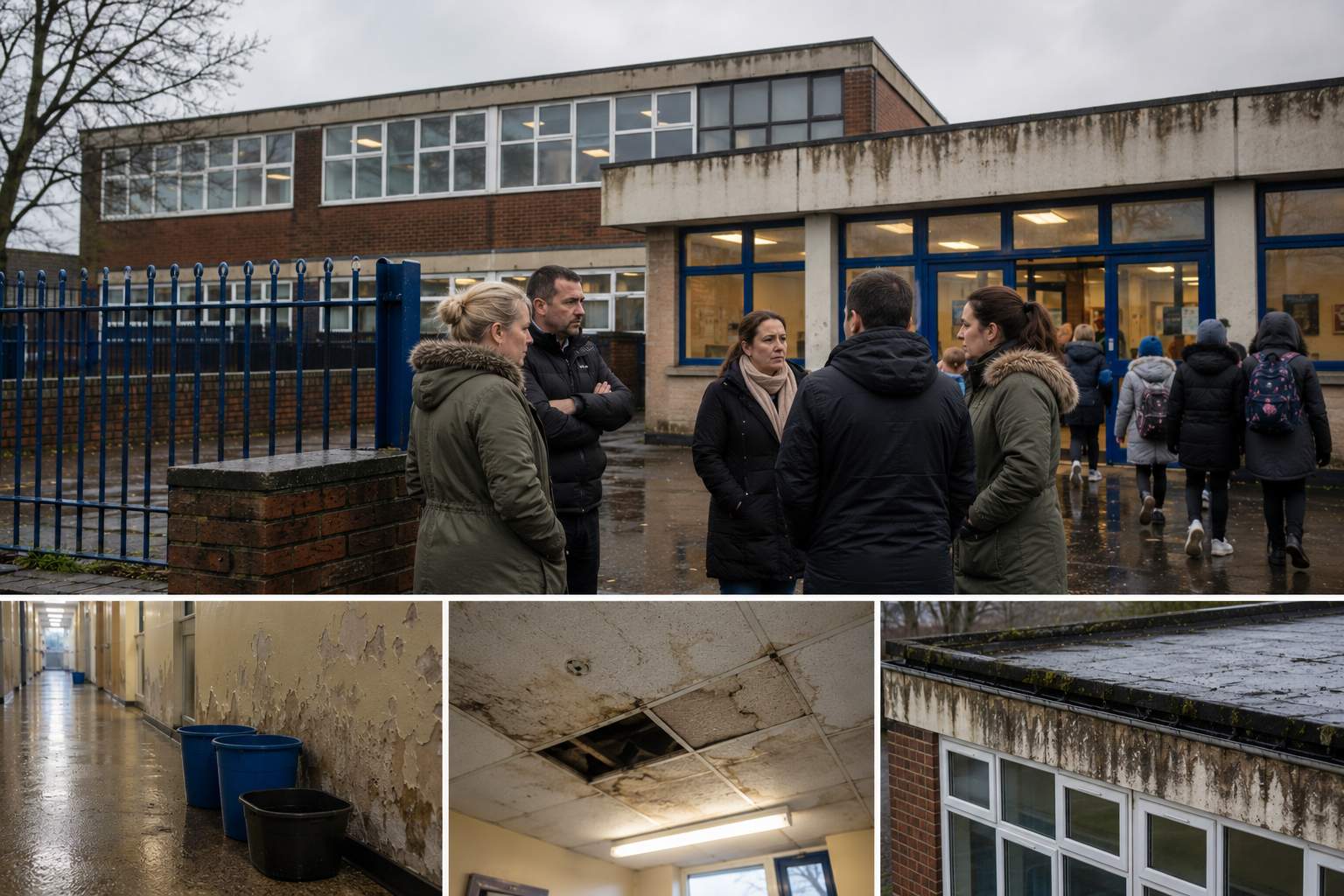
Across the North East, concerns are growing over the condition of school buildings where thousands of children spend much of their day. From leaking roofs and damaged classrooms to sewage problems, damp, mould and ageing infrastructure, school leaders and parents are increasingly questioning whether some educational environments are safe and fit for purpose.
While teachers focus on improving educational outcomes, many schools are battling issues that have little to do with learning. Reports of flooded corridors, unusable toilets, damaged ceilings and outdated heating systems have become a familiar challenge in parts of England, including schools across Newcastle and the wider North East.
The issue has become more visible since the national RAAC concrete crisis, but experts warn that dangerous building conditions extend far beyond one construction material.
A Hidden Health Problem Inside School Buildings.
For many families, the school gates represent a place of safety. However, deteriorating buildings can expose children and staff to a range of health risks that are often overlooked.
Persistent leaks can create damp environments where mould develops. Medical experts have long linked damp and mould exposure to respiratory problems, asthma flare-ups, coughing and allergic reactions. Young children, whose immune systems are still developing, are particularly vulnerable.
Sewage leaks present another serious concern. Faulty drainage systems and collapsed pipes can create unpleasant conditions, increase the risk of bacterial contamination and force schools to close sections of buildings. In some cases, toilets become unusable, creating hygiene challenges for both pupils and staff.
A recent survey of school leaders found that half of schools in England had buildings or facilities that were either unusable or unfit for purpose due to issues such as leaks, mould, faulty toilets and ageing infrastructure. Among those affected, 73 percent reported toilet facilities that were either closed or not fit for use.
Health concerns are not limited to visible problems. Older school buildings can also contain asbestos, ageing electrical systems and deteriorating structural components that require constant monitoring and maintenance.
Newcastle And The North East Have Faced Their Own Challenges.
The North East has not escaped the wider national problem.
Schools in Newcastle and Tyne and Wear were among those affected during the reinforced autoclaved aerated concrete, or RAAC, crisis. RAAC was widely used in public buildings between the 1950s and 1990s and has since been found to deteriorate faster than traditional concrete. Concerns about structural failure led to emergency inspections and, in some cases, partial school closures.
Among the schools impacted were St John Vianney Catholic Primary School in West Denton and St Columba's Catholic Primary School in Wallsend, both of which have been earmarked for replacement buildings.
While RAAC attracted national headlines, education leaders say many North East schools face wider maintenance issues, including ageing roofs, outdated heating systems and decades of underinvestment.
The challenge is particularly significant because many school buildings across the region were constructed during periods of rapid population growth in the post-war decades. As those buildings age, repair costs continue to rise.
The Scale Of England's School Repair Crisis.
The condition of school buildings has become a growing concern for government departments, auditors and education organisations.
According to the National Audit Office, around 700,000 pupils in England attend schools that require major rebuilding or refurbishment. The watchdog concluded that years of underinvestment have contributed to a decline in the overall condition of the school estate.
Separate analysis has highlighted a school maintenance backlog estimated at approximately £13.8 billion, making schools one of the largest areas of public sector repair need.
Other figures paint an equally concerning picture:
More than one-third of school buildings are now considered beyond their original design life.
An estimated 1.5 million children are believed to be studying in buildings considered unfit or in need of significant repair.
Nearly all school leaders surveyed recently said existing capital funding was insufficient to maintain their buildings properly.
The figures suggest that problems involving leaks, sewage systems, damaged classrooms and ageing facilities are not isolated incidents but part of a much wider national challenge.
How Poor Conditions Affect Learning.
The consequences of building disrepair extend well beyond physical safety.
Research consistently shows that learning environments influence concentration, attendance and educational performance. Children distracted by cold classrooms, unpleasant smells, leaking ceilings or unusable facilities may struggle to focus on lessons.
Teachers and school leaders often face difficult decisions when maintenance budgets are stretched. Money that could be spent on educational resources, support staff or extracurricular activities may instead be diverted towards emergency repairs.
In some schools, classrooms have been temporarily closed because of structural concerns or water damage. This can lead to overcrowding, disruption and reduced access to specialist learning spaces.
For children with special educational needs and disabilities, suitable learning environments can be especially important. Recent survey findings showed that 41 percent of schools experiencing building problems reported SEND facilities that were no longer fit for purpose.
What The Government Is Doing To Address The Problem.
Successive governments have faced criticism over the condition of public buildings, but significant investment programmes are now underway.
The Department for Education has launched extensive surveys of school buildings across England through its Condition Data Collection programme. Every government-funded school is being assessed to help identify priorities for future investment and repairs.
The School Rebuilding Programme is one of the government's flagship initiatives. More than 500 schools are expected to benefit from rebuilding or major refurbishment projects over the coming decade, with priority given to those in the poorest condition.
The government has also committed funding to remove RAAC from affected schools and has stated that schools receiving removal grants should be free of the material by 2029. Around 237 schools across England have been identified as containing RAAC.
Education officials say additional capital funding is being directed towards repairing roofs, replacing heating systems, upgrading drainage infrastructure and tackling urgent safety concerns.
However, critics argue that the scale of deterioration means progress may take years to become visible in many communities.
Why Parents Are Paying Closer Attention.
Parents today are more aware of school building conditions than perhaps at any point in recent history.
Social media, local news coverage and increased transparency around inspection reports have made it easier for families to learn about issues affecting their local schools. Concerns that once remained largely internal are now often discussed publicly.
Many parents recognise that teachers and school leaders have limited control over ageing infrastructure. Yet there is growing expectation that children should not have to learn in buildings affected by leaks, mould, sewage problems or structural concerns.
For communities across Newcastle and the wider North East, the debate is not simply about bricks and mortar. It is about ensuring that every child has access to a safe, healthy environment where they can focus on learning rather than the condition of the building around them.
A Long-Term Challenge That Requires Long-Term Investment.
Fixing England's ageing school estate will not happen overnight. The sheer scale of repair requirements means governments, councils and academy trusts face difficult funding decisions for years to come.
Yet few would argue against the principle that children deserve safe classrooms, functioning facilities and buildings that support their education rather than undermine it.
The North East has already seen first-hand how structural issues can disrupt learning. As rebuilding projects progress and maintenance programmes continue, many parents, teachers and pupils will be watching closely to see whether promised improvements translate into meaningful change on the ground.
The condition of a school building may not determine a child's potential, but it can play a significant role in their daily experience of education. Ensuring those buildings are safe, healthy and fit for the future remains one of the most important challenges facing the education system today.
Share your views.
Do you believe enough is being done to tackle leaking roofs, sewage issues and ageing classrooms?
Local News
The North East School Repairs Backlog Putting Pupils At Risk
Advertisement





Comments (0)
You must be logged in to post comments.
Don't have an account? Register here
No comments yet. Be the first to share your thoughts!