
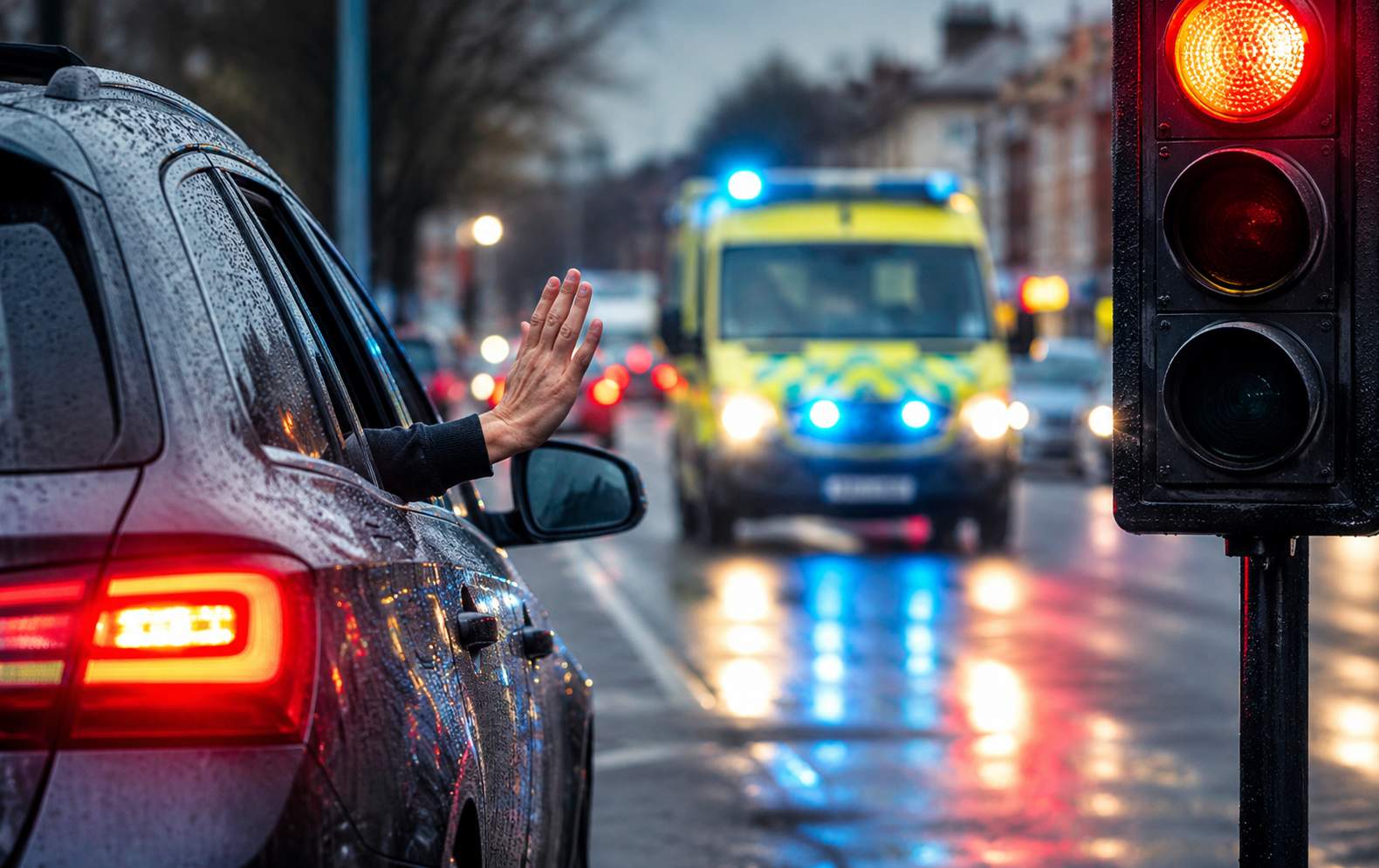
Motorists across Newcastle are being reminded to stay calm and follow the law when emergency vehicles approach, after fresh warnings revealed that many drivers could unknowingly face fines and penalty points while trying to help ambulances, police cars and fire engines get through traffic.
The RAC has issued a warning to drivers across the UK, stressing that road laws still apply even during emergency situations. While most motorists instinctively attempt to move out of the way as quickly as possible when they see flashing blue lights or hear sirens, making the wrong decision in panic can result in serious consequences.
Drivers are being urged not to drive through red traffic lights, enter restricted bus lanes, stop dangerously, or mount pavements simply to allow emergency vehicles to pass. According to motoring experts, these split-second decisions can not only lead to penalties but may also create dangerous situations for pedestrians, cyclists and other road users.
Emergency vehicle laws explained.
The warning comes as traffic congestion continues to increase in many busy urban areas, including Newcastle city centre and surrounding commuter routes. During peak travel times, drivers often feel pressured to clear a path immediately when an ambulance or police vehicle appears behind them.
However, the RAC says motorists should remember that emergency service drivers are highly trained to navigate traffic safely and do not expect members of the public to break the law on their behalf.
One of the most common mistakes happens at traffic lights. Drivers frequently edge over the white line or move through red lights in an attempt to create room for approaching emergency vehicles. Despite good intentions, doing so remains illegal under UK road laws and could result in a fine, penalty points, or even prosecution if it causes an accident.
Road safety experts say many motorists wrongly assume that camera operators or police officers will automatically cancel penalties issued in these situations. In reality, there is no guarantee that fines will be overturned simply because a driver was trying to make way for an ambulance or fire engine.
Ambulance crews urge drivers to stay calm.
West Midlands Ambulance Service has also reinforced the message, advising motorists waiting at red lights to remain where they are unless it is completely safe and legal to move.
The service explained that ambulance crews are trained to assess traffic conditions and may even temporarily switch off sirens while waiting behind vehicles at junctions or traffic lights. This is done to reduce panic among drivers and lower the risk of unsafe manoeuvres.
Motorists in Newcastle are also being encouraged to avoid reacting suddenly when emergency vehicles appear nearby. Sudden braking, swerving or mounting kerbs could place pedestrians and cyclists in danger, particularly in busy shopping areas and residential streets.
The Highway Code clearly states that drivers should take action carefully and remain aware of their surroundings. Panic reactions can quickly create more hazards than the emergency vehicle itself.
Highway Code guidance for emergency vehicles.
Under the Highway Code, drivers should look and listen for ambulances, police cars, fire engines and other emergency vehicles using flashing blue, red or green lights, sirens or flashing headlights. Once aware of the vehicle, motorists should consider the safest place to pull over if necessary.
Drivers are also advised not to stop in locations that would block the road completely or put other motorists at risk. Emergency service drivers are trained to anticipate traffic flow and will often manoeuvre around stationary vehicles when required.
Importantly, motorists should never enter cycle boxes at traffic lights, drive onto pavements, or enter areas marked with solid white lines unless legally permitted to do so.
Experts say there is growing confusion among motorists regarding what is allowed during emergency situations, particularly as modern roads become busier and more complex. Bus lanes, yellow box junctions and advanced stop lines can all create uncertainty for drivers trying to respond quickly to approaching emergency vehicles.
Newcastle drivers face increasing traffic pressures.
In Newcastle, increasing traffic levels around key routes such as the A1, Central Motorway and city centre junctions have made encounters with emergency vehicles more common. Commuters navigating congested roads may feel intense pressure to act immediately when sirens are heard behind them.
Road safety campaigners say education remains the best way to reduce accidents and unnecessary penalties. Understanding what drivers can and cannot legally do is essential for keeping roads safe while still allowing emergency services to respond rapidly.
Motoring organisations are now encouraging drivers to think ahead whenever they are in heavy traffic. Leaving extra space between vehicles and remaining alert can make it easier for emergency services to pass without forcing dangerous manoeuvres.
The RAC says staying calm is one of the most important things motorists can do. Emergency vehicles are equipped with advanced warning systems and are driven by professionals trained to handle difficult road conditions safely.
Drivers who panic are far more likely to make errors that could endanger themselves and others.
Why breaking the law could cost you.
Crossing the stop line at a red traffic light remains one of the biggest risks for drivers. Traffic enforcement cameras may automatically record offences, potentially leading to fines and points on a driving licence.
Insurance costs could also rise if drivers receive penalty points for offences committed while attempting to move aside for emergency vehicles. In more serious cases involving collisions or dangerous driving, motorists could face court proceedings.
Road safety experts stress that while helping emergency crews is important, no driver is expected to put lives at risk or ignore traffic laws.
For drivers across Newcastle and the wider North East, the advice remains clear - stay aware, stay calm, and only move when it is safe and legal to do so.
Have you ever encountered an emergency vehicle in heavy Newcastle traffic? Share your experiences in the comments to help other drivers stay safe on North East roads.
Local News
Why Moving for Emergency Vehicles Could Land Drivers With Penalty Points
Advertisement



Comments (0)
You must be logged in to post comments.
Don't have an account? Register here
No comments yet. Be the first to share your thoughts!