
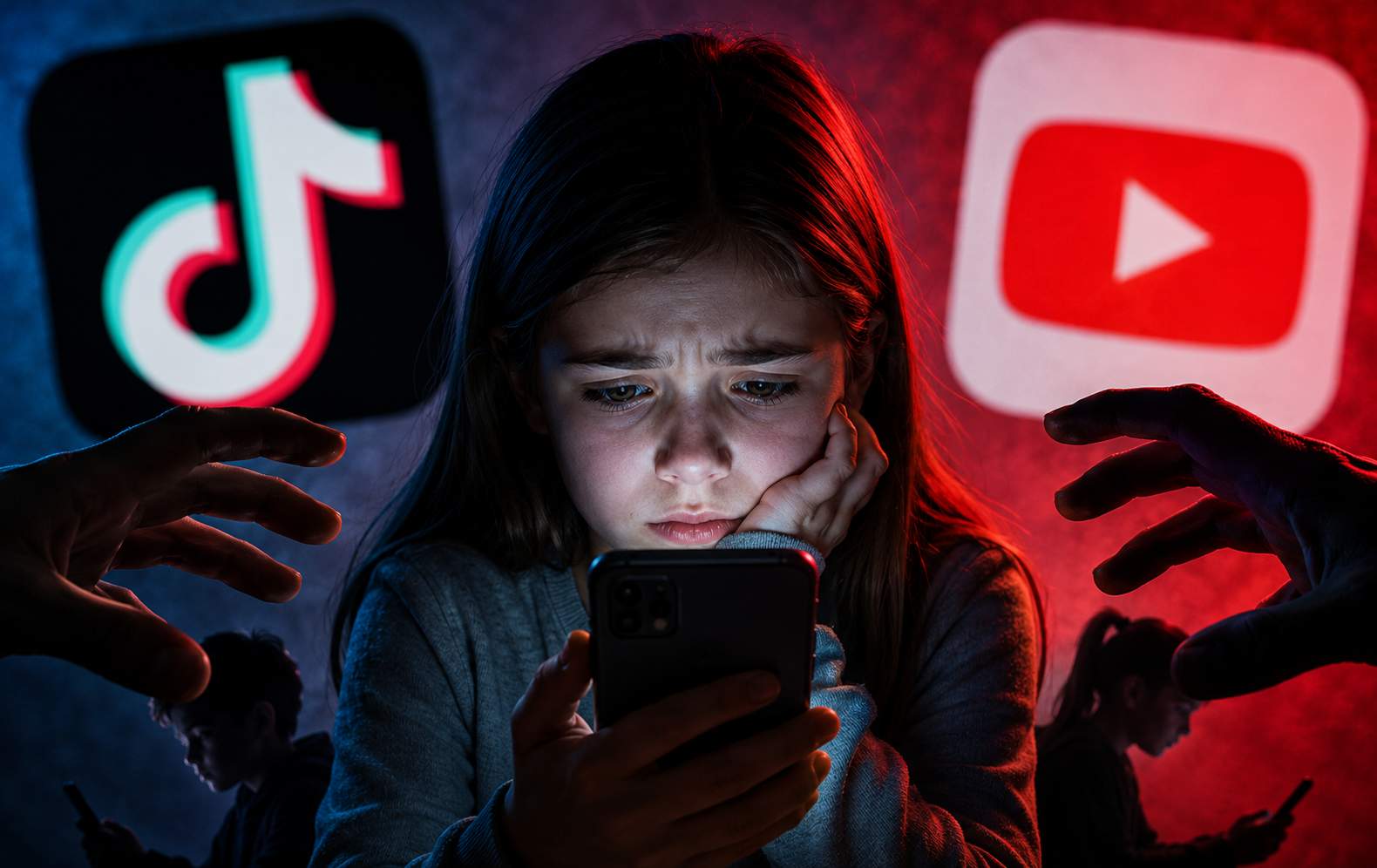
Britain’s communications regulator has sharply criticised TikTok and YouTube after claiming the platforms are still failing to do enough to protect children from harmful online content. The warning comes amid increasing political pressure for tighter social media regulation and growing public concern about the impact online platforms are having on young people across the UK, including families in Newcastle and the North East.
In a newly published report, Ofcom said the two global platforms had not committed to making major changes to their recommendation systems despite repeated concerns about the type of material children continue to see online. The regulator said evidence gathered during its investigation showed harmful content was still reaching underage users through algorithm-driven feeds.
The findings are likely to intensify debate around whether the UK government should introduce stricter age restrictions or even ban social media access for children under 16.
Ofcom Says Platforms Are “Not Safe Enough”.
Ofcom’s report examined how five of the world’s biggest social media and online entertainment companies responded to demands for stronger child protection measures. While Meta, Snap and Roblox agreed to introduce additional safeguards, TikTok and YouTube were singled out for failing to offer significant new commitments.
The regulator said both platforms continued to insist their existing systems already provided safe experiences for younger users. However, Ofcom challenged those claims directly, stating that evidence suggested children were still being exposed to harmful material through personalised content feeds.
The criticism reflects a wider shift in how online harms are viewed by regulators and child safety campaigners. Rather than focusing only on removing harmful posts after they appear, authorities are increasingly questioning why certain content is being recommended to children in the first place.
Social media analyst Matt Navarra said the debate around online safety had changed dramatically in recent years.
He explained that regulators are no longer only asking whether companies remove dangerous content quickly enough. Instead, the bigger question now is why algorithms continue placing potentially harmful videos and posts directly in front of young users.
TikTok And YouTube Defend Existing Safety Features.
Both TikTok and YouTube rejected the criticism and pointed to safety tools already available on their platforms.
TikTok said it was disappointed that Ofcom had failed to properly recognise the measures already introduced to protect younger users. The company highlighted restrictions that prevent direct messaging for users under 16 as well as parental control options designed to manage screen time and content access.
YouTube also defended its approach, saying it works closely with child safety experts to deliver what it described as industry-leading age-appropriate experiences for children and teenagers.
The Google-owned platform noted that parents can set time limits on YouTube Shorts, its short-form video feature that has become hugely popular with younger audiences.
Despite those assurances, campaigners continue to argue that existing protections are not enough. Many believe recommendation systems remain one of the biggest risks facing children online because harmful or addictive content can spread rapidly through automated feeds.
Concerns Grow Over Underage Social Media Use.
Ofcom also revealed new data showing large numbers of younger children are still using social media services despite minimum age requirements.
According to the regulator, 84 percent of children aged between eight and 12 use at least one major platform that officially requires users to be at least 13 years old. The figures have raised fresh concerns about how effectively companies are enforcing age verification rules.
The regulator warned it may now share concerns directly with the government as ministers consider introducing stronger online safety legislation.
The debate is particularly relevant for parents in cities such as Newcastle, where schools and youth organisations have increasingly raised concerns about excessive screen time, online bullying and harmful social media trends affecting teenagers.
Professor Victoria Baines, an online safety researcher, said the findings were not surprising given the limited success other countries have experienced when trying to restrict underage access to social media platforms.
She suggested companies may eventually need to rely more heavily on behavioural analysis to identify underage users. This could include monitoring viewing habits, interactions and communication patterns to determine whether somebody is genuinely above the minimum age requirement.
Snap, Roblox And Meta Introduce New Measures.
While TikTok and YouTube faced criticism, Ofcom praised other major platforms for agreeing to implement stronger child safety protections.
Snap, the company behind Snapchat, has committed to blocking adult strangers from contacting children by default in the UK. It will also stop encouraging children to connect with users they do not know and plans to introduce stronger age verification checks later this year.
A Snapchat spokesperson said the company aimed to improve child safety while still allowing users to stay connected with real friends and family members.
Gaming platform Roblox also announced new changes that will allow parents to disable direct chat entirely for users under 16.
Meanwhile, Meta has agreed to hide Instagram connection lists for teenagers by default and is developing artificial intelligence tools designed to detect potentially sexualised conversations in direct messages.
Child safety charities welcomed those developments but warned that stronger enforcement would still be needed if meaningful progress is to be made.
Andy Burrows, chief executive of the Molly Rose Foundation, accused major technology companies of being too slow to act against preventable harm online.
He argued that personalised recommendation algorithms continue pushing dangerous material towards teenagers and called for tougher restrictions on systems that encourage excessive use among younger audiences.
Pressure Builds For A UK Social Media Ban.
The report arrives as the UK government considers whether to introduce a social media ban for under-16s.
A public consultation on the issue is due to close soon, with ministers expected to announce their response later this summer. The debate has become one of the biggest political issues surrounding online safety in Britain.
Government officials have already signalled that all options remain under consideration, including stricter age limits, app curfews and a complete ban on social media access for younger teenagers.
The Education Committee has also backed calls for stronger action. MPs recently recommended a statutory ban for under-16s alongside restrictions on platform features they believe are deliberately designed to increase screen addiction among young people.
Committee chair Helen Hayes MP said social media companies could no longer be trusted to regulate themselves effectively.
She argued that commercial interests continue to outweigh child safety concerns and called for what she described as a “total reset” of online protections for young people.
Ofcom Promises Tougher Enforcement Action.
Ofcom chief executive Dame Melanie Dawes defended the regulator’s work following criticism that action against major tech firms has been too slow.
Speaking during media interviews after the report’s release, she acknowledged that online safety enforcement remains an enormous challenge but insisted progress was being made.
Dame Melanie said Silicon Valley companies had spent decades prioritising growth over safety and warned that changing that culture would take time.
However, she also stressed that Ofcom was prepared to launch formal investigations and use stronger enforcement powers if companies fail to comply with new online safety requirements.
The regulator warned all promises made by social media platforms must now be implemented quickly and effectively.
With pressure mounting from politicians, campaign groups and parents, the future of social media regulation in the UK could soon change significantly.
As concerns continue to grow in Newcastle and across the country, many families will now be watching closely to see whether tougher laws finally force major technology firms to put child safety ahead of profits.
What do you think about stricter social media rules for children in Newcastle and across the UK?
Political News
YouTube And TikTok Facing Pressure Over Online Safety Failures
Advertisement


Comments (0)
You must be logged in to post comments.
Don't have an account? Register here
No comments yet. Be the first to share your thoughts!