
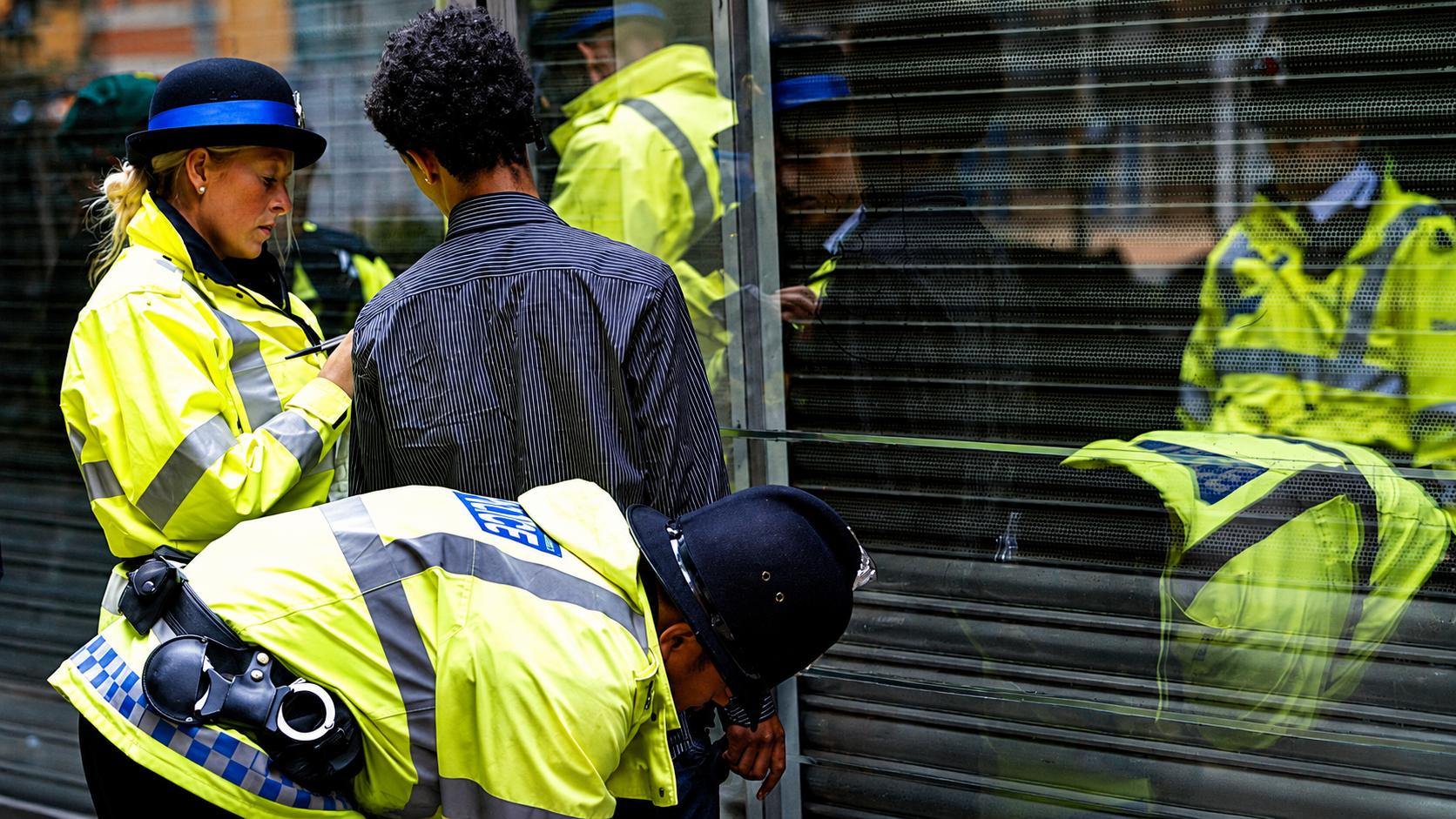
Stop and search is among the most visible and most debated of all police powers. It has been the subject of reviews, reforms, legal challenges and a great deal of public argument over several decades.
Whatever view you take of it, the practical position is worth knowing. The rules are reasonably clear, they apply everywhere in England and Wales, and knowing them changes how an encounter goes.
Here is what officers can do, what they must tell you, and where the limits sit.
Most searches require reasonable grounds.
The main power, under section 1 of the Police and Criminal Evidence Act 1984, allows an officer to search a person or vehicle where they have reasonable grounds to suspect they will find stolen or prohibited articles.
Reasonable grounds must be based on objective factors. They cannot rest on personal appearance alone, on prior convictions alone, or on generalisations about a group of people.
This is the crucial safeguard, and it is set out in a statutory code of practice known as Code A. An officer should be able to explain what specifically caused them to form that suspicion.
Some powers do not require suspicion at all.
Section 60 of the Criminal Justice and Public Order Act 1994 allows searches without reasonable grounds within a defined area for a defined period.
It must be authorised by a senior officer who believes serious violence may occur, or that people are carrying weapons in the area. It is intended for specific, time-limited circumstances rather than routine use.
Separate powers exist under terrorism legislation, again subject to authorisation requirements. If you are stopped under one of these, the officer should say so.
Officers must tell you specific things.
Before searching, an officer must give you certain information. The mnemonic used in police training is GOWISELY.
That covers the grounds for the search, the object being searched for, the officer's warrant number, the station they are attached to, your entitlement to a record, the legal power being used, and, if the officer is in plain clothes, they must identify themselves and show identification.
You are entitled to know why you are being searched. If that has not been explained, it is entirely reasonable to ask, calmly and clearly.
What can be removed in public is limited.
In a public place, an officer can require you to remove an outer coat, jacket and gloves. That is the limit of what can be required in public view.
Anything further, including removal of a T-shirt or headwear worn for religious reasons, must be done out of public view, and by an officer of the same sex.
More intrusive searches, including strip searches, are subject to considerably stricter requirements and safeguards, particularly where a child is involved. These have been the subject of significant national scrutiny and policy change in recent years.
You are entitled to a record.
You can ask for a record of the search at the time. Where it is not practicable to provide one immediately, you should be told how to obtain one, and records are generally available for a limited period afterwards.
Keeping that record matters if you later wish to raise a concern, since it identifies the officer, the power used and the stated grounds.
Forces publish stop and search data, and Northumbria Police, like all forces, records searches and outcomes. Scrutiny panels involving community members review a sample of encounters in many force areas.
Refusing a lawful search is not advisable.
If the search is lawful, an officer can use reasonable force to carry it out. Physically resisting is likely to make the situation considerably worse and may itself lead to arrest.
The practical advice from legal advisers is consistent: comply at the time, note what happened, ask for the officer's details and the record, and challenge afterwards through the proper route if you believe the search was unlawful.
Being searched does not mean you have been arrested, and a search on its own does not create a criminal record.
Complaints have a defined route.
Concerns can be raised directly with the force's professional standards department, and complaints about serious matters may be referred to the Independent Office for Police Conduct.
Free legal advice is available from law centres, some solicitors and civil liberties organisations that specialise in police powers.
Recording an encounter on a phone is generally lawful in a public place, provided you do not obstruct officers in carrying out their duties.
The debate is genuinely unresolved.
Supporters argue stop and search is a necessary tool for disrupting knife and drug offending, and point to weapons recovered as evidence of its value.
Critics point to disproportionality in who is stopped, particularly the consistently higher rates for Black people relative to population share, and question the effect on trust in policing among the communities most affected.
Both sets of concerns are real, and the tension between them is precisely why the safeguards exist. Knowing them is worthwhile whichever side of the argument you find more persuasive.
Share your thoughts.
Do you think stop and search powers strike the right balance in the North East?
Crime News
Stop and Search: Your Rights and Police Powers Explained
Stop and search remains one of the most contested police powers in Britain, and knowing precisely what officers can and cannot do matters to everyone.
Advertisement




Comments (0)
You must be logged in to post comments.
Don't have an account? Register here
No comments yet. Be the first to share your thoughts!