
More than 70 years after his death, Alan Turing remains one of the most influential figures in modern history. Best known for helping crack Germany's Enigma code during the Second World War, Turing's work laid the foundations for modern computing, artificial intelligence and cybersecurity. Today, every smartphone, laptop and internet-connected device owes something to the theories developed by the brilliant mathematician.
While Alan Turing was not born in the North East, his legacy continues to resonate strongly across Newcastle and the wider region, where thriving technology companies, university research centres and cybersecurity initiatives reflect many of the ideas he pioneered decades ago.
Alan Turing's Early Life and Upbringing.
Alan Mathison Turing was born on 23 June 1912 in Maida Vale, London. His father, Julius Turing, worked in the Indian Civil Service, while his mother, Ethel Sara Turing, came from an engineering family. During much of his childhood, Turing and his brother stayed with foster families in England while their parents travelled between Britain and India.
From an early age, Turing displayed remarkable intelligence and curiosity. Teachers often noted his exceptional ability in mathematics and science, although his unconventional thinking sometimes put him at odds with traditional educational methods.
His fascination with numbers, puzzles and scientific principles would eventually change the course of history.
School Years and Academic Success.
Turing attended Sherborne School in Dorset, where his talent for mathematics became increasingly evident. Despite the school's focus on classical subjects, he continued to pursue scientific interests independently.
He later studied mathematics at King's College, Cambridge, earning a prestigious fellowship after producing important work in probability theory. His academic journey then took him to Princeton University in the United States, where he completed a doctorate in mathematics in 1938.
Many historians view this period as critical to the development of ideas that would later form the basis of computer science.
The Birth of Modern Computing.
Before computers existed as we know them today, Turing developed the concept of what became known as the "Turing Machine". This theoretical device demonstrated how a machine could perform calculations by following a set of instructions. The idea became one of the most important concepts in computer science.
Today, global statistics show the enormous scale of the industry that emerged from these early concepts. More than 5.5 billion people worldwide use the internet, while billions rely on computers and smartphones every day. The digital economy contributes trillions of pounds annually to global economic activity.
Many experts consider Turing the father of theoretical computer science because of these groundbreaking contributions.
Breaking the Enigma Code.
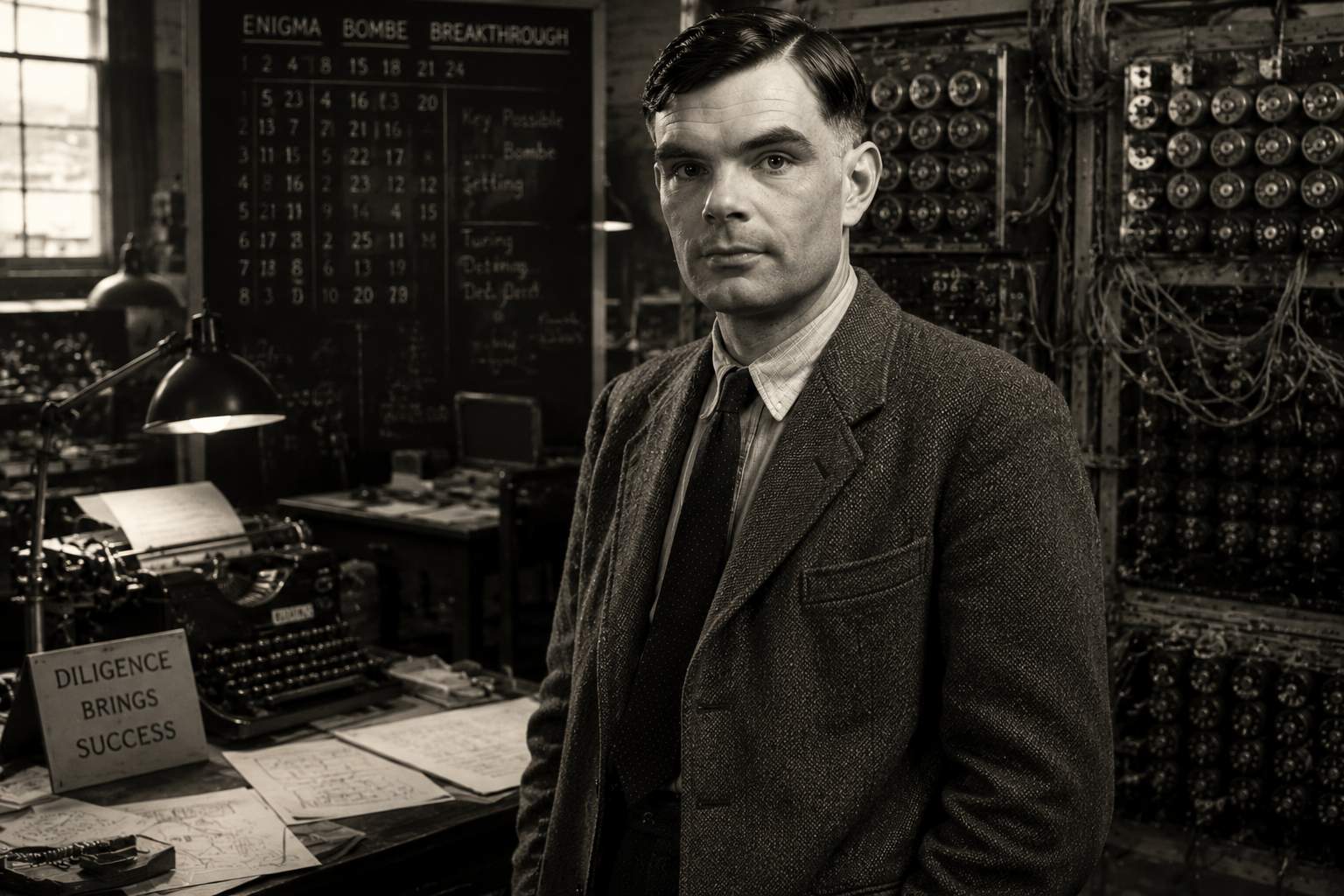
When the Second World War began, Turing joined the Government Code and Cypher School at Bletchley Park, Britain's secret codebreaking centre.
The German military relied heavily on Enigma machines to encrypt communications. These devices generated an enormous number of possible settings, making messages appear impossible to decipher.
Working alongside other mathematicians and cryptanalysts, Turing helped develop the Bombe machine, which dramatically accelerated the process of finding Enigma settings. His work was particularly important in breaking German naval communications, helping Allied forces combat U-boat attacks in the Atlantic.
Historians estimate that intelligence produced through codebreaking shortened the war in Europe by more than two years and potentially saved millions of lives.
At its peak, Bletchley Park employed more than 10,000 people working in complete secrecy around the clock.
Connections to Newcastle and the North East.
Although Turing never lived in Newcastle, his influence can be seen throughout the North East's modern technology sector.
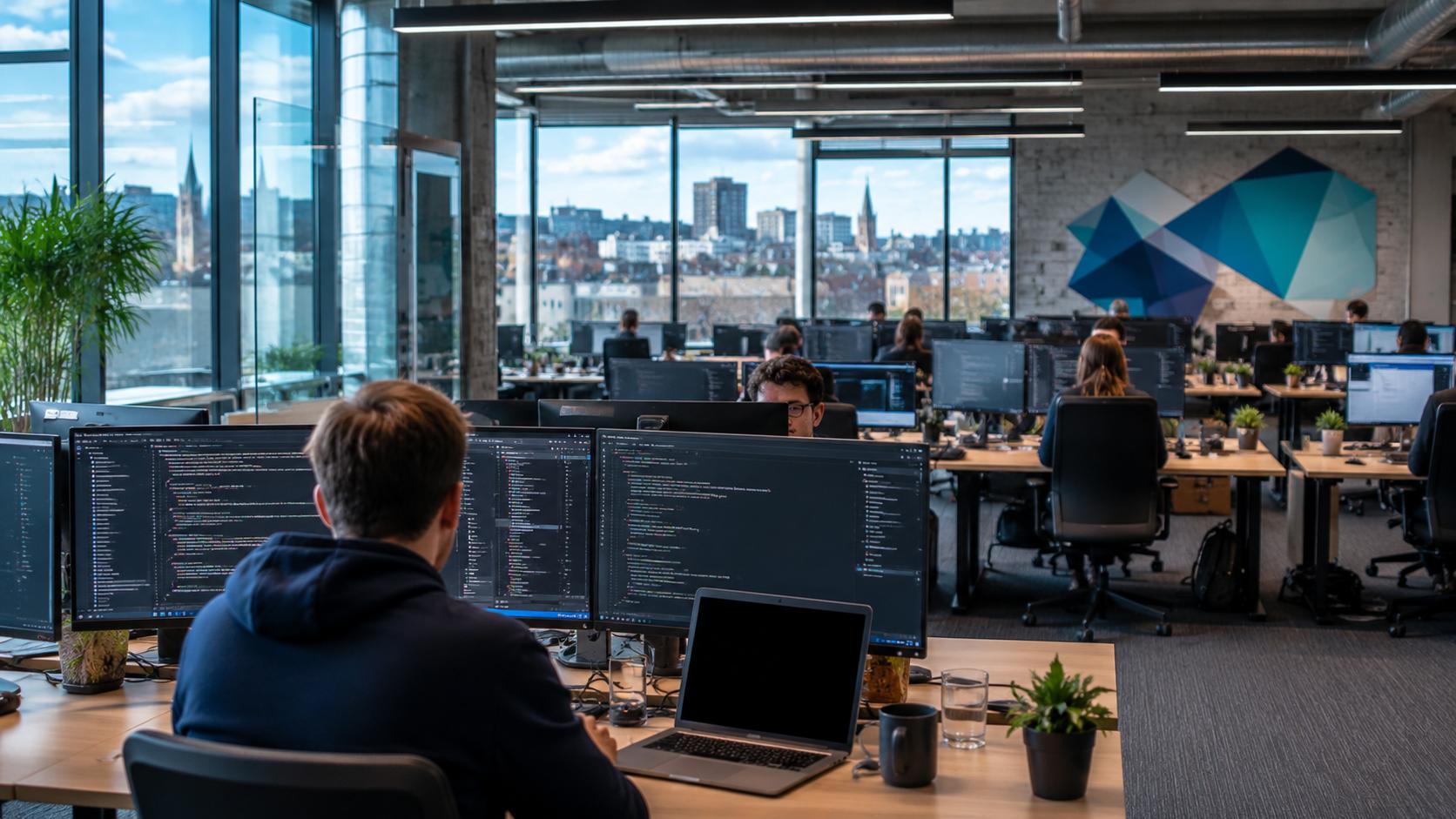
Newcastle University is recognised for research in computer science, artificial intelligence and cybersecurity, fields that trace their origins directly to Turing's work. The North East has also become home to numerous digital businesses, software companies and technology start-ups employing thousands of people.
Cybersecurity, one of the fastest-growing sectors in the region, owes much to the wartime codebreaking methods pioneered at Bletchley Park. The challenges faced by today's security experts protecting networks and data are modern versions of the encryption problems Turing helped solve.
The North East's growing reputation as a digital innovation hub reflects the continuing relevance of his ideas.
Life After the War.
Following the war, Turing worked at the National Physical Laboratory and later at the University of Manchester. There, he helped design one of the world's earliest stored-program computer systems and continued developing theories that influenced future computing technologies.
He also explored concepts that many now associate with artificial intelligence. His famous "Turing Test" proposed a way of evaluating whether a machine could exhibit intelligent behaviour similar to that of a human.
With artificial intelligence now generating hundreds of billions of pounds in global economic value, Turing's predictions appear remarkably forward-thinking.
Tragedy and Death.
Despite his extraordinary achievements, Turing faced severe discrimination because he was gay. In 1952, homosexuality was illegal in Britain, and Turing was prosecuted for his relationship with another man. He accepted hormone treatment instead of imprisonment, a decision that had significant physical and emotional consequences.
On 7 June 1954, Alan Turing died at the age of 41 from cyanide poisoning. An inquest ruled his death a suicide, although debate has continued over the circumstances.
In later years, Britain formally recognised the injustice he suffered. A public government apology was issued in 2009, and Queen Elizabeth II granted him a royal pardon in 2013.
Why Alan Turing Still Matters Today.
Few individuals have shaped the modern world as profoundly as Alan Turing. His contributions to mathematics, wartime intelligence, computer science and artificial intelligence continue to influence daily life across the globe.
Every online search, encrypted message, banking transaction and AI-powered tool can trace part of its heritage back to the theories developed by a young mathematician who simply wanted to understand how machines could think.
For Newcastle, the North East and the wider UK technology sector, Turing's story remains a reminder that groundbreaking innovation often begins with curiosity, determination and a willingness to challenge conventional thinking.
More than seven decades after his death, Alan Turing's impact shows no sign of fading. Instead, it grows stronger with every technological breakthrough inspired by the foundations he helped create.
Tech News
The British Genius Behind Modern Computing and AI
Advertisement


Comments (0)
You must be logged in to post comments.
Don't have an account? Register here
No comments yet. Be the first to share your thoughts!