
Remote working has evolved from a temporary solution into a permanent part of modern working life. Across Newcastle and the wider North East, thousands of professionals now split their time between home and the workplace, while many others work remotely full-time. As a result, the quality of a home office setup has become increasingly important for productivity, wellbeing and job satisfaction.
A spare bedroom, kitchen table or corner of the living room may have been enough during the early days of remote work, but many employees and business owners are now investing in more effective workspaces. From ergonomic furniture and better lighting to improved technology and organisation, small changes can have a significant impact on daily performance.
With studies continuing to highlight the benefits and challenges of remote work, experts say creating the right environment is one of the most effective ways to improve focus, reduce stress and support long-term health.
The Rise of Remote Working Across the UK.
Remote and hybrid working remain firmly established within the UK workforce.
According to the Office for National Statistics, around 44 percent of working adults reported either working from home or using a hybrid arrangement during recent surveys. Flexible working has become particularly popular among professionals in technology, finance, marketing, education and administrative roles.
Newcastle has seen significant growth in sectors that support remote and hybrid work, particularly within its thriving digital and technology community. Many employees now spend a large proportion of their week working from home, making the quality of their workspace more important than ever.
As home offices become long-term workplaces rather than temporary solutions, creating a comfortable and productive environment is increasingly viewed as an investment rather than an expense.
Start with an Ergonomic Workspace.
One of the most important improvements people can make is investing in ergonomics.
Research from the Health and Safety Executive suggests that musculoskeletal disorders remain one of the leading causes of workplace discomfort and absence in the UK. Poor posture, inadequate seating and improper desk setups can contribute to back pain, neck strain and repetitive stress injuries.
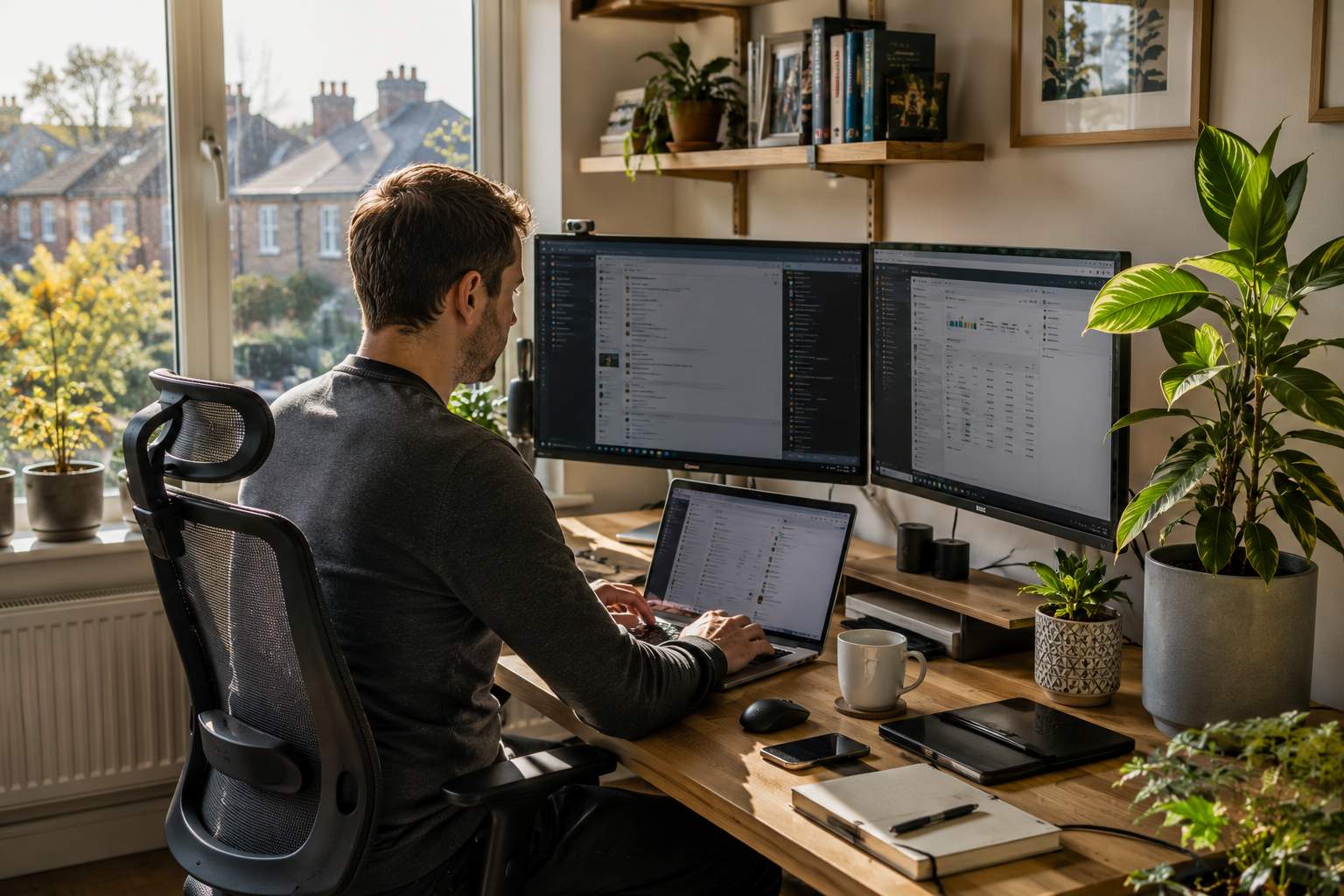
A good office chair should support the lower back and encourage proper posture throughout the working day. Ideally, feet should rest flat on the floor, while computer screens should sit at eye level to reduce strain on the neck.
For many remote workers across the North East, upgrading a chair or adjusting monitor height can provide immediate benefits without requiring a complete office redesign.
Creating an ergonomic setup is not simply about comfort. It can also improve concentration and reduce fatigue during long working hours.
Lighting Can Transform Productivity.
Lighting is often overlooked when designing a home office, yet it plays a major role in both productivity and wellbeing.
Natural light is widely regarded as the best option where possible. Research has shown that exposure to natural daylight can improve mood, support better sleep patterns and increase alertness during working hours.
Positioning a desk near a window can help reduce eye strain while creating a more pleasant working environment.
During darker winter months, which are common across Newcastle and the North East, quality task lighting becomes particularly important. Adjustable desk lamps and warm lighting can help reduce visual fatigue while improving focus.
A well-lit workspace can make a surprising difference to energy levels throughout the day.
Reliable Technology Is Essential.
Technology forms the backbone of modern remote working.
Slow internet connections, outdated equipment and poor audio quality can create frustration and reduce productivity.
According to Ofcom, average broadband speeds across the UK continue to improve, but connection reliability remains a key concern for many home workers.
Investing in dependable technology can help minimise interruptions and support more efficient working practices.
This may include upgrading broadband packages, using external monitors, purchasing quality webcams or improving audio equipment for virtual meetings.
Many professionals find that dual-monitor setups significantly improve efficiency, particularly when managing multiple tasks or working with data-intensive applications.
Technology upgrades often deliver some of the fastest productivity gains available within a home office environment.
Organisation Reduces Stress.
A cluttered workspace can quickly become a source of distraction.
Research into workplace productivity has consistently shown that organised environments can support focus and reduce mental overload.
Simple storage solutions, cable management systems and organised filing methods can help create a cleaner and more efficient workspace.
Many home workers benefit from establishing a clear separation between professional and personal areas, even when space is limited.
This separation helps create psychological boundaries that support concentration during working hours and relaxation when the day ends.
For remote workers balancing professional responsibilities with family life, organisation can be particularly valuable.
Create a Space That Supports Wellbeing.
Productivity is important, but wellbeing should not be overlooked.
Mental health organisations have increasingly highlighted the connection between work environments and psychological wellbeing. A workspace that feels comfortable, attractive and personalised can contribute positively to daily mood and motivation.
Adding plants, artwork or personal touches can make a home office feel more inviting without becoming distracting.
Research has suggested that indoor plants may help improve mood and increase feelings of wellbeing in workplace settings.
Many remote workers also benefit from incorporating elements that encourage movement throughout the day, such as standing desks or designated stretching areas.
The goal is to create an environment where productivity and wellbeing work together rather than compete.
Minimise Distractions Wherever Possible.
One of the biggest challenges associated with remote working is managing distractions.
Household noise, social media notifications and competing responsibilities can all affect concentration.
Creating a dedicated workspace is often one of the most effective solutions. Even a small area reserved exclusively for work can help establish stronger focus and routine.
Noise-cancelling headphones have become increasingly popular among remote workers, particularly those living in busy households.
Setting clear boundaries with family members or housemates can also help reduce interruptions during important tasks and meetings.
For many people, productivity improves dramatically when distractions are proactively managed rather than simply tolerated.
Establish Healthy Work Habits.
Even the best home office cannot compensate for poor working habits.
Remote workers often report challenges related to overworking, blurred boundaries and reduced physical activity.
Research suggests that many home workers struggle to fully disconnect at the end of the day, increasing the risk of stress and burnout.
Creating routines around working hours, breaks and exercise can help maintain healthier boundaries.
Simple habits such as standing regularly, taking short walks and scheduling lunch breaks can support both physical and mental wellbeing.
Newcastle's parks, riverside routes and green spaces offer excellent opportunities for remote workers to incorporate movement into their daily schedules.
A productive home office should support healthy routines rather than encourage constant availability.
Future-Proofing Your Workspace.
The future of work is likely to remain flexible.
Many organisations across the North East now operate hybrid models that combine office attendance with remote working. This means home offices will continue to play an important role in professional life.
Future-proofing a workspace involves thinking beyond immediate needs.
Investing in quality furniture, adaptable technology and efficient layouts can provide benefits for years to come. It can also improve overall job satisfaction and support career development by creating an environment that encourages focus and professionalism.
As remote working continues to evolve, the most successful home offices will be those that balance comfort, productivity and wellbeing.
Building a Workspace That Works for You.
Every home office is different because every worker is different.
Some people thrive in minimalist environments, while others prefer creative and personalised spaces. The key is understanding what supports your productivity and wellbeing most effectively.
For remote workers across Newcastle and the North East, improving a home office setup does not necessarily require a complete renovation or major expense. Small adjustments to lighting, ergonomics, technology and organisation can produce meaningful improvements.
As flexible working becomes an established part of modern life, creating a workspace that supports both professional performance and personal wellbeing has never been more important. The best home offices are not simply places to work. They are environments designed to help people perform at their best every day.
Share your reccomendations!
What is the best upgrade you have made to your home office setup?
Business News
The Simple Home Office Changes That Make a Big Difference
Advertisement





Comments (0)
You must be logged in to post comments.
Don't have an account? Register here
No comments yet. Be the first to share your thoughts!