
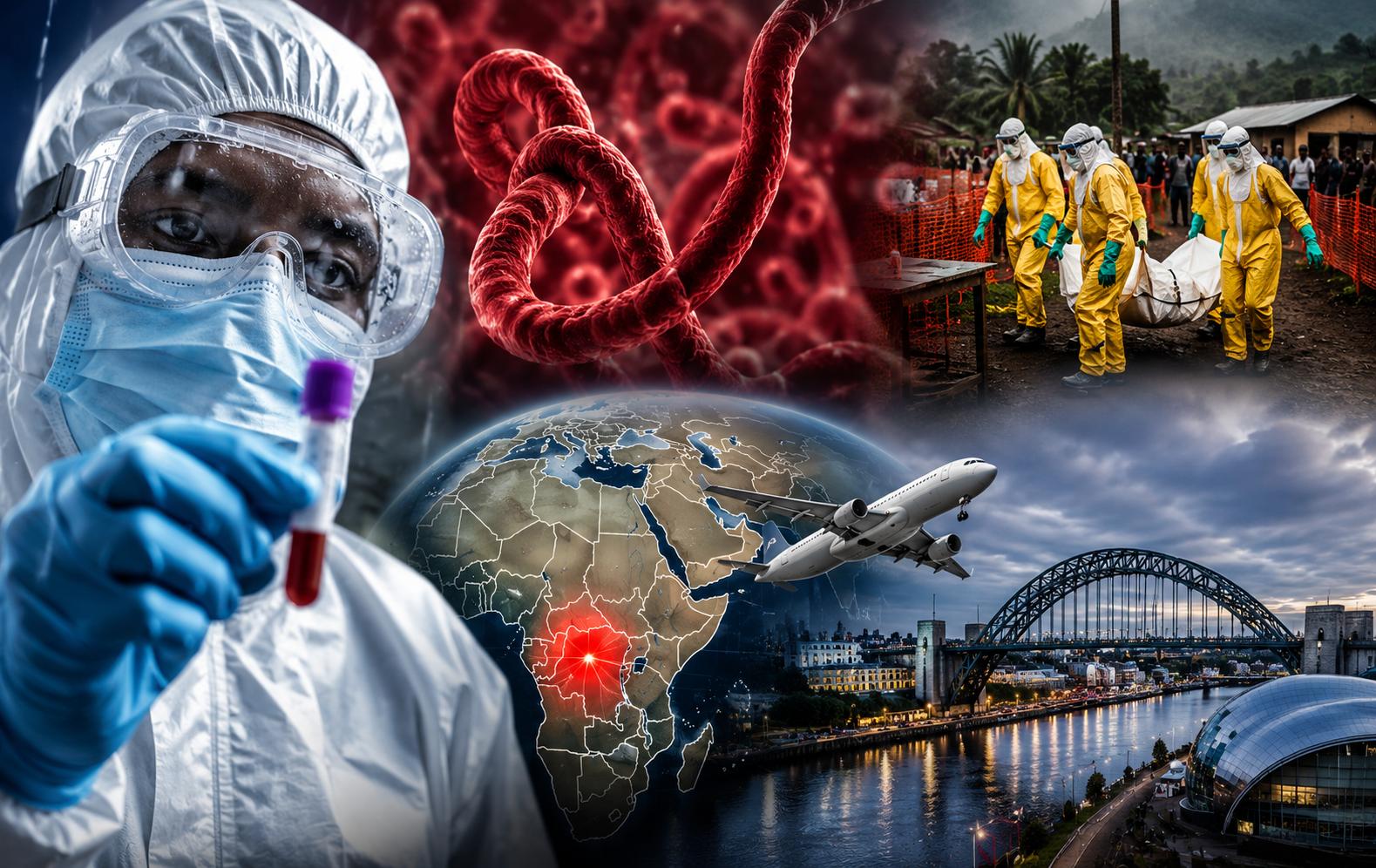
Fresh concerns are growing among health experts after another Ebola outbreak was confirmed in the Democratic Republic of Congo, raising questions about whether future cases could eventually reach the UK, including cities such as Newcastle, Manchester and London.
The major outbreak in central Africa has once again placed global health agencies on high alert, with officials closely monitoring the spread of the deadly virus and assessing the potential risk to international travel networks. While experts stress that the immediate risk to the UK remains low, memories of previous Ebola crises continue to shape emergency planning across Britain.
Public health specialists say the outbreak also serves as a reminder that highly infectious diseases can spread rapidly in an increasingly connected world where international travel remains common.
Ebola remains one of the world’s deadliest viruses.
Ebola virus disease is one of the most feared infectious illnesses globally because of its severe symptoms and high fatality rate. The disease spreads through direct contact with infected bodily fluids, contaminated materials and infected animals.
Symptoms often begin suddenly and can include fever, weakness, muscle pain, headaches and sore throat before progressing into vomiting, diarrhoea and, in severe cases, internal and external bleeding.
Outbreaks have historically been concentrated in parts of central and western Africa, particularly in regions where healthcare systems face major challenges.
The Democratic Republic of Congo has experienced multiple Ebola outbreaks over the past several decades, partly due to the virus naturally existing in animal populations in the region.
Health authorities in the country moved quickly after the latest suspected cases emerged, with emergency response teams deployed to affected areas to trace contacts and contain further spread.
Why the DRC outbreak is causing international concern.
Although Ebola outbreaks are not new to the Democratic Republic of Congo, global health organisations are paying particularly close attention because of the continuing movement of people between countries and the possibility of isolated international cases.
The World Health Organization and regional health authorities are monitoring the outbreak closely to prevent wider transmission.
International experts have repeatedly warned that no country can completely ignore the threat posed by infectious diseases emerging abroad. Modern air travel means illnesses can potentially move between continents within hours if infected individuals travel before symptoms become severe.
While strict health screening and monitoring systems are now in place across many countries, including the UK, previous outbreaks have demonstrated how quickly concern can spread once cases begin crossing borders.
The Ebola epidemic that devastated parts of West Africa between 2014 and 2016 remains one of the clearest examples of how outbreaks in one region can trigger worldwide alarm.
Could Ebola cases reach the UK again?
Medical experts continue to emphasise that the likelihood of a widespread Ebola outbreak in the UK is extremely low due to strong infection control systems, rapid diagnosis procedures and advanced healthcare infrastructure.
However, isolated imported cases remain theoretically possible.
Britain has previously prepared for Ebola-related incidents, particularly during the West African epidemic when specialist treatment units were placed on standby and airports increased passenger monitoring procedures.
Several UK hospitals, including specialist infectious disease centres, developed emergency response plans for suspected Ebola patients during that period.
Public Health England, now operating under the UK Health Security Agency framework, has continued to maintain protocols designed to identify and isolate suspected cases quickly.
Experts say the biggest risk would likely involve an infected traveller arriving in the country after exposure abroad.
Because Ebola symptoms can take between two and 21 days to appear, individuals may travel before realising they are ill.
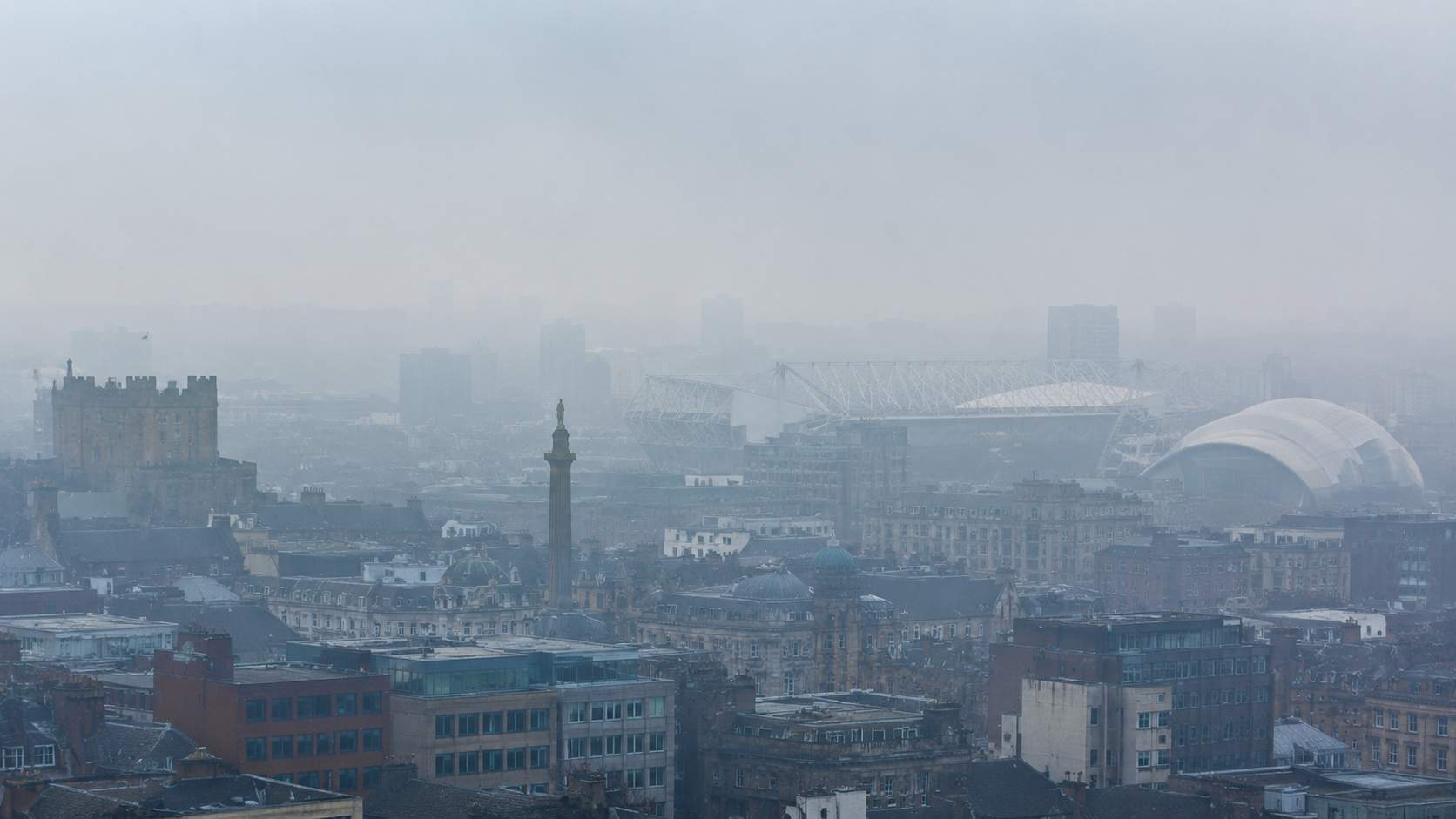
Newcastle hospitals prepared for infectious disease threats.
Although Newcastle upon Tyne has never experienced an Ebola outbreak, local NHS services have long been involved in national preparedness planning for infectious diseases.
Hospitals across the North East regularly participate in emergency exercises designed to test responses to potential outbreaks involving highly dangerous viruses.
Newcastle’s major healthcare facilities, including the Royal Victoria Infirmary and Freeman Hospital, have specialist teams trained in infection prevention and control.
Medical experts say preparedness remains essential because global health threats can evolve rapidly.
During the Covid-19 pandemic, hospitals across Newcastle upon Tyne gained additional experience in dealing with infection containment measures, personal protective equipment protocols and emergency public health coordination.
Those lessons continue to influence planning for future outbreaks involving diseases such as Ebola, monkeypox and other high-risk viruses.
Public fears often rise during global outbreaks.
Whenever Ebola outbreaks make international headlines, fears often grow among the public because of the virus’s severe symptoms and high mortality rate.
Images from previous outbreaks, including healthcare workers in full protective suits and isolated treatment centres, have left a lasting impression on people worldwide.
However, infectious disease specialists stress that Ebola does not spread in the same way as airborne viruses such as Covid-19 or influenza.
Transmission generally requires close physical contact with infected bodily fluids, making widespread community transmission in countries with strong healthcare systems significantly less likely.
Health experts also point out that medical understanding of Ebola has improved substantially over the past decade.
Vaccines, improved testing and better outbreak response strategies now play a major role in limiting the spread of the virus in affected regions.
International travel keeps health officials alert.
One of the main reasons outbreaks in Africa attract global attention is the scale of modern international travel.
Large numbers of passengers travel between continents every day through major airports including London Heathrow, Manchester and other transport hubs connected to the UK.
Although Newcastle International Airport handles fewer long-haul routes directly, the city remains connected to global travel networks through domestic and international transfers.
Health officials routinely monitor international disease outbreaks and update guidance for travellers when required.
The Foreign Office and UK health agencies may issue travel advice, vaccination recommendations or entry screening measures depending on the severity of an outbreak abroad.
Experts say international cooperation is essential in preventing outbreaks from escalating into wider health emergencies.
Lessons learned from past outbreaks.
The Ebola crisis in West Africa during the mid-2010s changed the way many countries prepare for infectious disease emergencies.
More than 11,000 people died during that epidemic, which affected Guinea, Liberia and Sierra Leone particularly severely.
The outbreak exposed weaknesses in global healthcare coordination but also led to major improvements in surveillance systems, rapid response planning and vaccine development.
British medical teams and military personnel were among those deployed overseas to help tackle the crisis at its source.
In the years since, governments and health organisations have invested heavily in preparedness planning to reduce the risk of future outbreaks spreading internationally.
The Covid-19 pandemic further reinforced the importance of early intervention, scientific cooperation and clear communication with the public.
Experts urge calm despite renewed concerns.
Health officials continue to stress that there is no immediate reason for panic in the UK or Newcastle upon Tyne regarding the latest Ebola outbreak in the Democratic Republic of Congo.
Specialists say the current systems designed to detect and manage infectious diseases are significantly stronger than they were during earlier outbreaks.
At the same time, experts acknowledge that global health threats can never be ignored entirely.
The emergence of new outbreaks anywhere in the world serves as a reminder that disease surveillance, international cooperation and investment in healthcare remain critical for protecting public safety.
For Newcastle residents, the situation is unlikely to have any direct day-to-day impact, but public health authorities will continue monitoring developments closely alongside international partners.
Do you think the UK is fully prepared for future Ebola outbreaks and other global health emergencies? Share your thoughts in the comments and join the discussion on public health in Newcastle upon Tyne and across Britain.
Health News
Ebola Outbreak in DRC Sparks UK Health Concerns
Advertisement




Comments (0)
You must be logged in to post comments.
Don't have an account? Register here
No comments yet. Be the first to share your thoughts!