
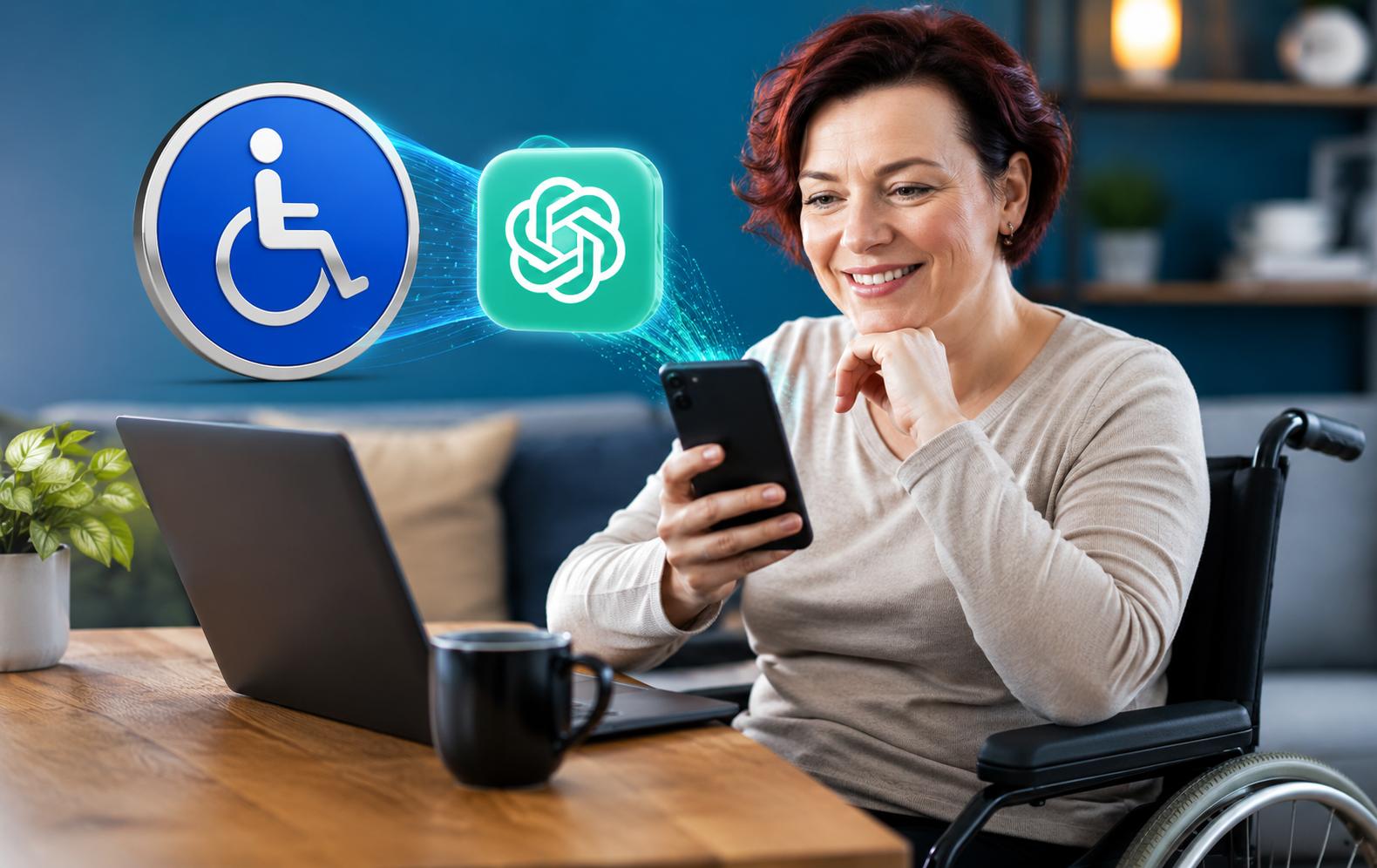
Artificial intelligence is becoming part of everyday life across the UK, but for many disabled people in Newcastle, its impact is proving far more meaningful than simply saving time. AI-powered tools are now helping residents manage everyday responsibilities that can often become difficult, exhausting, or frustrating.
From filling out housing applications and drafting professional emails to managing bills, invoices, and appointments, AI accessibility technology is helping many disabled people across Newcastle live more independently.
As more public services, workplaces, and businesses move online, the challenge of navigating digital systems has become increasingly obvious. Long forms, inaccessible websites, complicated financial software, and endless admin tasks can quickly become overwhelming for people living with physical disabilities, chronic illness, neurodivergent conditions, or visual impairments.
AI is now beginning to close some of those gaps.
Local disability groups and accessibility advocates say the technology is not replacing human support services, but it is giving many people more control over their daily lives.
AI Is Helping Newcastle Residents Fill Out Forms More Easily.
Whether applying for benefits, booking GP appointments, updating council information, or managing housing paperwork, online forms are now part of daily life for many Newcastle residents.
For disabled users, those systems are not always easy to navigate.
People with arthritis, chronic pain conditions, or mobility impairments can struggle with long periods of typing. Others living with dyslexia, ADHD, or cognitive disabilities may find large blocks of text and confusing instructions difficult to process.
AI-powered accessibility tools are helping make these systems easier to use.
Voice-to-text software allows users to complete forms simply by speaking naturally into a phone or computer. Predictive text systems can automatically complete repeated information such as addresses, names, or contact details, reducing the amount of manual input required.
For visually impaired residents, AI-enhanced screen readers are improving access to online portals by identifying menus, reading instructions aloud, and guiding users through digital forms more accurately than older systems.
Several Newcastle charities and community support organisations have also begun encouraging service users to explore AI-powered accessibility apps to help reduce admin stress and improve confidence when dealing with official paperwork.
Drafting Letters And Emails Is Becoming Less Stressful.
Writing formal emails or letters can become another major challenge for many disabled people, especially when dealing with landlords, employers, healthcare providers, or benefit applications.
AI writing assistants are increasingly helping users across Newcastle create professional documents without needing outside support.
Modern AI software can structure letters, improve grammar, simplify wording, and generate professional responses based on short prompts. This can be particularly useful for people with dyslexia, communication impairments, learning disabilities, or conditions affecting concentration and memory.
Disabled business owners and freelancers in Newcastle are also beginning to use AI tools to handle routine administration, client communication, and invoice management more efficiently.
For many users, the biggest benefit is confidence.
Rather than relying on family members or support workers to proofread important messages, people can now handle more communication independently while still ensuring documents appear professional and clear.
AI Accounting Tools Are Supporting Financial Independence.
Managing finances is another area where AI is beginning to make a noticeable difference.
Disabled residents running small businesses, freelance services, or side projects across Newcastle are increasingly using AI-powered accounting software to reduce repetitive admin work.
Modern platforms can automatically track expenses, organise receipts, generate invoices, and send payment reminders. Some AI systems can even provide simplified financial summaries in plain English rather than complicated spreadsheets.
Voice-assisted banking features are also becoming more common, allowing users to check balances, review spending, or make transfers using spoken commands instead of manually navigating apps.
For people managing chronic fatigue, long-term illness, or cognitive overload, automating these smaller financial tasks can help conserve valuable energy.
Accessibility campaigners say this kind of technology may also help more disabled people pursue self-employment opportunities without becoming overwhelmed by administration.
AI Assistants Are Helping People Stay Organised.
Daily admin responsibilities rarely stop with forms and emails. Remembering appointments, paying bills, replying to messages, renewing prescriptions, and managing schedules can quickly become exhausting for people living with certain disabilities.
AI assistants are increasingly being used as practical support tools.
Smart reminder systems can prompt users about hospital appointments, medication schedules, or important deadlines. AI calendar apps can automatically organise tasks and prioritise urgent responsibilities.
For neurodivergent users, AI productivity systems can help break large tasks into smaller, more manageable steps. This can reduce mental overload and make everyday routines easier to maintain.
Some Newcastle residents are also using AI-powered smart home devices to control lighting, heating, shopping lists, and household appliances using voice commands, reducing physical strain around the home.
Newcastle Workplaces Are Gradually Adopting Accessibility Technology.
Businesses across Newcastle are also beginning to introduce more AI accessibility tools into workplaces.
Speech-to-text systems can automatically transcribe meetings for employees with hearing impairments. AI writing assistants can help staff manage reports, emails, and communication tasks more efficiently.
For workers with mobility impairments, voice-controlled software reduces the need for repetitive manual tasks. Flexible remote working systems powered by AI scheduling tools are also creating new opportunities for disabled professionals.
However, disability advocates stress that technology alone is not enough.
Accessible workplaces still require proper support, inclusive design, and employers willing to understand the needs of disabled staff rather than relying entirely on automation.
Concerns Around Cost And Accessibility Remain.
Despite the growing benefits, concerns still exist around affordability and accessibility.
Some advanced AI tools remain expensive, particularly for people already dealing with rising living costs and healthcare expenses. Others may struggle with speech recognition systems that fail to understand regional accents, speech impairments, or non-standard communication patterns.
Privacy concerns are also becoming more important as AI systems collect large amounts of personal and financial information.
Accessibility experts say disabled people must remain directly involved in the design and testing of future AI systems to ensure the technology genuinely reflects real-world needs.
AI Is Quietly Changing Everyday Life Across Newcastle.
For many disabled residents across Newcastle, AI is not about futuristic robots or complicated technology. It is about making ordinary life easier.
Whether helping someone complete a council form, draft an important letter, manage household finances, or organise appointments, AI accessibility tools are reducing barriers that many people have faced for years.
The technology is still evolving, but its impact is already becoming visible in homes, workplaces, and communities across the city.
As AI continues developing, the challenge for technology companies and public services will be ensuring these tools remain affordable, inclusive, and accessible to the people who need them most.
How do you think AI accessibility tools could improve life for disabled people across Newcastle? Share your thoughts in the comments and join the conversation around inclusive technology and independent living.
Health News
How AI Is Helping Disabled People Across Newcastle With Everyday Tasks
Advertisement





Comments (0)
You must be logged in to post comments.
Don't have an account? Register here
No comments yet. Be the first to share your thoughts!