
For decades, biology textbooks taught that the skin was the largest organ in the human body. However, some scientists now believe another little-known structure called the interstitium may actually deserve that title.
The interstitium has become one of the most fascinating discoveries in modern medical science. Although researchers only officially identified it within the last decade, experts believe it has quietly played a major role in the human body all along. Its discovery has sparked debate across the scientific community and opened the door to new research into disease, ageing, inflammation and even cancer.
While not all researchers agree that the interstitium should be classed as a separate organ, there is no doubt that the discovery has transformed the way scientists understand the body’s internal systems.
A Hidden Network Inside the Human Body.
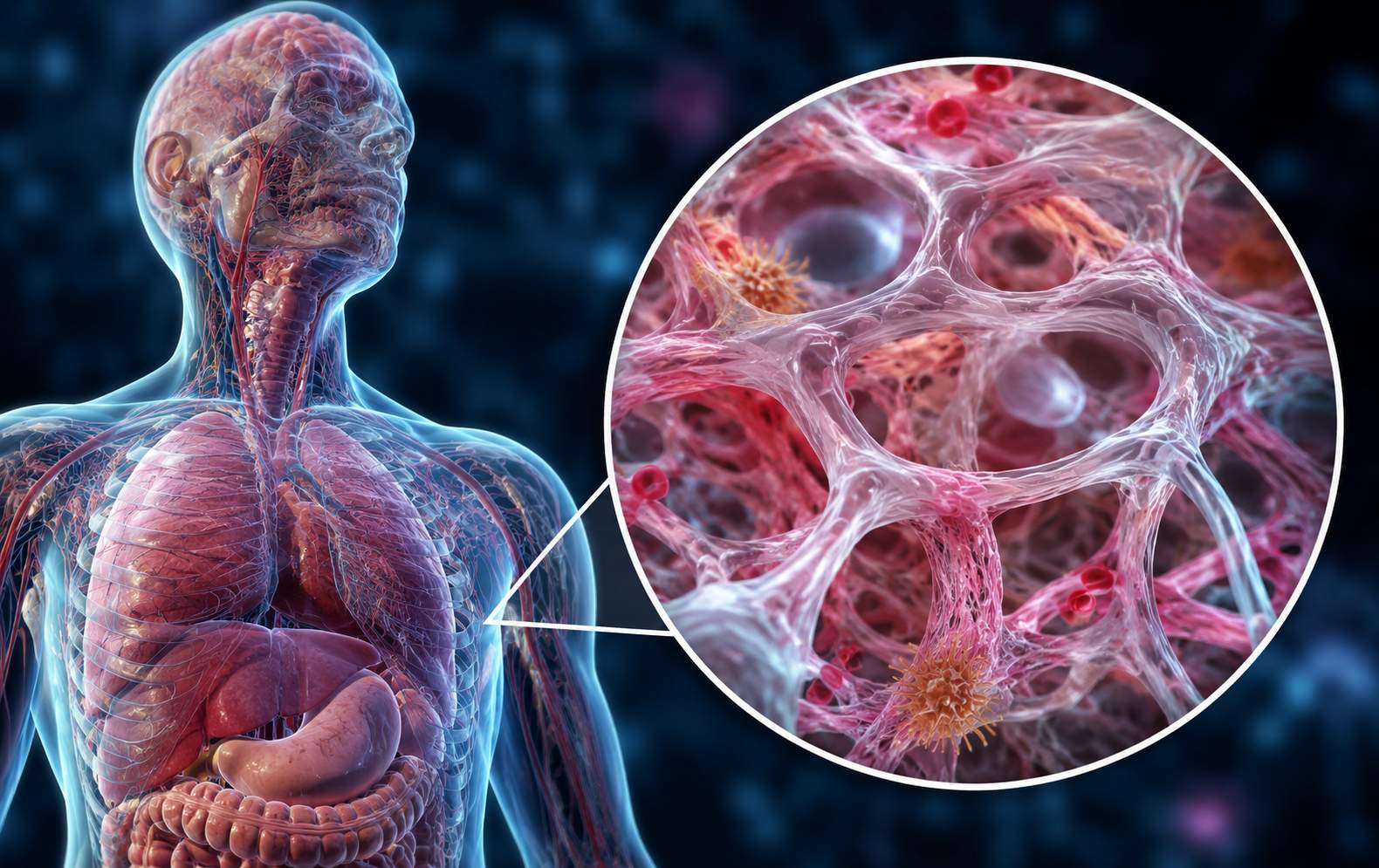
The interstitium is best described as a vast network of fluid-filled spaces running throughout the body. These channels exist between tissues, beneath the skin, around organs and alongside muscles and blood vessels.
Rather than being a single solid structure, the interstitium acts more like a connected highway system filled with fluid and supported by flexible proteins such as collagen and elastin. Scientists say this network may help cushion organs and tissues from everyday movement and physical stress.
Researchers also believe the interstitium may assist with transporting nutrients, oxygen and waste products around the body. In addition, it could play an important role in the immune system by helping white blood cells travel quickly to areas of infection or injury.
The discovery has attracted huge attention because these spaces were largely overlooked for centuries despite being present in every human body.
Why Scientists Missed the Interstitium for So Long.
One of the most surprising parts of the discovery is how long it remained hidden from medical science.
Traditionally, doctors and researchers studied tissue samples using biopsies or preserved specimens. During these processes, fluid drains away from tissues before they are examined under a microscope. As a result, the interstitium appeared collapsed and flattened, making it difficult to recognise as a connected structure.
That changed in 2018 when researchers used an advanced imaging technique called confocal laser endomicroscopy. This technology allows scientists to examine living tissues in real time while fluid is still present inside the body.
Using the technique, researchers observed open channels filled with moving fluid beneath the skin and surrounding organs including the lungs and digestive tract. Instead of tightly packed tissue, they discovered an interconnected system supported by strong fibres.
The findings challenged centuries of anatomical understanding and led some experts to describe the interstitium as a previously unknown organ.
Could the Interstitium Help Explain Disease?.
Since the discovery, scientists have been racing to understand how the interstitium affects human health.
One major area of interest is cancer research. Experts believe the fluid-filled channels may help explain how cancer cells spread through the body. Because the network connects directly to the lymphatic system, some researchers suspect tumour cells may use these pathways to travel between organs.
There is also growing interest in the interstitium’s role in inflammation and swelling. Scientists think the structure may influence how fluid builds up in tissues during illness or injury.
Other studies are examining whether problems within the interstitium could contribute to diseases involving fibrosis, where tissues become scarred and stiff over time.
Researchers hope that understanding the network better could eventually lead to new treatments, earlier disease detection and improved drug delivery methods.
Is the Interstitium Really an Organ?.
Despite the excitement surrounding the discovery, scientists remain divided over whether the interstitium should officially be classified as an organ.
Supporters argue that it meets several important criteria. It has a distinct structure, performs multiple functions and exists throughout the body as a connected system. Some estimates suggest it may account for up to 20 per cent of the body’s volume, potentially making it larger than the skin.
However, critics believe the interstitium is simply a clearer understanding of tissue spaces that scientists already knew existed. They argue it does not function independently enough to qualify as its own organ.
The debate reflects how science continues to evolve as new technology reveals previously hidden details about the human body.
Why the Discovery Matters for Future Medicine.
Regardless of how it is classified, the discovery of the interstitium is already reshaping medical research.
Scientists across the world are studying how the structure interacts with the immune system, transports fluid and responds to injury. The findings may eventually influence treatments for cancer, inflammatory diseases and chronic health conditions.
The discovery also highlights how much there is still to learn about the human body, even in the modern age of medicine. Researchers believe future advances in imaging technology could uncover even more hidden systems that have remained invisible until now.
For readers in Newcastle and across the UK following the latest science news, the interstitium represents a reminder that major breakthroughs can still emerge from areas once thought fully understood.
The Human Body Still Holds Many Secrets.
The debate over the interstitium shows that anatomy is far from a finished science. As researchers continue exploring this mysterious network, it could unlock important answers about how diseases spread, how the body heals and how future medicines are developed.
Whether or not it officially becomes recognised as the body’s largest organ, the interstitium has already changed the conversation around human biology forever.
What do you think about this surprising discovery? Could the interstitium eventually change the future of medicine in Newcastle and beyond?
Share your thoughts in the comments and join the discussion on the latest s
Health News
Medical Breakthrough Reveals Hidden Structure Inside the Human Body
Advertisement





Comments (0)
You must be logged in to post comments.
Don't have an account? Register here
No comments yet. Be the first to share your thoughts!