
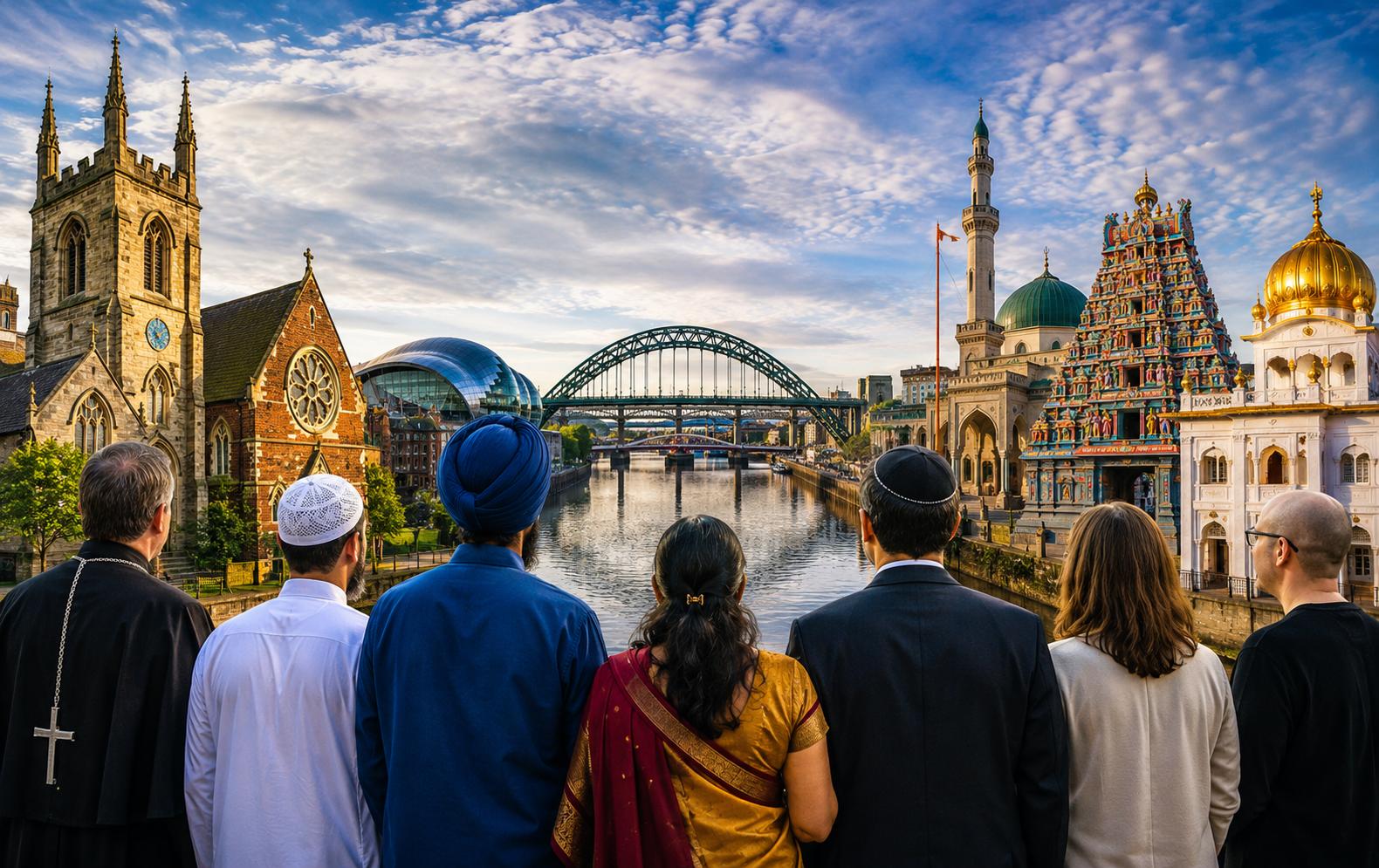
Newcastle has become one of the North East’s most culturally and religiously diverse cities, with communities from many faiths living, working and studying together across the region. While Christianity has historically shaped much of Newcastle’s identity, the city is now home to growing Muslim, Hindu, Sikh and Jewish communities alongside a rising number of people identifying as atheist or having no religion at all.
Religion continues influencing life in Newcastle through education, charity work, cultural celebrations and community support networks. Churches, mosques, temples and gurdwaras remain important gathering places where people connect not only through faith, but also through social and community activities.
As the city continues evolving, Newcastle’s religious diversity is increasingly seen as one of its defining strengths. Community leaders say understanding different beliefs and traditions has become more important than ever in helping people from different backgrounds live together respectfully and peacefully.
Christianity remains central to Newcastle’s history.
Christianity has shaped Newcastle for centuries and remains the largest religion across the city and wider North East. Historic churches and cathedrals continue standing at the centre of many communities, while Christian traditions still influence major public celebrations and holidays.
Many schools in Newcastle also maintain Christian foundations, particularly through Church of England and Catholic educational systems that continue playing major roles in local education.
Although church attendance has declined compared with previous generations, Christianity remains deeply connected to Newcastle’s identity and heritage. Churches continue supporting food banks, homeless outreach programmes and mental health initiatives across the city.
Within Newcastle’s Christian population, the Church of England, Catholic Church and Methodist Church remain among the most recognised denominations.
The Church of England still plays a visible role in Newcastle.
The Church of England remains one of the most established religious institutions in Newcastle, with churches located throughout the city and surrounding areas. Newcastle Cathedral continues serving as one of the region’s best known Christian landmarks and regularly hosts public services, ceremonies and community events.
The Church of England has historically been closely linked to Newcastle’s social and political development, particularly during periods of industrial growth when churches often acted as important centres for working class communities.
Today, Church of England congregations across Newcastle continue focusing on charity work, poverty reduction and community wellbeing. Many churches organise support services for vulnerable residents, including food programmes and mental health support groups.
Religious leaders within the Church of England have also increasingly spoken about modern social challenges affecting Newcastle, including homelessness, isolation and rising living costs.
Catholic communities continue growing across the city.
Catholicism remains another major part of Newcastle’s religious landscape. Catholic churches and schools are spread across the city, serving communities that include long established local families alongside newer migrant populations from Europe, Africa and Asia.
The Catholic Church has maintained a strong presence in Newcastle for generations, particularly through education and charitable outreach work. Catholic schools remain popular across the North East, while churches continue supporting community projects aimed at helping vulnerable residents.
Mass remains central to Catholic worship, with churches across Newcastle holding regular services throughout the week. Important celebrations such as Christmas, Easter and Holy Week continue attracting large congregations each year.
Catholic charities in Newcastle are also involved in housing support, refugee assistance and youth development programmes, reflecting the Church’s wider role within community life.
Methodism has deep roots in Newcastle’s working class history.
Methodism has played an important role in Newcastle and the wider North East since the Industrial Revolution. Methodist chapels became common throughout mining towns and industrial communities where faith and social support often went hand in hand.
Founded through the teachings of John Wesley, Methodism focused heavily on community, education and helping working people during periods of social change.
Although Methodist congregations are smaller today than in previous decades, churches across Newcastle remain highly active in charity work and social justice campaigns.
Many Methodist groups continue supporting food banks, debt advice services and projects aimed at tackling loneliness and social isolation. Methodist churches are also known for encouraging open discussion around modern social issues while maintaining strong community connections.
Newcastle’s Muslim population continues expanding.
Islam has become one of the fastest growing religions in Newcastle over recent decades, largely driven by international migration and the city’s large student population.
Muslim communities in Newcastle come from a variety of cultural backgrounds, including Pakistani, Bangladeshi, Middle Eastern, African and British born Muslim families. Mosques across the city serve not only as places of worship but also as centres for education, charity and social support.
The Newcastle Central Mosque is among the city’s best known Islamic institutions and plays an important role in bringing communities together during religious celebrations and public events.
Muslims observe daily prayer, fasting during Ramadan and Islamic festivals such as Eid al-Fitr and Eid al-Adha. During Ramadan, many Newcastle mosques organise community meals and charity initiatives aimed at supporting people in need.
Local Muslim organisations have also become increasingly involved in interfaith projects designed to strengthen understanding between different religious groups across Newcastle.
The Jewish community remains part of Newcastle’s cultural history.
Newcastle’s Jewish community has a long history dating back more than a century. Although smaller than in some larger UK cities, the Jewish population continues contributing to the city’s cultural and religious diversity.
Jewish traditions focus heavily on family life, education and community responsibility. Synagogues remain important places of worship and social gathering for Jewish families across the region.
Important festivals such as Hanukkah, Passover and Yom Kippur continue being observed within Newcastle’s Jewish community, helping preserve cultural traditions and religious identity.
Jewish organisations have also participated in community dialogue projects aimed at promoting tolerance and tackling discrimination in modern society.
Sikh communities continue strengthening Newcastle’s diversity.
Sikhism is another growing faith within Newcastle, with Sikh families contributing significantly to local business, healthcare and education sectors.
The Sikh religion is based on teachings that emphasise equality, honesty and helping others regardless of religion or background. Gurdwaras play an important role within Sikh communities and are well known for providing free meals known as langar to visitors and residents alike.
In Newcastle, Sikh organisations regularly participate in charity work and multicultural events designed to bring communities together.
Religious festivals such as Vaisakhi continue attracting large celebrations each year, highlighting the increasing visibility of Sikh culture within the city.
Many Sikhs in Newcastle say maintaining cultural traditions while also embracing wider British society has become an important part of community identity.
Hinduism continues growing in Newcastle.
Hinduism has also become more visible in Newcastle as international migration and student populations have expanded. Hindu communities celebrate a range of religious festivals throughout the year, including Diwali and Holi, which are increasingly recognised across the city.
Hindu beliefs focus on spirituality, karma and the cycle of rebirth. Temples and cultural organisations help provide support networks for Hindu families while preserving important traditions and celebrations.
Many Hindu residents in Newcastle are involved in professional sectors including medicine, technology and education, contributing to the city’s economic and cultural development.
Community leaders say multicultural celebrations involving Hindu traditions are helping younger generations better understand different religions and cultures throughout Newcastle.
Atheism and non religious identities are also rising.
Alongside religious diversity, Newcastle has also seen growing numbers of people identifying as atheist, agnostic or having no religion. Census data across the UK shows non religious identities have increased significantly over recent decades, particularly among younger generations.
Many people who identify as atheist say morality, community and personal values can exist independently from organised religion. Others describe themselves as spiritual without following a specific faith tradition.
The rise in secularism reflects wider cultural changes across Britain, including changing attitudes towards religion, science and modern social values.
Despite differences in belief, Newcastle remains a city where religious and non religious communities generally coexist peacefully through shared respect and open discussion.
Religious diversity continues shaping Newcastle’s future.
Newcastle’s religious diversity reflects the changing face of modern Britain. From historic Christian churches to growing Muslim, Sikh and Hindu communities, faith continues influencing the city’s culture, education and community life in many different ways.
Religious organisations across Newcastle remain heavily involved in charity work, mental health support and helping vulnerable residents during difficult times. Community leaders say interfaith cooperation has become increasingly important in creating stronger relationships between people from different backgrounds.
At the same time, the rise in atheism and non religious identities highlights how attitudes towards faith continue evolving across younger generations.
As Newcastle continues growing as a multicultural city, many residents believe understanding different religions and beliefs will remain essential in building a more inclusive and respectful future for everyone living in the region.
How has religious diversity shaped your experiences living in Newcastle? Share your thoughts and experiences in the comments to continue the conversation around faith, culture and community across the North East.
Lifestyle News
Newcastle’s Religious Diversity Reflects Modern Britain
Advertisement




Comments (0)
You must be logged in to post comments.
Don't have an account? Register here
No comments yet. Be the first to share your thoughts!