
Most discussion of energy bills focuses on unit rates, which is understandable because that is the part you can influence by using less.
The other component is the standing charge, a daily fee payable regardless of how much energy you use, and for households that already use very little it can be the larger part of the problem.
Here is what it is and why it has become contentious.
It is a fixed daily fee.
The standing charge is charged for every day you are connected to the network, whether you use any energy or not.
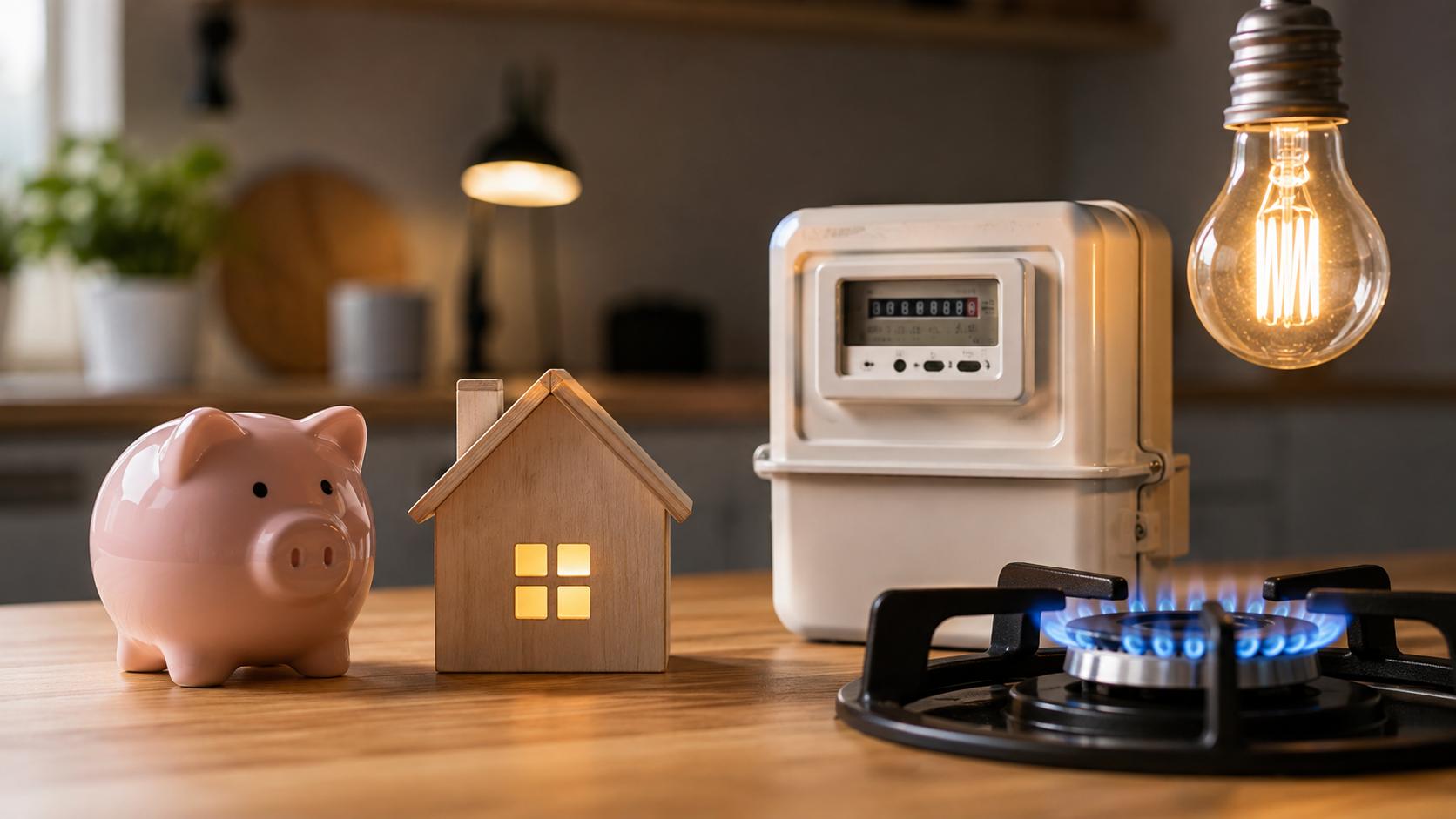
From 1 July to 30 September 2026, the average direct debit standing charge is 57.19 pence per day for electricity and 29.04 pence per day for gas, across England, Scotland and Wales including VAT.
Together that is around 86 pence a day, or roughly £315 a year before a single unit of energy is used.
A household away for a month still pays it. An empty property still pays it. A household that has insulated thoroughly and reduced consumption dramatically still pays all of it.
It covers costs that are not about usage.
Standing charges fund costs that exist regardless of consumption.
These include maintaining the electricity and gas networks that connect homes, meter provision and reading, and the costs of government schemes and policy obligations.
They also include the costs of supplier failures. When energy companies collapsed during the market crisis, the cost of transferring their customers and honouring credit balances was recovered across all bills, and a portion of that sits in standing charges.
Standing charges vary by region, reflecting different network costs, which is why the North East figure differs from other parts of the country.
They rose sharply, then stayed.
Standing charges increased substantially through the energy crisis and have not returned to previous levels.
Electricity standing charges in particular are considerably higher than before 2021, and the increase affected all customers equally in cash terms, which means it affected low users disproportionately as a share of their bill.
That is the core of the criticism. A household using very little energy pays the same standing charge as one using a great deal, so the fixed element makes up a much larger proportion of their bill.
The fairness argument is well established.
Campaigners, including MoneySavingExpert and its founder Martin Lewis, have argued for years that standing charges penalise low users and undermine the incentive to reduce consumption.
The counter-argument is that network costs are genuinely fixed and must be recovered somewhere, and that moving them into unit rates would raise bills for high users, who include many households with medical equipment, large families and poorly insulated homes.
There is no version of this that does not create winners and losers, which is part of why reform has been slow.
Low standing charge tariffs were delayed.
Ofgem had announced plans requiring suppliers to offer at least one low standing charge tariff to all customers by early 2026, sitting outside the price cap mechanism.
That requirement has been delayed, which drew criticism from consumer campaigners.
Some suppliers offer tariffs with lower or zero standing charges independently, but these typically carry higher unit rates, so whether they benefit a particular household depends entirely on consumption.
Working out whether one suits you requires your actual annual usage in kilowatt hours, which is on your bill or annual statement.
Prepayment customers face particular difficulty.
Prepayment meters accrue standing charges continuously, including during periods when the meter has no credit.
That means a household that has been unable to top up returns to a debt of accumulated standing charges before any energy is available, which is a significant contributor to self-disconnection.
Support exists for prepayment customers, including through supplier hardship funds and the Priority Services Register, and anyone struggling should contact their supplier rather than simply going without.
Empty and second properties still pay.
Standing charges apply to any connected property, which catches out executors dealing with an estate, landlords between tenancies and owners of properties undergoing renovation.
Disconnecting a supply entirely is possible but involves a cost and is rarely worthwhile for short periods.
Where a property will be empty for an extended period, contacting the supplier to explain the situation is worthwhile, as some offer arrangements.
What you can actually do.
Very little directly, which is the frustrating answer, but a few things help.
Compare tariffs on the basis of your actual annual consumption rather than headline figures, since the balance between standing charge and unit rate varies between tariffs.
Make sure you are not paying standing charges on a supply you do not need. Some households with electric heating and no gas appliances continue paying a gas standing charge for a connection they never use, and capping off the supply may be worth investigating.
Check whether you qualify for the Warm Home Discount, supplier hardship schemes or the Priority Services Register, none of which reduce standing charges directly but can offset the overall cost.
Share your thoughts.
Do you think standing charges should be scrapped and built into unit rates?
Lifestyle News
Standing Charges: What You Pay Before Using Anything
Before a single light goes on, a typical household pays over three hundred pounds a year in standing charges, and there is very little you can do about it.
Advertisement




Comments (0)
You must be logged in to post comments.
Don't have an account? Register here
No comments yet. Be the first to share your thoughts!