
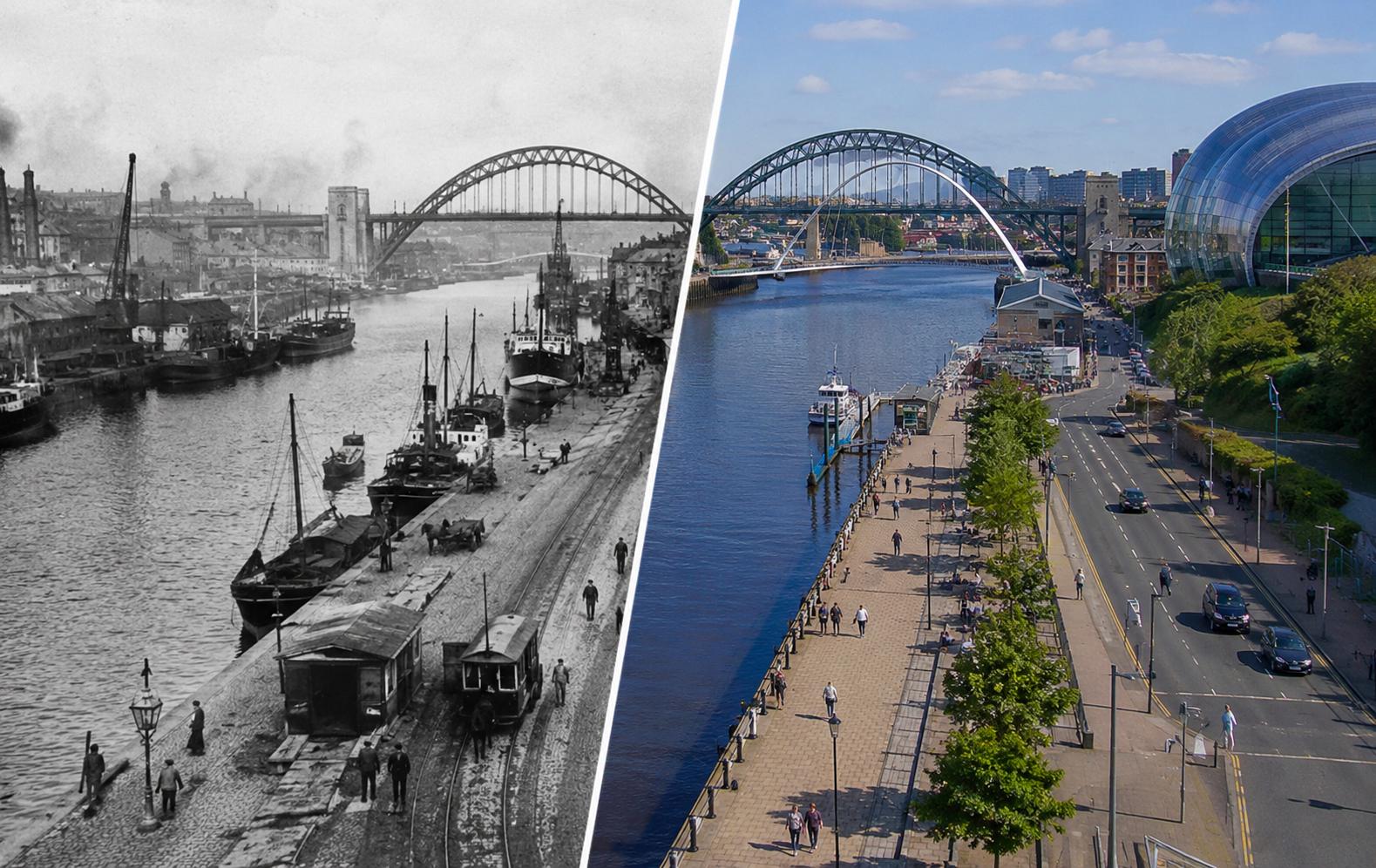
Today, Newcastle Quayside is one of the North East’s most recognisable destinations, filled with stylish bars, restaurants, luxury apartments and modern office buildings overlooking the River Tyne.
Tourists flock to the waterfront to photograph the Tyne Bridge, Millennium Bridge and the famous riverside skyline. Weekend markets, busy nightlife and major events now define much of the area’s reputation.
But long before regeneration transformed Newcastle Quayside into a modern hotspot, the riverside looked dramatically different.
For generations, the Quayside was a gritty industrial centre shaped by coal, shipbuilding, trade and hard physical labour. The area once echoed with the sound of cranes, steam engines, shouting dock workers and heavy industry rather than live music and restaurant crowds.
Its history is deeply connected to the rise of Newcastle itself.
The Quayside Was Once The Heart Of Newcastle Trade.
Centuries ago, the River Tyne was the economic lifeblood of Newcastle.
The Quayside became one of the busiest commercial areas in northern England, with ships constantly arriving carrying goods from across Britain and overseas. Coal dominated much of the trade, helping Newcastle become internationally famous during the Industrial Revolution.
Large warehouses lined the waterfront while merchant businesses, ship owners and traders operated from crowded streets nearby.
At its peak, the riverside was packed with sailors, dock workers, traders and labourers moving goods day and night.
The Quayside was not designed for beauty or tourism. It existed purely for work, commerce and survival.
Coal Made Newcastle Rich.
Coal exports transformed Newcastle into one of Britain’s most important industrial cities.
By the 18th and 19th centuries, huge quantities of coal were being transported down the Tyne before being shipped around the world. The phrase “taking coals to Newcastle” became famous because the city was already so heavily associated with coal production.
The Quayside played a central role in this trade. Coal wagons arrived constantly from nearby pits before the cargo was loaded onto waiting ships along the river.
The industry brought wealth to some parts of Newcastle, but life for many workers remained incredibly hard.
Labourers often worked long hours in dangerous conditions for low wages. Injuries were common, especially among dock workers loading heavy cargo manually.
The Area Was Crowded, Dirty And Dangerous.
Unlike the modern Quayside people know today, the historic waterfront was crowded with smoke, pollution and industrial noise.
The river itself was heavily polluted for decades because factories and ships dumped waste directly into the Tyne. Coal dust covered many surrounding buildings, while cramped housing conditions nearby created serious health problems for working families.
Historians have described parts of old Newcastle Quayside as chaotic and overcrowded, particularly during the height of industrial activity.
Pubs, boarding houses and cramped alleyways filled much of the area, catering to sailors and labourers arriving from across the world.
Crime and poverty were also major problems in some riverside districts during the Victorian era.
Shipbuilding Shaped The River Tyne.
The River Tyne became globally famous for shipbuilding during the 19th and early 20th centuries.
Massive shipyards lined parts of the river, employing thousands of workers from Newcastle and neighbouring towns including Gateshead, Wallsend and Jarrow.
Some of the world’s most famous ships were built on Tyneside, helping establish the region as an industrial powerhouse.
The Quayside itself became closely connected to this maritime identity. Cranes towered over the waterfront while steamships and cargo vessels constantly moved along the river.
Generations of Newcastle families depended directly or indirectly on shipbuilding and river trade for employment.
The Decline Of Industry Changed Everything.
By the mid 20th century, the industries that once made Newcastle wealthy began to collapse.
Coal exports declined, shipbuilding contracts disappeared and traditional manufacturing across Tyneside entered a period of steep decline. Thousands of jobs vanished over several decades, leaving parts of the Quayside neglected and economically damaged.
Large sections of the riverside became rundown as warehouses emptied and industrial sites closed.
Many people who remember Newcastle during the 1970s and 1980s describe the Quayside as tired, abandoned and struggling compared with the busy tourist destination seen today.
Old industrial buildings stood empty while unemployment across the North East rose sharply.
The Fish Market And Riverside Trade.
Despite industrial decline, parts of the Quayside remained active for years through local markets and smaller businesses.
The Newcastle Fish Market became an important feature of riverside life, attracting traders, restaurants and residents looking for fresh seafood from the North Sea.
Markets and local commerce helped preserve some sense of activity even while larger industries disappeared.
Older Newcastle residents often remember the Quayside as a rough but lively working environment filled with strong local character and community spirit.
Regeneration Began To Transform The Waterfront.
Major regeneration projects during the late 20th century completely changed the appearance and reputation of Newcastle Quayside.
Investment from local authorities and developers helped convert former industrial land into restaurants, offices, hotels and apartments. Historic buildings were restored while modern architecture introduced a very different atmosphere to the riverfront.
The opening of the Gateshead Millennium Bridge in 2001 became one of the most symbolic moments in the area’s transformation.
Alongside cultural developments such as the BALTIC Centre for Contemporary Art and Sage Gateshead, the Quayside gradually evolved into a modern leisure and tourism destination.
Some Locals Still Miss The Old Quayside.
Although regeneration brought investment and visitors back to the riverfront, some Newcastle residents believe parts of the Quayside’s industrial identity have been lost.
Older generations often remember the area as a place built around working people rather than expensive bars and luxury apartments.
For many families across Tyneside, the Quayside represents more than nightlife and tourism. It reflects generations of industrial history, labour and community connected to the River Tyne.
Historians say preserving that memory remains important as Newcastle continues evolving.
The Quayside Remains Central To Newcastle Identity.
Even after decades of change, Newcastle Quayside remains one of the city’s most historically important locations.
Its story reflects the rise of industry, the decline of traditional manufacturing and the regeneration that reshaped much of modern Newcastle.
Today’s riverside may look cleaner, wealthier and more modern, but traces of its industrial past still remain in the architecture, bridges and surviving historic buildings along the Tyne.
For many people visiting the Quayside today, it is difficult to imagine just how different the waterfront once looked during its industrial peak.
Yet beneath the restaurants, bars and modern developments lies a history that helped build Newcastle itself.
Do you remember Newcastle Quayside before regeneration transformed the area? Share your memories, old photographs and stories from the riverside in the comments below.
Newcastle History
Newcastle Quayside History Before Modern Regeneration Changed It
Advertisement



Comments (0)
You must be logged in to post comments.
Don't have an account? Register here
No comments yet. Be the first to share your thoughts!